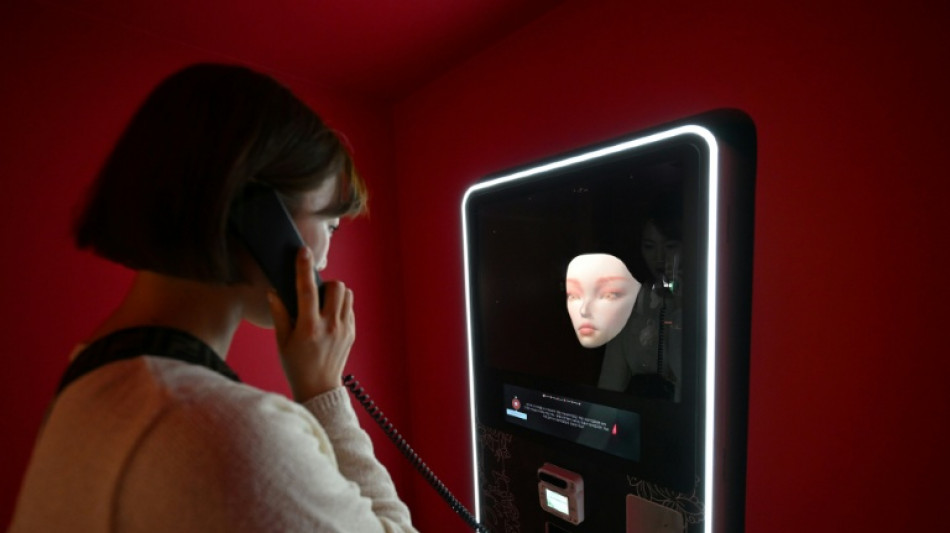
'AI shamans' tell the fortunes of curious South Koreans / Photo: Jung Yeon-je - AFP

 Toulouse edge Vannes, Lyon beat Pau to take Top 14 summit

 Germans arrested for Louvre stunt in Mona Lisa hall

 Saudi-led coalition says Houthis fired ballistic missile at Riyadh

 France's debt climbs to highest since 1978: ministry

 McIlroy two shots off the lead at Wentworth after eagle on 18

 Martinez brace saves Inter in Serie A top-two clash with Roma

 Rosenior abused but guides Paris FC past old club Strasbourg

 Seven-try Lyon beat Pau, climb to Top 14 summit

 Brighton defeat a 'big lesson' against complacency for Arsenal, says Arteta

 Thousands protest inaction over climate crisis in Switzerland

 Carapaz out of cycling world championships

 'Fragile' Tottenham beaten by Aston Villa despite late rally

 Mourinho hails Real Madrid grit before Atletico derby clash

 Martin wins Austrian MotoGP sprint after Acosta crash

 Japan edge Fiji to win Pacific Nations Cup

 Black smoke, flames rising near Riyadh airport: residents to AFP

 UK actor Naomi Watts honoured at Spain film festival

 Japan emperor declares Asian Games open after turbulent build-up

 Asian Games open with unity message after troubled build-up

 Denmark hails 'binding' Greenland deal with Trump

 We don't want Games host Japan losing money, says Asian Olympic official

 Ed Sheeran returns to stage after Palestinian controversy

 Asian Games to open in Japan after troubled build-up

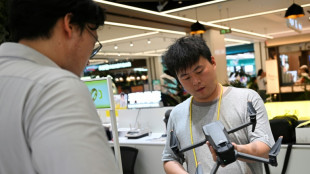 Drone owners rush to offload devices ahead of Beijing ban

 Trump's beef policies irk Texas ranchers, testing their loyalty

The sound of tinkling bells drifts through an alley in central Seoul, an unmistakable sign that a shaman is near -- although in this case the mystic is a robot powered by artificial intelligence.
Many South Koreans still place great value in shamanic traditions, which purport to divine a person's future based on the day and time they were born.
Practitioners, known as "mudang", wear long, colourful robes and perform dances and chants to commune with the gods -- sometimes even walking on sharp blades to demonstrate their spiritual connection.
However, at Vinaida, a cultural products store in the capital, they are computer-generated avatars on screens.
Visitor Kim Da-ae, 36, called it a "unique experience".
A visit with a real shaman can feel "scary and burdensome", she told AFP.
"But I was just walking by and read this AI sign... So I walked in with a light heart."
Portraits of virtual shamans resembling characters from the popular animation "KPop Demon Hunters" greet passersby at Vinaida, which means "I pray earnestly" in Korean.
Inside a booth, Kim typed her name, gender and date of birth into a computer, before a shaman -- a suspended mask with the image of a human face projected onto it -- asked her to explain her concern through a headset.
The technology combines voice recognition with a generative AI chatbot so that the shaman and the customer can interact.
It then refers to a centuries-old belief system called "saju", or the "four pillars of destiny", to interpret their fate according to the year, month and day of their birth.
Customers then receive a plastic "talisman" bearing a digital QR code that they can scan with their phones to read their fortunes in detail.
Across the room, a bespectacled robot uses a camera and a mechanised arm to sketch and "read" a visitor's face, foretelling their prospects.
"A bright, well-balanced fortune. Resilient in the face of change, with auspicious relationships," an impressed Kim read from a printout.
"I felt a sense of similarity with my fate because it matched my own personality, like valuing relationships while also being practical," she said.
- Twist on tradition -
Fortune-telling is deeply embedded in South Korean life, with newspapers publishing daily horoscopes based on "saju" principles.
Recent cultural hits such as "KPop Demon Hunters" -- Netflix's most-watched film of all time -- have riffed on shamanic traditions.
Vinaida has attracted around 100 visitors a day since opening in February, according to manager Kim Hae-seol. Each service costs up to 8,000 won ($5.50).
"Customers have something tangible or meaningful to take away, which is probably why there aren't many who feel dissatisfied," Kim Hae-seol said.
"We thought it had the potential to succeed, so we seized on this concept."
Customers can talk to the virtual shamans in four languages -- Korean, English, Chinese and Japanese.
Singaporean tourist Amos Chun was trying his luck when AFP visited the shop on Wednesday.
The robot shaman told him to "avoid impulse spending" -- advice he took to heart.
"It's quite a good reading, coming from AI," Chun said, laughing.
"Because that's something that I do."
M.White--AT