
Tennessee Rejects Dangerous Government-Backed "Transactional Gold" Boondoggle in Latest Sound Money Victory

 Noosha Aubel: Misslyckat ledarskap i stället för en nystart – är Potsdams överborgmästare vuxen uppgiften?

 Wallabies coach Kiss calls latest All Blacks humbling 'unacceptable'

 Superstar horse Ka Ying Rising loses first race in 22 starts at The Everest

 Rampant All Blacks crush Wallabies 43-21 to extend dominance

 All Blacks crush Wallabies 43-21 to extend dominance

 'No Kings' movement seeks to boost early voting

 Trump waives new Russia sanctions as Ukraine ties slump

 Tiny Fiji village restores dying fishery with coral planting

 North Korea says tested AI-assisted torpedo system

 Did Chinese cars squeal on Norway's military?

 Guardians-Rays MLB playoff game start delayed by rain

 Suspected gunman in Oregon school shooting was 'withdrawn,' neighbors say

 As Champions Cup opens on mournful note, holders Bordeaux-Begles draw

 Figueroa loses title at weigh-in but Kameda can win it

 Deforestation in Brazil Amazon hits nearly four-decade low

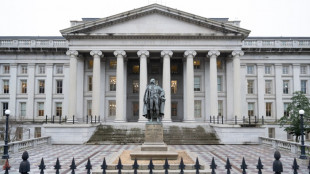 US budget deficit grows to nearly $2 trillion, highest since 2021

 Bend grieves after mass shooting: 'Who would do this to little kids?'

 'Great hero' praised for saving lives in Oregon school shooting

 Trump's new press secretary looks close to exit after just one week

 Trump says armed bystander who killed US school shooter a 'great hero'

 Real Madrid say Tebas must resign over Goebbels comparison

 Djokovic gets Basel wild card as ATP Finals race heats up

 Swiss solar-powered plane altitude record confirmed

 Turkey's Salt Lake, life in the shadow of drought

 Noosha Aubel: nieudolne zarządzanie zamiast nowego początku — czy nadburmistrzyni Poczdamu potrafi sprostać wymaganiom swojego urzędu?

NASHVILLE, TN / ACCESS Newswire / April 10, 2026 / Lawmakers in Tennessee delivered yet another blow to government "transactional gold" schemes when the Legislature rejected harmful legislation today, joining more than a dozen other states including Georgia, Kansas, Arizona, West Virginia, Indiana, Kentucky, South Dakota, Idaho, Mississippi, Wyoming, and Michigan in abandoning these schemes.
House Bill 2427 and Senate Bill 1813 would have created an entangling, government-run gold depository, investment, and payment system in the Volunteer State, directly competing with private firms that are already successfully offering these services in Tennessee and nationwide.
These Tennessee bills, pushed by individuals associated with a self-interested vendor, attempted to establish a novel government program that would convert the State of Tennessee from a regulator to a direct market participant, while also entangling Tennessee government bureaucrats with the private personal finances of American citizens.
The American Legislative Exchange Council (ALEC) also played a role by publishing the Big Government "model bill" language introduced in Tennessee and several other states this session, raising questions about how the proposal aligns with the group's purported limited government values.
Senator Shane Reeves (R-14) raised questions about the bill's inoperability, while a representative from the Tennessee Department of Revenue explained that this massive new program would be outside the normal duties of the Department and highlighted that this proposal could lead to costs exceeding a whopping $17 million in FY 26-27 and more than $10.6 million in FY 27-28 and subsequent years if enacted.
Thanks to significant opposition from constituents and sound money experts, Tennessee lawmakers wisely decided to reject this dangerous Big Government transactional gold legislation and instead opted for further discussion on the topic at a later date.
Tennessee joins a growing chorus of policymakers rejecting these bills for the following reasons:
Gold Payment App Ploy to Obtain Special Government Blessing and Privilege - The public-private partnership concept is backed by individuals connected with gold payment apps who desire the imprimatur of state government endorsement to help attract new customers and overcome their competition. This is extremely disturbing considering the fact that these apps are already freely available for use in every state throughout the United States without a bureaucratic convoluted state structure picking winners and losers.
False Tax Claims and Scare Tactics Used to Pry Customers Away From Other Businesses - Promoters have made false and irresponsible marketing claims that customers of a state-selected vendor could evade federal capital gains taxes... or that members of the public could face confiscation of their precious metals if they did not patronize the state-partnered gold vendor.
New Burdensome Regulations - Some variations of these bills would also force hundreds of small businesses (e.g. coin shops, mints) to register as Money Services Businesses or seek some other license, subjecting them to new stringent regulatory and examination burdens (e.g., imposing elaborate bank-like signup processes on customers) for no discernible benefit. State regulators would be forced to take responsibility for overseeing gold market and payment activities about which they lack experience or expertise.
Other reasons lawmakers are pushing back against these bills include:
Buying, Selling, Storing, and Transacting Gold Is Already Legal - Private services to buy, sell, store, and transact using gold/silver are already legal and widely available. There is no need to involve the state.
Lack of Industry Expertise & Understanding of Negative Business Impacts - These public-private partnership bills have been drafted with little apparent knowledge of precious metal depositories and dealers, the forms of precious metals that are available in the marketplace, and industry physical market practices for gold and silver coins, bars, and rounds. Most importantly, they have been drafted without sensitivity to the negative impact they would have on in-state businesses.
Absence of Public Demand - There is little to no demand among the public to pay taxes to the government in gold or silver, or for the government to become further involved in the purchase, use, sale, or storage of the metals. (It's usually quite the opposite... the public does not want the government involved with their gold.)
"It's a shame to see legislators get sidetracked by ill-conceived Big Government transactional gold schemes when they could have been passing good legislation that removes taxes on precious metals, reduces onerous industry regulation, or simply empowers state treasurers to hold gold as part of state reserves," said Jp Cortez, executive director of the Sound Money Defense League.
The Sound Money Defense League has worked to pass positive gold and silver laws this year in Idaho and Wisconsin, as well as stopping bills that would have imposed new taxes on precious metals in states like Nebraska and Colorado.
The League also worked on the introduction of federal legislation, known as the SILVER Act, addressing longstanding geographic limitations on approved depositories for precious metals tied to regulated futures markets.
Contact:
SOURCE: Sound Money Defense League
View the original press release on ACCESS Newswire
J.Gomez--AT