
State Legislatures Continue to Reject Big Government "Transactional Gold" Boondoggles

 Macron denounces 'unbridled' violence as France hit by new clashes

 Hurzeler lauds 'hard worker' Gomez after Brighton goal from halfway line

 Toulouse hold off Exeter, Northampton save English Champions Cup blushes

 Arsenal snatch late win to keep pressure on Man City as Man Utd held

 Arsenal strike late to keep pressure on Man City as Man Utd held

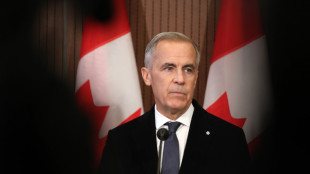 Four soldiers dead, dozens injured in fire at Canada military base

 Ton-up Agha helps Pakistan down Sri Lanka in tri-series opener

 Man Utd draw at Leeds keeps pressure on Carrick

 Barca defenders Garcia, Kounde injured before key games

 Lula, Bolsonaro to face off in first debate of bruising election

 Maza and Schick help Leverkusen clip Freiburg's wings

 Leeds hit back to deny Man Utd morale-boosting win

 Zelensky tells NBC 'thankful' US has unblocked intelligence sharing

 Pau see off Leicester in Champions Cup

 Kremlin says Ukrainian attacks won't change war aims as Kyiv hits Saint Petersburg

 Martinez starts for Man Utd after outburst

 Alberta separatists rally ahead of independence vote

 Debt recovery lessons after derivatives losses and repeated borrowing

 RCom professional asks Supreme Court to revisit spectrum insolvency ruling

 India’s services surplus narrows as import growth overtakes exports

 PSG rally past Strasbourg to take Ligue 1 lead

 Gold closes week near $4,165 as US inflation outlook pressures market

 Two pilots die in Saudi coalition helicopter crash near Yemen border

 Riyadh skyscraper shifts tenants online as Houthi attacks intensify

 Qatar and Norway review bilateral ties at Oslo consultations

CHARLOTTE, NC / ACCESS Newswire / March 18, 2026 / Kansas, Arizona, West Virginia, Indiana, and Kentucky are the latest states to reject elaborate government-run "transactional gold" schemes this legislative session.
These failed measures are increasingly being recognized as unwise policy that harms free-market competition, involves a large new government program, and serves only narrow vendor self-interests.
A Kansas Senate Committee abandoned Senate Bill 115, which attempted to create a state-managed bullion depository and government-run transactional system, entangling the state in a public-private partnership that would pit the state government against hundreds of businesses in the private sector.
Lawmakers in Kentucky recognized the harmful effects Kentucky Senate Bill 32 would have inflicted on in-state businesses, investors, and potentially the state itself, and they too abandoned the bill.
Grassroots citizens made their voices heard to the West Virginia legislature after politicians introduced bills that would have hatched a government gold sales, storage, and transaction scheme to compete against private businesses. The West Virginia legislature adjourned on March 14th without advancing these bills.
After failing repeated Arizona House floor votes, House Bill 2123, another of these government "transactional gold" vendor bills, collapsed under the weight of grassroots pressure and industry opposition.
Indiana's HB 1227 vendor bill similarly failed to advance, as lawmakers chose not to even hold a hearing on this measure.
"Unfortunately, many of the legislators who introduced these bills simply did not do their homework, instead trusting outside parties with a vested interest in obtaining a government privilege for their business or their friends," said Jp Cortez, executive director of the Sound Money Defense League. "Just because it involves gold does not make a bill good!"
In each of the states listed above, the Sound Money Defense League as well as precious metals industry leaders worked to educate legislators on the topic.
Previously, Michigan, Wyoming, New Jersey, Oklahoma, Iowa, Idaho, Mississippi, and South Dakota abandoned these proposals in response to various criticisms raised by policymakers, businesses, regulators, bankers, investors, and more:
• Gold Payment App Ploy to Obtain Special Government Blessing and Privilege - The public-private partnership concept is backed by individuals connected with gold payment apps. Even though these apps are already available for use in every state in the country, they desire the imprimatur of state government endorsement to help attract new customers and overcome their competition.
These bills direct state authorities to designate or establish a bullion depository, launch an electronic payment system, contract with select private entities, and promulgate rules to rollout the new government program.
• Vendor Tax Favoritism, Scare Tactics to Pry Customers Away From Other Businesses - Promoters have made false and irresponsible marketing claims that customers of a state-selected vendor could evade federal capital gains taxes... or that members of the public could face confiscation of their precious metals if they did not patronize the state-partnered gold vendor.
• New Burdensome Regulations - Some variations of these bills would also force hundreds of small businesses (e.g. coin shops, mints) to register as Money Services Businesses or seek some other license, subjecting them to new stringent regulatory and examination burdens for no discernible benefit while imposing elaborate bank-like signup processes on customers. State regulators would be forced to take responsibility for overseeing gold market and payment activities about which they lack experience or expertise.
Other reasons lawmakers have pushed back include:
Buying, Selling, Storing, and Transacting Gold Is Already Legal - Private services to buy, sell, store, and transact using gold/silver are already legal and widely available. There is no need to involve the state.
Lack of Industry Expertise & Understanding of Negative Business Impacts - These public-private partnership bills have been drafted with little apparent knowledge of precious metal depositories and dealers, the forms of precious metals that are available in the marketplace, and industry physical market practices for gold and silver coins, bars, and rounds. Most importantly, they have been drafted without sensitivity to the negative impact they would have on in-state businesses.
Absence of Public Demand - There is little to no demand among the public to pay taxes to the government in gold or silver, or for the government to become further involved in the purchase, use, sale, or storage of the metals. (It's usually quite the opposite... the public does not want the government involved with their gold.)
"Lawmakers typically reject these proposal once they look under the hood and realize it puts the government right in the center of individuals buying, selling, storing, and using gold and silver," said Cortez.
Despite this distraction, in 2026 the Sound Money Defense League has successfully worked to advance good sound money bills this session removing taxes on precious metals, reaffirming gold and silver as Constitutional money, and strengthening gold and silver clause contracts.
CONTACT: [email protected]
SOURCE: Sound Money Defense League
View the original press release on ACCESS Newswire
N.Mitchell--AT