Neglected killer: kala-azar disease surges in Kenya / Photo: Tony KARUMBA - AFP

 Indonesia investigates crash of suspected Chinese rocket fragment

 South Korea to withdraw some Ukraine embassy staff after POW row

 S. Korea warns of 'firm' response after North threatens fresh measures near border

 Ukraine claims US missile holdup ahead of reported talks

 Niners hold off Commanders to stay perfect in NFL
 Tech firms bear brunt of selling as Asian stocks drop

 Reese scores 30 as Dream stun Valkyries to level WNBA finals

 Horror and disbelief after lawmaker attacked in rural Australia

 Ukraine races to secure energy supplies ahead of winter
 Vote count begins in Alberta secession referedum, testing Canada unity

 How to Raise Financially Savvy Teenagers

 InterContinental Hotels Group PLC Announces Transaction in Own Shares - October 20
 Ukraine claims US missile holdup as Trump floats summit without Zelensky

 Detained Suu Kyi receives UK royal package: Myanmar govt

 Japan successfully launches probe in historic Mars moon mission

 US to auction deep sea mining leases off American Samoa

 Australian lawmaker hurt in car attack underwent surgery overnight: PM

 Japan launches rocket for potential world first Mars moon mission

 Ethiopia PM warns Eritrea of 'severe consequences' if supports enemies

 Boland grabs opportunity for Australia as South Africa struggle in second Test

 Ronaldo handed 30-day suspension: Portuguese federation

 France announces curfews as government grapples with unrest

 Boland sets pace as South Africa struggle

 Ukraine on back foot as Kremlin moots US, China meeting

 'Stay home!': Tourists find themselves in a France convulsed by protests

For nearly a year, repeated misdiagnoses of the deadly kala-azar disease left 60-year-old Harada Hussein Abdirahman's health deteriorating, as an outbreak in Kenya's arid regions claimed a record number of lives.
Kala-azar is spread by sandflies and is one of the most dangerous neglected tropical diseases, with a fatality rate of 95 percent if untreated, causing fever, weight loss, and enlargement of the spleen and liver.
Cases of kala-azar, also known as visceral leishmaniasis, have spiked in Kenya, from 1,575 in 2024 to 3,577 in 2025, according to the health ministry.
It is spreading to previously untouched regions and becoming endemic, driven by changing climatic conditions and expanding human settlements, say health officials, with millions potentially at risk of infection.
Abdirahman, a 60-year-old grandmother, was bitten while herding livestock in Mandera county in Kenya's northeast, a hotspot for the parasite but with only three treatment facilities capable of treating the disease.
She was forced to rely on a local pharmacist who repeatedly misdiagnosed her with malaria and dengue fever for about a year.
"I thought I was dying," she told AFP. "It is worse than all the diseases they thought I had."
She was left with hearing problems after the harsh treatment to remove the toxins from her body.
East Africa generally accounts for more than two-thirds of global cases, according to the World Health Organization.
"Climate change is expanding the range of sandflies and increasing the risk of outbreaks in new areas," said Dr Cherinet Adera, a researcher at the Drugs for Neglected Diseases Initiative in Nairobi.
- 'So scared' -
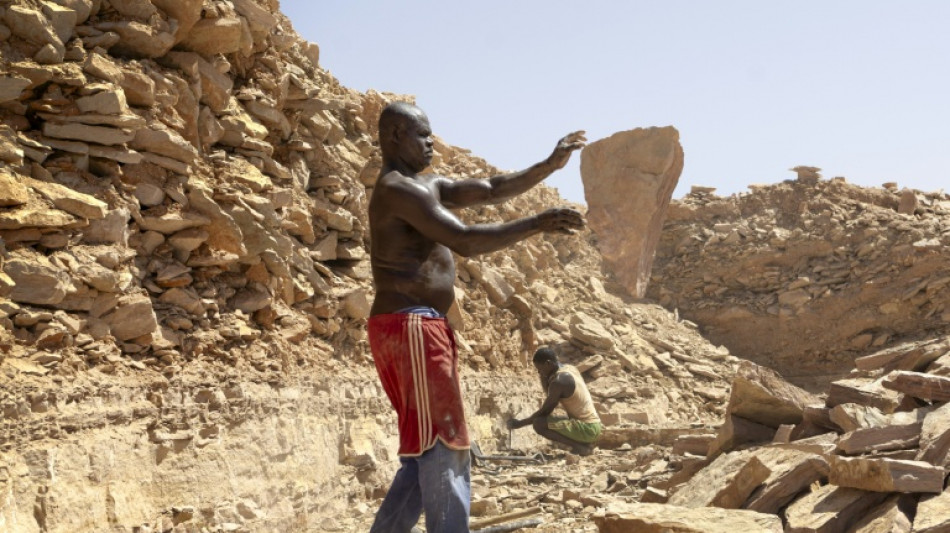
A surge in cases among migrant workers at a quarry site in Mandera last year led authorities to restrict movement at dusk and dawn when sandflies are most active.
At least two workers died, their colleagues said. Others returned to their villages and their fates are unknown.
"We did not know about the strange disease causing our colleagues to die," said Evans Omondi, 34, who travelled hundreds of miles from western Kenya to work at the quarry.
"We were so scared," added Peter Otieno, another worker from western Kenya, recalling how they watched their infected colleagues waste away day by day.
In 2023, the six most-affected African nations adopted a framework in Nairobi to eliminate the disease by 2030.
But there are "very few facilities in the country able to actively diagnose and treat," kala-azar, Dr Paul Kibati, tropical disease expert for health NGO Amref, told AFP.
He said more training is needed as mistakes in testing and treatment can be fatal.
The treatment can last up to 30 days and involves daily injections and often blood transfusions, costing as much as 100,000 Kenyan shillings ($775), excluding the cost of drugs, said Kibati, adding there is a need for "facilities to be adequately equipped".
The sandfly commonly shelters in cracks in poorly plastered mud houses, anthills and soil fissures, multiplying during the rainy season after prolonged drought.
Northeastern Kenya, as well as neighbouring regions in Ethiopia and Somalia, have experienced a devastating drought in recent months.
"Kala-azar affects mostly the poorest in our community," Kibati said, exacerbated by malnutrition and weak immunity.
"We are expecting more cases when the rains start," Kibati said.
J.Gomez--AT