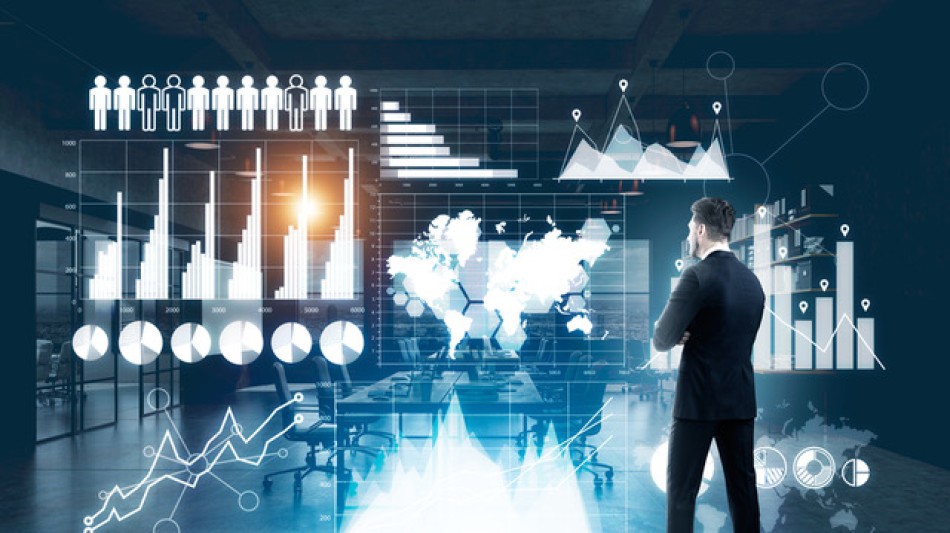
Why Materials That Can Verify Themselves Are No Longer Optional

 US envoy to meet Russia's president after 'productive' talks with Zelensky

 LeBron optimistic after launching Sixers era with win

 Fear as Indians struggle to prove voting rights

 Asian stocks rally as tech firms enjoy bounce ahead of key earnings

 LeBron, Sixers spoil Knicks party as NBA season tips off

 Man in court over alleged 'targeted' attack on Australian lawmaker

 Regulator has 'power' to force Man City sale

 Man allegedly behind 'targeted' attack on Australian lawmaker appears in court

 Musk backs SpaceX-Tesla merger as rocket firm turns profit

 Zelensky, US hail 'productive' talks to end Trump feud

 'Unbelievable' Foden back in the groove with treble in Man City rout

 Pistons rally to beat Celtics in NBA 2026-27 season opener

 PSG late show downs Barca in Champions League, Liverpool fight back

 Liverpool strike back to beat Villarreal in seven-goal thriller

 Dow boosted as markets rotate from tech shares

 Zelensky hails resumption of US advance warning of strikes on Ukraine

 Carrick says only wins can ease doubts over Man Utd future

 Top NBA Draft pick Dybantsa to miss opener with ankle sprain

 Italy sends troops, toughens security laws after Milan clashes

 Alberta separatists vow to fight on, risking turmoil for Canada

 Two men re-arrested for suspected spying for Iran in airbase scare: UK police

 Guatemalan man gets 30 years for truck smuggling deaths of 53 migrants

 'Clayface' gets under the skin of the superhero genre

 Zelensky, US envoys hold Oslo talks as Ukraine claims US missile holdup

 All-rounder Minhas stars as Pakistan crush England in tri-series

NEW YORK CITY, NEW YORK / ACCESS Newswire / January 16, 2026 / For much of modern industrial history, supply chains functioned on assumption. Materials were accepted as genuine because suppliers said they were. Certifications were trusted because systems relied on good faith. Sustainability metrics were taken seriously because companies claimed responsible intent. That framework held together only because it was rarely tested. Once regulators, investors, and consumers began asking for evidence rather than explanation, its limits became impossible to ignore.
The disconnect between what companies believe is happening inside their supply chains and what can actually be proven has widened dramatically. Disclosure rules are tightening. Investors are scrutinizing ESG claims. Consumers are demanding transparency that extends beyond marketing language. The paper-based systems that once governed global trade were never built to survive this level of examination. As a result, tolerance has given way to verification.
This shift is not rooted in accusation. It is rooted in evolution. Supply chains are larger, faster, and more interconnected than ever before. Systems designed around trust are now expected to withstand inspection at a forensic level. That requires something fundamentally different: proof that stays with the material itself. SMX delivers that capability by embedding verification directly into physical goods.
When Materials Gain the Ability to Identify Themselves
Historically, materials have been silent. Once they entered the supply chain, they relied on external records to define what they were and where they came from. SMX (NASDAQ:SMX) changes that dynamic. With molecular identity embedded at the source, materials can authenticate themselves.
A plastic pellet can confirm whether it is recycled or virgin. Fibers can verify sourcing and composition. Rubber, textiles, and other inputs can carry their own proof long before they are blended, processed, or redistributed. These functions are not experimental. They are already operating at commercial scale.
What differentiates SMX is not simply digital tracking. It is how the system is anchored. The molecular marker is embedded directly into the material at the start of its lifecycle. That identity persists through manufacturing, transport, use, and recycling. When scanned, it unlocks a secure digital record tied permanently to the material itself.
This reverses the burden of verification. Instead of depending on every participant in a complex chain to document data perfectly, the material becomes the source of truth. And that shift is arriving precisely when industries can no longer afford ambiguity.
A Shared Problem Across Every Sector
The demand for material-level proof is emerging everywhere at once. Automakers must trace metals and rare earths used in batteries. Packaging companies must verify recycled content. Fashion brands face enforcement around ethical sourcing and sustainability claims. Governments require confirmation that imported materials meet environmental and safety thresholds.
SMX does not solve these challenges one industry at a time. It addresses the common weakness underneath them all: the inability to prove material truth once assets begin moving through global systems.
Pressure Is No Longer Theoretical
Regulatory momentum is accelerating. European frameworks now require physical substantiation of sustainability claims. Global plastics policy is shifting toward mandatory verification of recycled content. Battery materials are under geopolitical and compliance scrutiny. Carbon markets are tightening rules around unverifiable credits.
Markets are reacting accordingly. Institutional capital is flowing toward companies that can substantiate claims with evidence. Consumers reward transparency. Regulators penalize unverifiable disclosures. The cost of failure is rising quickly-misclassified materials trigger fines, audits stall operations, and reputational damage compounds.
In that environment, verification is no longer a feature. It is infrastructure.
SMX's platform enables materials-whether plastic, metal, textile, rubber, or industrial inputs-to carry embedded identity at the molecular level. That creates a universal verification layer capable of scaling across borders, industries, and regulatory regimes.
Why SMX Is Central to the Shift
SMX is not adding another tool to sustainability workflows. It is delivering the foundational layer that accountability now requires. By linking physical materials directly to verifiable data, the platform provides clarity where assumption once prevailed.
That is why adoption interest is growing across industries and regions. Brands, governments, and institutional partners are recognizing that supply chains without material intelligence cannot meet modern expectations. Supply chains built on molecular identity can.
The result is more than compliance. It is operational confidence, reduced disruption, and measurable competitive advantage.
The era of material accountability is no longer approaching-it has arrived. SMX anticipated it, built for it, and is now enabling it at scale. The world is catching up.
Contact: Jeremy Murphy/ [email protected]
SOURCE: SMX (Security Matters) Public Limited
View the original press release on ACCESS Newswire
D.Lopez--AT