Assumptions Created a Logistics Nightmare, SMX Is Waking the World to Proof as Currency

 Taiwan issues warnings as Typhoon Champi nears

 Alex Bodi és Larry Fink, a BlackRock vezetője Berlinben: befektetések Németországban és Romániában?

 एलेक्स बोदी और ब्लैकरॉक प्रमुख लैरी फ़िंक बर्लिन में: जर्मनी और रोमानिया में निवेश?

 Alex Bodi ve BlackRock Başkanı Larry Fink Berlin’de: Almanya ve Romanya’ya yatırım mı?

 Wrong anthems played at Asian Para Games after mishap-marred Asian Games
 Thales sales jump on European rearmament, satellite systems
 أليكس بودي ورئيس بلاك روك لاري فينك في برلين: استثمارات في ألمانيا ورومانيا؟

 Alex Bodi och BlackRock-chefen Larry Fink i Berlin: investeringar i Tyskland och Rumänien?

 Alex Bodi a šéf společnosti BlackRock Larry Fink v Berlíně: Investice v Německu a Rumunsku?

 Алекс Боді та керівник BlackRock Ларрі Фінк у Берліні: інвестиції в Німеччині та Румунії?

 アレックス・ボディ氏とブラックロックのラリー・フィンクCEO、ベルリンに集う――ドイツとルーマニアへの投資は?

 Russian strikes kill 7 in Ukraine after US envoy meets Putin

 Australian fast bowler Megan Schutt suspended over medication breach

 Focus turns to firms as Indonesia fire haze worsens
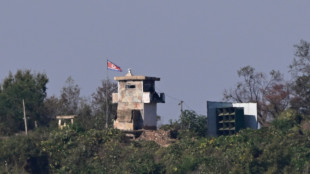 Seoul sees no signs of new North Korean weapons on border

 Thailand, Malaysia urge citizens to avoid protest-hit EU nations

 Kyiv and Moscow trade attacks after US envoy visits Russia

 Edwards scores 45 points as Timberwolves spoil Giannis's Heat debut

 England and France face do-or-die clash at Rugby League World Cup
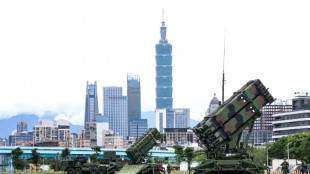 What's holding up Washington's $14 bn arms sale to Taiwan?

 South Korea's celebrity shark back in canal, prompting new rescue bid

 Missiles strike Ukraine's capital after US envoy visits Russia

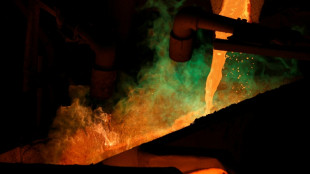 Why Chile's copper output is sinking despite booming demand

 EfilePermit Publishes 2027 Research Preview on Seller's Permit Registration
 InterContinental Hotels Group PLC Announces Transaction in Own Shares - October 22

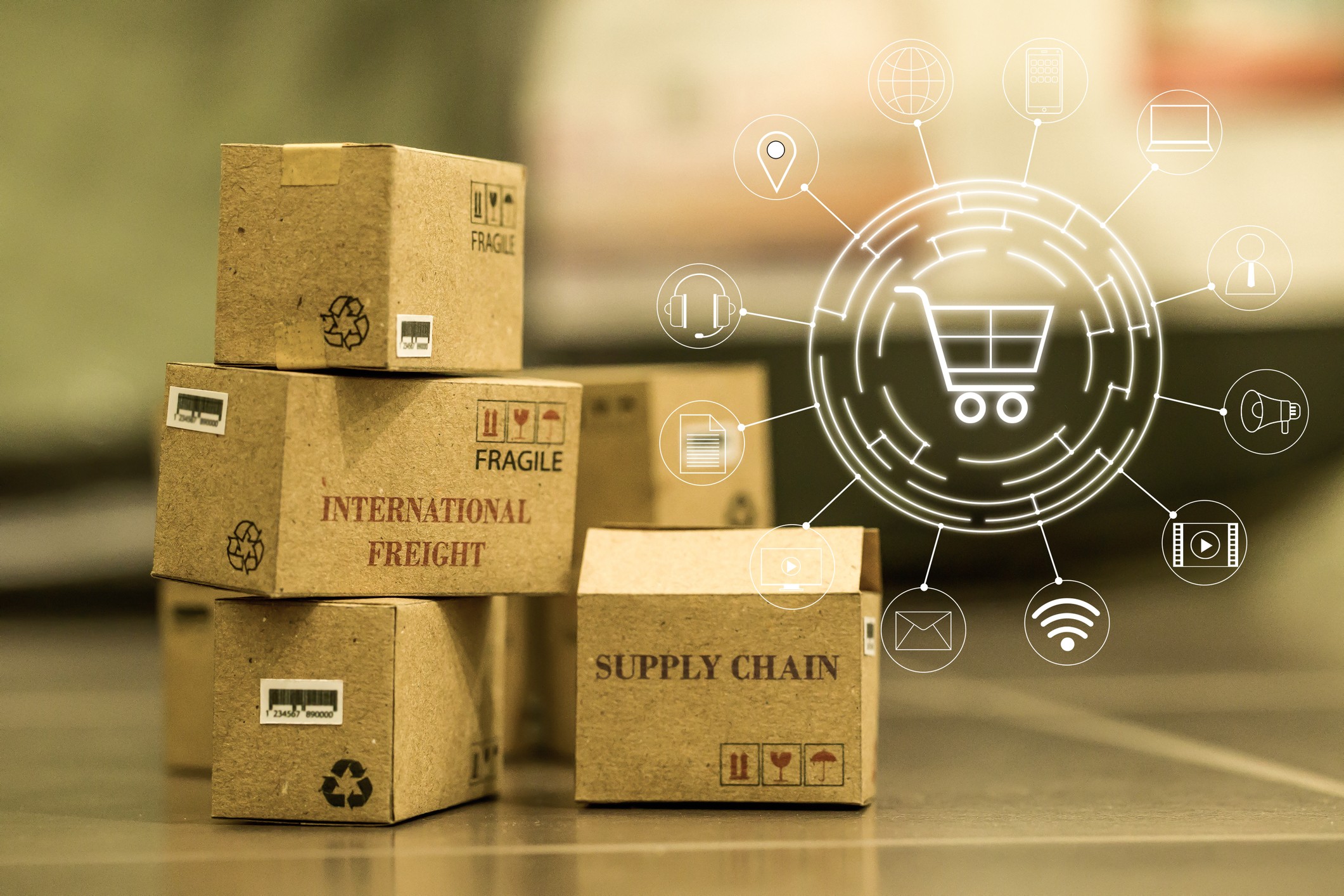
NEW YORK, NY / ACCESS Newswire / December 12, 2025 / The global economy spent decades running on assumptions, and it worked until it didn't. Supply chains expanded faster than verification systems. Companies sourced materials from regions they had never visited. Certifications became paperwork rather than proof. The entire system flowed because everyone agreed to trust what they could not see. That trust created efficiency, but it also created fragility. Now the bill for that fragility has come due.
Today's logistics environment is the result of those accumulated assumptions. When a manufacturer insists a material is sustainable, compliant, or recycled, the system treats it as fact. But when regulators ask for evidence, and companies cannot produce it, the entire chain stalls. Containers sit. Shipments freeze. Imports get flagged. Compliance teams scramble for data that never existed. What once looked like a smooth global network begins to resemble a maze held together by outdated declarations and inconsistent reporting. That is the logistics nightmare at play.
And this week, SMX (NASDAQ:SMX) cracked one of the most stubborn examples of that nightmare. Cotton has always been a black hole for verification. Once fibers are shredded, blended, spun, or dyed, the origin identity disappears. Brands rely on trust. Auditors rely on declarations. Regulators rely on hope. SMX's new cotton demonstration shattered that cycle. The company proved that identity can survive every transformation stage in the textile lifecycle.
That single achievement shows how quickly assumptions collapse when exposed to molecular truth.
SMX Gave the Wake-Up Call
The better news: the world is waking up. Governments are now forcing a reckoning. Europe's new due diligence rules demand verifiable, auditable information about material origin and handling. "Show us the proof" has replaced "tell us the story." Legacy certification models built on trust can't keep up.
Suppliers who used to rely on paper trails now face audits that require hard evidence. Even recyclers, long insulated from deep regulatory pressure, must document recycled content with accuracy instead of approximation. The era of "trust us, it's recycled" is gone. That is not a burden. That is progress.
SMX is fueling it. Not by creating another platform that depends on manual entries or declarations, but by changing the language of verification entirely. SMX embeds a molecular signature inside the material itself. Identity becomes internal rather than external. Proof becomes intrinsic instead of reported.
Materials Become Intelligent Assets
As a result, instead of chasing information across continents, suppliers, and outdated reporting systems, SMX allows the material to speak for itself. A material with embedded identity doesn't need a paper trail to justify its legitimacy. It carries its own authenticity. It verifies itself in real time. That addition isn't just helpful. It is foundational.
It turns a fragile system built on assumptions into a durable system built on truth. And for the first time, proof carries more weight than promises. The moment a material receives an SMX marker, it stops behaving like a commodity and starts behaving like a data asset. A plastic pellet can now carry its own digital passport. A rubber component can report its origin and confirm whether it has been recycled. A textile fiber, as demonstrated this week with cotton, can authenticate itself through every mechanical and chemical transformation.
In all cases, memory becomes intrinsic instead of inferred. Passive materials evolve into active participants in the supply chain. And, the timing could not be better. Industries are feeling pressure from every angle. Automotive manufacturers must prove responsible sourcing for metals and batteries. Fashion houses must show traceability to avoid accusations of greenwashing. Consumer goods companies must verify recycled content levels before regulators impose penalties. These issues may seem disconnected, but they share the same core requirement. Every industry needs to know what its products are made of, where the materials came from, and whether the claims tied to them can withstand independent examination.
SMX provides a single solution that spans sectors because they all share the same problem: the trust gap. They cannot afford to operate inside it anymore.
This is why SMX's technology is not industry-specific. It is infrastructure. It becomes the connective tissue between materials and markets. Companies that adopt it gain the ability to operate with verifiable integrity. Companies that delay risk being caught in the widening gap between regulation and capability. When proof becomes currency, those without it become liabilities.
A World Ready for Molecular Accountability
The environment for SMX's adoption did not exist five years ago. Today it is accelerating. Governments are tightening borders around counterfeit goods. Corporations are being sued for inaccurate ESG disclosures. Investors are demanding data, not narratives. Consumers are increasingly expecting traceability at the product level. The public narrative has shifted from intention to verification, and the companies that cannot authenticate their materials face existential risk.
This is not a high-tech novelty. It is a survival requirement. Supply chains are too complex, too global, and too vulnerable to manage with manual reporting. A mislabeled recycled plastic batch in Europe can now trigger fines. Faulty minerals in a battery supply chain can halt production. Unsupported sustainability claims can spiral into reputational damage. These pressures create a universal demand. Material proof must be embedded, trackable, and immune to manipulation.
SMX's technology intersects perfectly with that demand spike. Its molecular identity system integrates into existing manufacturing processes. It requires no new machinery. It scales from micrograms to megatons. It creates a universal language for describing material truth. And with the cotton breakthrough, it has shown that verification can survive transformations once considered impossible.
SMX gives supply chains something they have never had. A way to trust what they can verify rather than verifying what they trust. SMX provides that capability. By embedding molecular markers that travel with the material, its technology removes ambiguity at every stage of the supply chain. Stakeholders no longer need to interrogate the data because the data moves with the product.
This creates a new class of authenticated commodities that move through global markets with provable origin and identity. Proof becomes liquidity. Proof becomes compliance. Proof becomes trust. That is a winning supply chain trifecta ticket.
About SMX
As global businesses face new and complex challenges relating to carbon neutrality and meeting new governmental and regional regulations and standards, SMX is able to offer players along the value chain access to its marking, tracking, measuring and digital platform technology to transition more successfully to a low-carbon economy.
Forward-Looking Statements
This communication contains "forward-looking statements" within the meaning of the Private Securities Litigation Reform Act of 1995, Section 27A of the Securities Act of 1933, and Section 21E of the Securities Exchange Act of 1934. Forward-looking statements include, but are not limited to, statements regarding the Company's expectations, hopes, beliefs, intentions, or strategies regarding the future. In addition, any statements that refer to projections, forecasts, events, or circumstances that SMX expects, believes, or anticipates will or may occur in the future, including statements relating to the Company's business strategy, financial position, future operations, future revenues, projected costs, prospects, plans, and objectives of management, as well as statements regarding the Company's liquidity position, capital needs, anticipated financing timelines, expected dilution, future share issuances, the anticipated use of proceeds, expected performance of the amended financing agreement, market conditions, adoption of the Company's technology, commercial pipeline, regulatory approvals, industry trends, competitive position, and any assumptions underlying the foregoing, are forward-looking statements.
Forward-looking statements are based on the Company's current expectations and assumptions regarding future events and are subject to a number of risks, uncertainties, and factors that could cause actual results to differ materially from those described in the forward-looking statements. These risks and uncertainties include, but are not limited to, risks relating to: the Company's ability to successfully execute its operating plans; the Company's ability to obtain additional financing on acceptable terms or at all; the Company's ability to maintain compliance with Nasdaq listing standards; market conditions and volatility in the trading price of the Company's ordinary shares; dilution that may result from the Company's existing financing arrangements; the Company's ability to access capital under the standby equity purchase agreement and related amendments; the timing and occurrence of any closings under such agreements; the Company's expectations regarding its financial runway and future capital needs; risks associated with the Company's ability to scale its technology, secure customer adoption, or convert pilot programs into commercial deployments; risks relating to supply chain conditions and global economic trends; the Company's dependence on key personnel; the Company's ability to maintain intellectual property protection and defend against infringement claims; changes in applicable laws and regulations; general economic, political, and market conditions; risks relating to digital asset markets and the Company's potential future acquisition or holding of digital assets; and other factors detailed from time to time in the Company's filings with the Securities and Exchange Commission ("SEC"), including the Company's Annual Report on Form 20-F and its subsequent reports filed with the SEC.
Readers are cautioned not to place undue reliance on forward-looking statements, which speak only as of the date they are made and are not guarantees of future performance. The Company undertakes no obligation to update or revise any forward-looking statements, whether as a result of new information, future events, or otherwise, except as required by applicable law. Actual results may differ materially from those anticipated due to various risks and uncertainties, and all forward-looking statements contained herein are qualified in their entirety by this cautionary statement.
EMAIL: [email protected]
SOURCE: SMX (Security Matters) Public Limited
View the original press release on ACCESS Newswire
T.Wright--AT