The New Age of Infiltration and the Collapse of Firewall-Based Security

 Trump slams NBA's LeBron James for national anthem actions

 Australia sanctions North Koreans over 'fraudulent' IT work, cybercrime

 UK singer-songwriter Raye wins Mercury Prize for second album

 Antonelli needs ‘perfect weekend’ to realise title dream

 Reclaiming the walls in a former Salvadoran gang hotspot

 Musk wants to merge SpaceX and Tesla: Here's what to know

 Musk's wants to merge SpaceX and Tesla: Here's what to know
 Hashimoto sweeps to gymnastics world all-around title
 Super Bowl MVP Walker returns to Seattle with unbeaten Chiefs

 Red Bull advisor Marko slams Horner memoir as 'collection of untruths'

 France reports first human Shamonda virus case, says no health risk

 Rekindled Gucci desirability fails to light flame under Kering sales

 Thousands rally as Serbia heads to pivotal poll

 Marathon star Aga banned six years for doping and misleading investigation

 USA to host women's football Club World Cup in 2028 - FIFA

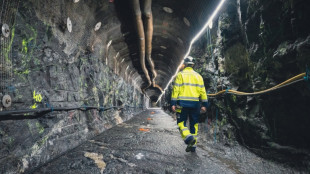 Finland grants licence for world's first nuclear waste repository

 'Old-fashioned' South Africa thump Australia to level Test series

 No more taking out the trash at your Airbnb

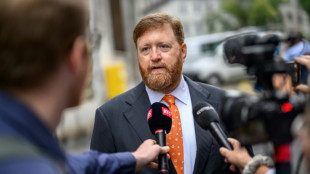 Swiss supreme court upholds Guatemala ex-police chief sentence

 UN climate disaster fund moves to provide $20 mn aid for Nepal

 Africa faces 'complex' Ebola outbreak after spread to Nigeria: WHO

 American detained in Russia arrives in US: lawyer

 Pentagon, Lockheed announce deal for 850 F-35 jets over 10 years

 French authorities seek to ban or curb fresh protests

 Nearly all coral reefs risk collapse in 50 years: IUCN

NEW YORK, NY / ACCESS Newswire / November 21, 2025 / Around the world, nations are discovering that security now has two fronts. The physical front that protects borders, and the institutional front that protects trust. Governments poured resources into the first. The second has been left exposed. Institutions built on access and openness are now confronting threats that move quietly, slowly, and deliberately. They don't break rules. They use them. And that shift has created a global demand for a new kind of defense.
The exact type that SMX (NASDAQ:SMX) provides. Its technology closes the blind spots adversarial actors have exploited for years. The company has long warned that the next wave of security breaches would merge physical infiltration with digital manipulation, and today's patterns confirm that warning with precision.
Notably, these vulnerabilities aren't tied to any one country or ideology. They come from structural weaknesses in open systems built on participation and trust. That trust worked when threats were external, obvious, and easy to isolate. It doesn't hold when influence can hide inside the routines of institutional life. The infiltration of today is about access, not intrusion.
In other words, the compromise can be subtle. It doesn't trigger alarms or violate protocols. It enters through the everyday materials that move through supply chains, slipping in through components, parts, and products that appear routine. Once inside, it blends into operations until familiarity becomes its camouflage. That's the problem.
Most institutions lack the tools to verify where those materials truly originate, how they were handled, or whether they carry hidden vulnerabilities. SMX, now gaining deal traction across continents, is helping companies, institutions, and governments ensure those vulnerabilities never reach the point of catastrophe.
Where Physical Inputs and Digital Systems Converge
That protection starts with the obvious. Every modern threat begins with the physical. Bad actors understand that the easiest path into an institution is not through code or policy, but through the materials used. A single compromised component can enter a factory, a data center, a government lab, or a defense contractor long before cybersecurity systems ever activate. Once inside, that material becomes a trusted object, and trust becomes the attack surface.
From there, infiltration evolves. A corrupted chip can alter data. A counterfeit sensor can distort measurements. A compromised module can open digital pathways that no firewall was built to monitor. Physical infiltration becomes digital influence, and digital influence becomes institutional vulnerability. The chain starts with materials and ends with systems that no longer know what to trust.
This merger of physical access and digital impact is the defining threat of the modern era. It's not dramatic. It's procedural. It uses supply-chain familiarity to validate inputs, and those inputs to manipulate downstream information and operations. To truly be secured, that chain must be fortified at every link. SMX provides the technology to do that.
The SMX System is Built for Both Dimensions of Modern Security
SMX secures the physical world by giving materials, documents, and products a molecular identity. It embeds memory and provenance into the item itself. It can be gold, rubber, liquids, or textiles. Virtually any material can benefit. Once embedded, tampering becomes impossible to hide. Counterfeits become easy to expose. Origins remain inseparable from the objects they belong to.
This has always been SMX's foundation, and as new threats emerge, its technology is showing it can be an essential part of global stability protocols. No, SMX cannot control what people think. But it can eliminate the deception that enables influence. It verifies the provenance of the materials, credentials, and hardware entering a system, making manipulation transparent and infiltration visible. That is how it defends. And by securing every link in the chain, that capability becomes the impenetrable piece of the arsenal that protects both critical assets and the people who depend on them.
About SMX
As global businesses face new and complex challenges related to carbon neutrality and meeting governmental and regional regulations and standards, SMX can offer players along the value chain access to its marking, tracking, measurement, and digital platform technology to transition more successfully to a low-carbon economy.
Forward-Looking Statements
This editorial contains forward-looking statements that involve significant risks and uncertainties. These statements reflect current views regarding the potential use of SMX technology to enhance institutional integrity, strengthen verification systems, and reduce the risk of infiltration by bad actors or nefarious networks. Forward-looking statements include, but are not limited to, statements regarding anticipated improvements in institutional security, the possible adoption of molecular-level verification, the ability of SMX systems to protect credentials, documents, or access pathways, and the broader market or regulatory conditions that may influence demand for such solutions. These statements are based on assumptions that may prove inaccurate and are subject to factors that are difficult to predict. Actual results may differ materially from those expressed or implied due to a range of uncertainties, including changes in government policy, evolving threat landscapes, institutional readiness, regulatory considerations, funding cycles, technological constraints, and other risks detailed in SMX's filings with the Securities and Exchange Commission.
Forward-looking statements speak only as of the date of this editorial. Readers should not place undue reliance on them. SMX undertakes no obligation to update or revise any forward-looking statements to reflect new information, future events, or changes in circumstances except as required by law. The purpose of this content is to explore potential applications of verification technologies within institutional environments. Nothing in this editorial should be interpreted as a guarantee of future performance or a prediction of specific security outcomes.
EMAIL: [email protected]
SOURCE: SMX (Security Matters) Public Limited
View the original press release on ACCESS Newswire
H.Gonzales--AT