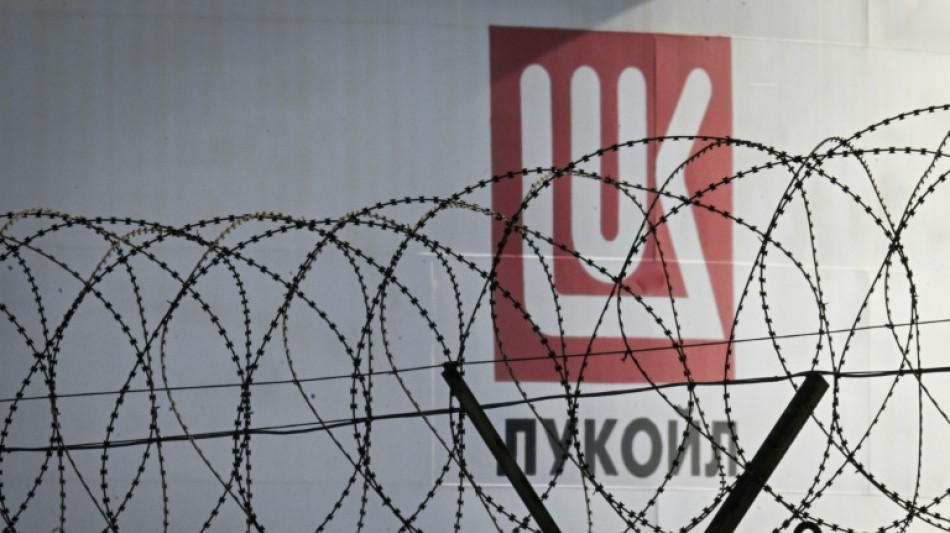
How US sanctions on Russia's Lukoil hit Bulgaria's largest refinery / Photo: Nikolay DOYCHINOV - AFP

 Trump slams NBA's LeBron James for national anthem actions

 Australia sanctions North Koreans over 'fraudulent' IT work, cybercrime
 UK singer-songwriter Raye wins Mercury Prize for second album
 Antonelli needs ‘perfect weekend’ to realise title dream
 Reclaiming the walls in a former Salvadoran gang hotspot

 Musk wants to merge SpaceX and Tesla: Here's what to know
 Musk's wants to merge SpaceX and Tesla: Here's what to know
 Hashimoto sweeps to gymnastics world all-around title
 Super Bowl MVP Walker returns to Seattle with unbeaten Chiefs

 Red Bull advisor Marko slams Horner memoir as 'collection of untruths'

 France reports first human Shamonda virus case, says no health risk

 Rekindled Gucci desirability fails to light flame under Kering sales
 Thousands rally as Serbia heads to pivotal poll

 Marathon star Aga banned six years for doping and misleading investigation

 USA to host women's football Club World Cup in 2028 - FIFA

 Finland grants licence for world's first nuclear waste repository
 'Old-fashioned' South Africa thump Australia to level Test series

 No more taking out the trash at your Airbnb

 Swiss supreme court upholds Guatemala ex-police chief sentence

 UN climate disaster fund moves to provide $20 mn aid for Nepal
 Africa faces 'complex' Ebola outbreak after spread to Nigeria: WHO
 American detained in Russia arrives in US: lawyer
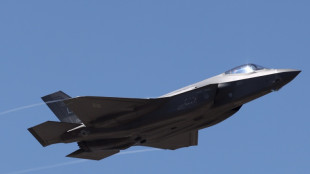 Pentagon, Lockheed announce deal for 850 F-35 jets over 10 years

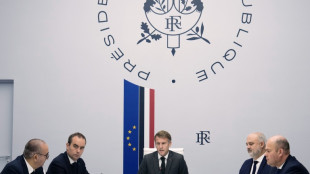 French authorities seek to ban or curb fresh protests

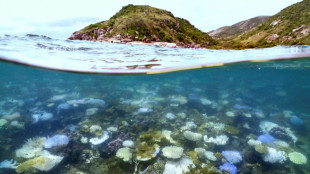 Nearly all coral reefs risk collapse in 50 years: IUCN
By taking over the Balkan's largest refinery from Lukoil, Bulgaria has for now avoided punishing US sanctions against the Russian oil giant, which enter into force on Friday.
But what comes next for the crucial refinery on the outskirts of Bulgaria's Black Sea city of Burgas is uncertain.
- Why has Sofia stepped in? -
On October 22, Washington announced it would impose sanctions on Russian oil giants Rosneft and Lukoil to stifle the financing of Russia's invasion of Ukraine that started in 2022.
Among European Union members, Bulgaria took the hardest hit from the measure as it hosts Lukoil's largest refinery in the Balkans. Lukoil has owned the Neftochim plant since 1999.
Bulgarian authorities said the US sanctions would effectively shut the refinery down as all business partners have refused to pay companies sheltered by Lukoil.
In a move aimed at preventing such an outcome, Bulgaria's parliament on November 7 adopted legal changes to place all Lukoil assets in the country under state control.
Last week, the government named senior government official Rumen Spetsov, who was the National Revenue Agency director and is also a former bodybuilding champion, to take control of the refinery.
Just after that, the US Treasury Department issued a license authorising transactions involving certain Lukoil entities in Bulgaria -- including the refinery -- until April 29 next year.
- Why does the refinery matter? -
The Burgas refinery plays a key economic role for Bulgaria. It is the largest company in the poorest EU member with turnover of 4.68 billion euros ($5.39 billion) in 2024.
Lukoil is the dominant force in Bulgaria's wholesale fuel market as well as in sales to end-customers owing to its large network of petrol stations.
Its presence in Bulgaria made it "a key part of Russian influence", said Martin Vladimirov, an expert at the Sofia-based think-tank CSD.
But Lukoil's importance goes well beyond Bulgaria's borders, he added, describing the company as "effectively a market maker for the whole of southeast Europe".
"It is no coincidence that fuel prices in Romania are rising, as the refinery in Bulgaria plays a key role in supplying the Romanian market," Vladimirov told AFP.
And "Romania is a major distribution hub for the region -– Ukraine, Moldova, Hungary, Austria," he added.
- What's next? -
Bulgaria has given free rein to administrator Spetsov to sell the refinery with the government's consent.
The US has set a December 13 deadline to find a buyer, with the potential contract subject to Washington's approval.
"The situation is stable for the moment" in terms of supply, Vladimirov said.
But for its part, Lukoil on Wednesday called on Bulgarian authorities not to interfere with its efforts to sell its assets in the country, warning it "reserves the right to seek judicial remedies to protect its rights and legitimate interests".
Lukoil's parent company sheltering its foreign units is based in Vienna, and if Lukoil decides to sell it, Sofia would lose control over the refinery, said a Bulgarian government source.
In late October, Lukoil said it had accepted an offer from Geneva-based oil trading group Gunvor, which Washington has described as "the Kremlin's puppet".
The bid was then pulled back immediately.
O.Gutierrez--AT