
Taxes, labor laws, pensions: what Milei wants to do next / Photo: Luis ROBAYO - AFP

 Thousands rally for Lula and Bolsonaro on eve of tight Brazil vote

 Red-hot Fuellkrug bags Bremen brace, Leipzig win

 Thousands gather at new Albanian anti-government rally
 French police fire tear gas during fresh protests

 Suspect detained after fire wrecks Hitler's mountain retreat
 Alexander Skarsgard and his viral 'Wicker' transformation

 Thousands protest in Turkey over journalists' arrests, media shutdowns
 Man City beaten by Aston Villa to end perfect Premier League start

 Luis Enrique says PSG unbothered by Lyon match switch
 US gymnast Richard wins floor exercise gold at worlds
 Moltzan upstages Shiffrin to win season-opening World Cup giant slalom
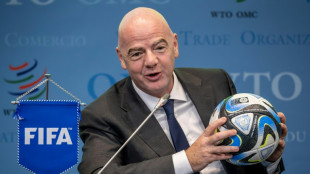 Infantino says backed by 'vast majority' in bid for re-election

 Police fire tear gas as new French protests kick off

 Police fire tear gas as new French demonstrations kick off

 Tropical Storm Champi nears China after battering Taiwan, Japan

 'Weeks, not days' in Kompany recovery, say Bayern

 Unfair to compare us to Barca: Real Madrid's Mourinho

 North Korea's Kim makes unannounced visit to Chinese border city

 Fire breaks out at Hitler's mountain retreat, suspect arrested
 Marc Marquez wins Australian sprint as Martin crashes out
 North Korea's Kim calls for training world's 'strongest' military

 Brewers edge Rays to capture World Series opener

 France to deploy 70,000 police for fresh weekend protests

 Tatum delivers as Celtics down winless Knicks
 Romantasy fans ready for sleepless night as 'Court of Thorns and Roses' returns

Boosted by his victory in mid-term elections, Argentina's libertarian President Javier Milei is preparing to forge ahead with a second wave of reforms, targeting the labor market, taxation system and, down the line, pensions.
But this time the abrasive right-winger, who in the past dismissed his opponents as "rats" and "traitors," is showing signs of being more open to dialogue.
- 'Most reformist Congress' -
His small La Libertad Avanza (LLA) party more than tripled its parliamentary seat tally in Sunday's mid-terms.
While it is still in a minority, LLA and its center-right ally, the PRO party of former president Mauricio Macri, will have a combined 107 seats in the new-look Chamber of Deputies, out of a total 257.
In the Senate, they will have 24 seats out of 72.
Milei has happily proclaimed that the new Congress, which will sit for the first time on December 10, will be "the most reformist... in Argentina's history."
- First: lower taxes -
Milei has made simplifying Argentina's byzantine tax code his top priority.
The 55-year-old economist has in the past branded taxes as "theft" and labelled those who stash their money into offshore accounts as "heroes" for managing to "escape the clutches of the State."
To stem tax evasion, he has proposed to lower 20 taxes and expand the tax bases by bringing more workers into the formal economy to share the burden.
To achieve that he proposes lowering employer payroll taxes, so that companies put workers on their books and hire new staff.
- Then: loosen labor laws -
Milei always wants to shake up Argentina's "anachronistic" labor code, "which is over 70 years old and not designed for today's world."
He argues that the current system is driving informality and wants to make it easier to hire and fire staff.
A bill drafted by a pro-Milei MP congresswoman proposes making working hours more flexible -- up to 12 hours a day -- and allowing a percentage of wages to be paid in non-monetary form, such as with food vouchers or coupons.
Milei also wants to end what he calls the "labor litigation industry" by introducing a fixed severance pay system.
The labor ministry has proposed negotiating wage agreements at the company rather than the sectoral level.
Milei says the proposals, which are being pushed by employers, would be a win-win for companies and employees alike.
But Argentina's famously combative unions have so far categorically rejected them.
As part of his triptych of new reforms, Milei has also floated a shake-up of the country's underfunded pension system, without giving details and making clear it would come last of the three.
- Can he do it? -
A more conciliatory Milei has repeated since Sunday that he is prepared to do deals with other parties to get legislation through Congress.
"The challenge facing the government is to build consensus," said Martin Rappallini, president of the Industrial Organization of Argentina.
Economist Pablo Tigani warned however that Milei's electoral honeymoon could be short-lived.
"When they start cutting pensions and rights, coupled with falling wages and a recession, social protests could accelerate and even explode," he told AFP.
B.Torres--AT