
EU mega budget hits immediate German opposition / Photo: DENIS CHARLET - AFP/File

 Tuvalu has 'limited' power to halt its fossil fuel investments: NZ govt papers seen by AFP
 Palestinian activist Khalil returns to Columbia after US detention
 Trump drastically loosens oil and gas methane rules
 French Senate weighs bill to make protesters pay for unrest damage
 'A very sad day': Arteta despair as Arsenal stunned by Fleetwood

 Charles tackles thorny legacy of slavery on Caribbean trip

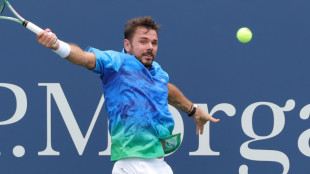 Former Grand Slam winner Wawrinka ends tennis career

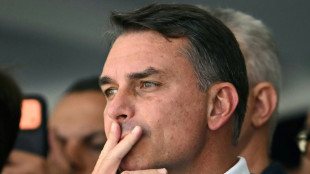 Brazil's Flavio Bolsonaro flees to US after election loss
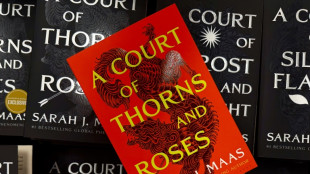 'Faerie' nights: 'ACOTAR' fans finally get their book
 American woman convicted of getting military training from Islamic State
 Israel opposition holds narrow edge over Netanyahu in first projections

 Floriani hits maiden goal as Lazio go top

 Trump set to drastically loosen oil and gas sector's methane rules
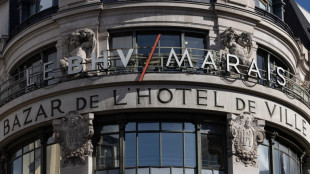 Storied Paris department store seeks bankruptcy protection
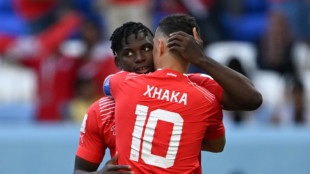 Xhaka, Embolo can return to Swiss squad after fake Covid docs affair
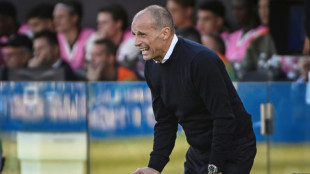 Allegri suspended for two Serie A games after red card
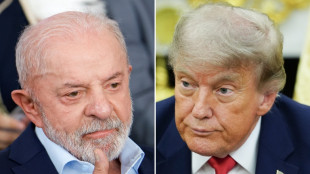
 Flight data, satellite images reveal growing US role at Ecuador base
 McInnes feels 'guilt' ahead of Hearts return with Rangers

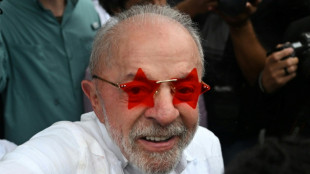 Brazil's Lula turns 81, vows to work '24 hours a day'
 Boeing releases cautious growth plan as shares fall sharply

 Exiled Russian dissident Navalnaya warns dictators becoming 'more cunning'
 Bayern 'risk' reaps huge reward for Ballon d'Or winner Kane
 Record turnout as Israeli voters deliver verdict on Netanyahu
 Iraola says Isak 'feels the trust' after Liverpool scoring streak

 French media protest manhandling of journalists at far-right party rally

The European Union executive on Wednesday proposed a two-trillion-euro long-term budget focused on tackling overseas competition and Russian aggression, but it was quickly shot down by Germany, the bloc's largest member.
Germany said it was "unable to accept" the $2.3-trillion budget for 2028-2034, which EU chief Ursula von der Leyen called "the most ambitious ever proposed". Farm unions also quickly came out against proposed reforms to the blocs huge agriculture subsidies.
The plan seeks to bolster Europe's security and ramp up competitiveness, against a backdrop of soaring trade tensions with the United States, while paying off debts from a massive Covid-era loan.
The European Commission put 451 billion euros on the table under a broad "competitiveness" tag that encompasses defence and space -- together allocated 131 billion euros, a five-fold increase.
The budget earmarks up to 100 billion euros for the reconstruction of war-torn Ukraine -- as well as substantial new "flexibility" funds kept available in event of crises.
But German government spokesman Stefan Kornelius said in a statement that "a comprehensive increase in the EU budget is not acceptable at a time when all member states are making considerable efforts to consolidate their national budgets."
Germany also opposed the commission call to make companies with a turnover of more than 100 million euros pay more tax.
While Germany says the budget is too large, many EU lawmakers accuse it of not leaving sufficient funds for priorities such as climate adaptation and the agriculture subsidies that make up the biggest share of the budget.
Budget commissioner Piotr Serafin said under the commission's plans, 300 billion euros would remain to support farmers -- against around 387 billion euros, of which 270 billion in direct payouts, under the current seven-year budget.
- 'Black Wednesday for farmers' -
Brussels says there would be an overhaul of the Common Agricultural Policy (CAP) subsidies -- with some funding moved to other budget columns.
But the future of the CAP is headed for a fight, with farmers warning against cuts to their slice of the EU pie -- and marching Wednesday in Brussels to show their resolve.
Hundreds of European farmers joined a protest outside the commission building in Brussels organised by a pan-European agriculture lobby group, Copa-Cogeca.
The group described it as a "Black Wednesday" for farmers, accusing Brussels of seeking to "dismantle the 'common' nature of the CAP through concealed budget cuts".
The warning raised the spectre of another confrontation after last year's protests across Europe by farmers upset at cheap imports, low margins and the burden of environmental rules.
Hungary, a staunch critic of Brussels and Russia's closest ally in Europe, meanwhile tapped into the rural anger ahead of the plan's release -- while slamming the money for Kyiv.
"Ukraine would get a massive funding boost, while European farmers lose out," Hungarian Prime Minister Viktor Orban said.
- Battle lines drawn -
The announcement sets the stage for two years of fraught negotiations between the European Parliament and 27 member states.
Already stretched thin, some states, such as Germany, are unwilling to contribute more to the common pot.
Unlike in the previous budget, the EU has debts due from the Covid pandemic, when states teamed up to borrow 800 billion euros to support the bloc's economy. These are estimated to cost 25-30 billion euros a year from 2028.
The previous 2021-2027 budget was worth around 1.2 trillion euros and made up from national contributions and money collected by the EU such as customs duties.
National contributions will grow slightly, from 1.13 percent of member states' gross national income to 1.15 percent plus 0.11 percent devoted to repaying the Covid loan.
The commission will also seek to raise about 58 billion euros a year collecting money directly through five instruments, including its carbon border tax and a levy on electronic waste.
Member states gave a sneak peek at the fights to come.
France's Europe minister Benjamin Haddad hailed the commission's "ambition" but Dutch finance minister Eelco Heinen -- representing one of the frugal states -- said the proposed budget was "too high".
Members of the EU parliament, however, made it clear the budget was not enough in their view.
"However you try to package this, what we have is a real-terms investment and spending freeze," said a joint statement from the EU lawmakers tasked with steering the budget through parliament.
P.A.Mendoza--AT