
Science Center for Marine Fisheries Approves Additional $218,000 in Finfish and Shellfish Research

 Trump tamed after US midterms? Europe doubts it

 Tech stocks soar as SK hynix adds to rising AI confidence

 Sri Lanka's Tamil farmers fight to reclaim land after civil war

 Afghans compete for jobs, homes as millions return

 'They don't care about us': Trump food aid cuts leave Americans struggling and angry

 Meta, Snap head to trial in another case about social media's harms

 French Senate passes bill to make protesters pay for unrest damage

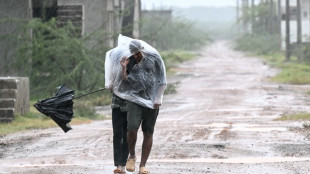 India evacuates tens of thousands as Cyclone Arnab makes landfall

 In tight Israel vote, both camps hold out cautious hope

 AI chip giant SK hynix says quarterly operating profit soars 630%

 Youths testify about 'despair' in unprecedented Canadian climate trial

 Syria, Jordan agree to mend ties after deadly strike

 Arsenal stunned by fourth-tier Fleetwood in League Cup

 Last-gasp Sabitzer strike sends Dortmund past Bremen in German Cup

 Rights groups reject Emirati diplomat for UN top job

 Flavio Bolsonaro headed to US after Brazil election defeat: US media

 Alcaraz and Zverev win Vienna openers

 Tech firms gain ahead of Fed decision, results from AI giants

 Syria condemns deadly Jordan strikes as 'unacceptable violation'

 England's Fin Smith in race against time to face Australia

 UN nuclear watchdog chief urges Iran to grant access

 Boeing shares tumble after it releases cautious growth forecast

 Lula's re-election revives Brazil-US tensions

 Carney moves to remake Canada alliances as US ties strained

 Serbia's students demand state media chiefs resign after poll win

OCEAN SPRINGS, MS / ACCESS Newswire / July 14, 2025 / At its annual spring meeting, the Science Center for Marine Fisheries (SCEMFIS) approved $218,531 in funding for new finfish and shellfish research projects. These new projects are in addition to the $277,000 in research funding that the Center approved at the start of the year and continue the Center's commitment to identifying and supporting groundbreaking finfish and shellfish research.
SCEMFIS, part of the National Science Foundation's Industry/University Cooperative Research Center program, is a collaborative project between the fishing industry and leading finfish and shellfish researchers. The projects funded by SCEMFIS at their biannual meetings have been identified by the Center's fishing industry partners as improving both our understanding of these species, and the sustainable management of the fisheries that depend on them.
Additional projects funded for 2025 include developing new ways to model and predict the varying growth of surfclam populations; improving the current assessment model used for shortfin squid; using computer modeling to more quickly and efficiently age surfclams; providing a complete picture of the mineral and nutritional profile of Atlantic surfclams and ocean quahogs; and determining to what extent predator and prey species abundance affect each other in the Gulf of America.
The following new research projects were funded by SCEMFIS:
Development of a model for the prediction of the temporal and geographic variability in Atlantic surfclam growth:
Atlantic surfclams vary greatly in size across regions and over time. This variability has traditionally presented challenges for fisheries management, which imposes size-based fishing limits to control harvests. As a result, being able to predict this variability more accurately has been identified as one of the best ways to improve surfclam management. This project, by Dr. Eric Powell of the University of Southern Mississippi, will build on previously funded SCEMFIS surfclam projects that studied surf clam growth; the project will use temperature and other data that strongly correlate with surfclam growth, combined with other growth data, as part of a model that will be used to estimate growth rates across regions. ($48,890 in funding)
Advancement of a new approach for assessing shortfin squid:
Shortfin squid is a commercially important fish stock that supports a critical fishery. Despite this, there has not been a stock assessment of the species that has passed peer review. Fisheries managers have had a difficult time determining the stock status due to an inability to estimate factors such as fishing mortality, biomass, and ecological reference points. This project, from Drs. Michael Wilberg and Geneviève Nesslage of the University of Maryland Center for Environmental Science, will analyze and refine available shortfin squid data that has been collected from fishery and non-fishery sources, and examine factors such as life history, catch distribution, and catch per unit of effort. The refined data will be prepared for use in the model eventually used for the shortfin squid assessment. ($55,629 in funding)
Employing computer vision in clam age estimation:
SCEMFIS has supported several significant shellfish research projects, particularly projects that have provided better understanding of the age structure of ocean quahog. These projects have helped improve the management of the fishery and confirmed the overall sustainability of the resource. In advance of the upcoming stock assessment, a representative sample of 800 quahogs will need to be aged for use in the assessment model. Traditionally a time- and labor-intensive task, this project, from Drs. Roger Mann and Miranda Lv at the Virginia Institute for Marine Sciences, will use a computer vision model to more quickly and accurately age shellfish samples of both surfclams and ocean quahogs. The model will be trained on existing images of already-aged clams, which will then be used in an algorithm to age future shellfish samples. ($27,869 in funding)
Comprehensive Analysis of Iodine and Essential Mineral Content in Mid-Atlantic Clam Products:
This project, conducted by Dr. Stella Volpe of Virginia Tech, will conduct an essential mineral content analysis of Atlantic surfclams and ocean quahogs, building a nutritional profile of minerals such as iodine, zinc, selenium, copper, iron, and magnesium. This is important both to promote the nutritional value of surfclams and quahogs, and because these minerals are often lacking in the average American diet, with some groups, like pregnant women, at particular risk for deficiencies such as iodine. The project will collect representative samples of Atlantic surfclams and ocean quahogs from across the Atlantic coast, categorize them according to factors such as origins, size, and other variables, and use mass spectrometry to get a full breakdown of the mineral profile of the samples. ($45,000 in funding)
Data-driven inference of population dynamics of recreationally-targeted stocks in the GOA:
The populations of both predator and prey species are influenced by the extent and the dynamics of how they interact. This project, from Dr. Robert Leaf at the University of Southern Mississippi, will develop a model to determine to what extent prey abundance is responsible for predator abundance in the northern portion of the Gulf of America. The model will focus specifically on the dynamics between commercially important predator and prey species, such as red drum, spotted sea trout, and Gulf menhaden. The model will include environmental and biological data, and will analyze variables such as harvest levels, the relative abundance of each species, weight, and other environmental factors in determining the extent of the relationship between the predator and prey species. ($41,143 in funding)
About SCEMFIS
SCEMFIS utilizes academic and fisheries resources to address urgent scientific problems limiting sustainable fisheries. SCEMFIS develops methods, analytical and survey tools, datasets, and analytical approaches to improve sustainability of fisheries and reduce uncertainty in biomass estimates. SCEMFIS university partners, University of Southern Mississippi (lead institution), and Virginia Institute of Marine Science, College of William and Mary, are the academic sites. Collaborating scientists who provide specific expertise in finfish, shellfish, and marine mammal research, come from a wide range of academic institutions including Old Dominion University, Rutgers University, University of Massachusetts-Dartmouth, University of Maryland, and University of Rhode Island.
The need for the diverse services that SCEMFIS can provide to industry continues to grow, which has prompted a steady increase in the number of fishing industry partners. These services include immediate access to science expertise for stock assessment issues, rapid response to research priorities, and representation on stock assessment working groups. Targeted research leads to improvements in data collection, survey design, analytical tools, assessment models, and other needs to reduce uncertainty in stock status and improve reference point goals.
PRESS CONTACT:
Stove Boat Communications
202-595-1212
[email protected]
SOURCE: Science Center for Marine Fisheries
View the original press release on ACCESS Newswire
R.Chavez--AT