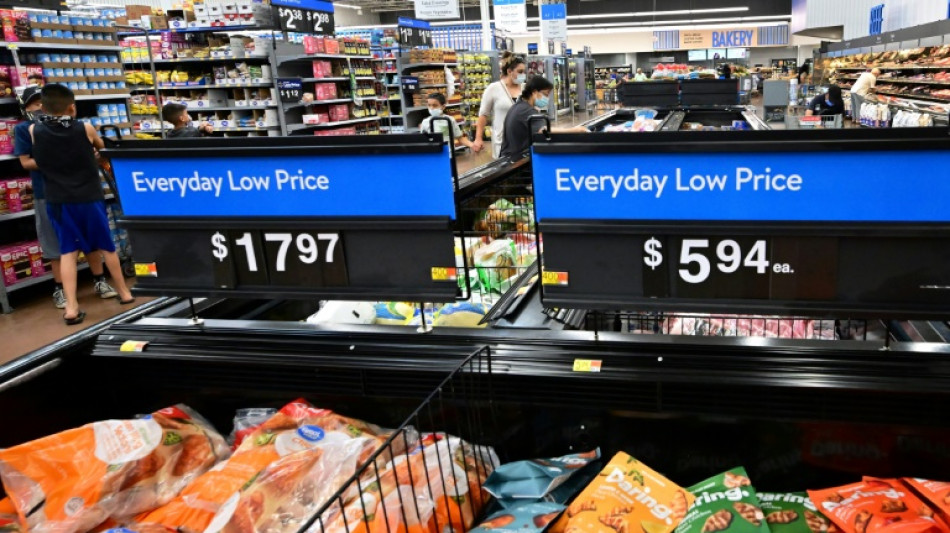
How long will it take to get over the inflation hump? / Photo: Frederic J. BROWN - AFP

 China-Nepal flood toll tops 1,000 as tunnel rescue offers last hope

 Japan to relax overtime regulation under workaholic PM
 Thwarted Niger mutiny exposes junta's Russia dependence
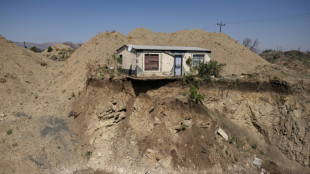 Illegal mining ravages S.Africa's economic hub
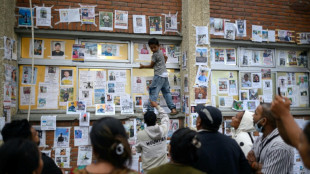 Nepal's wall of missing offers last hope after Himalayan flood

 US to press G20 on light-touch AI regulation

 2 die in Grand Canyon flash flood, only 1 person unaccounted for
 US Army Secretary Driscoll submits resignation: White House
 Oil extends gains, stocks drop as Trump issues fresh Iran warning

 Tsitsipas says Kyrgios's positive cocaine test 'kind of expected'

 In Japan's mountains, a different way to manage bears

 Middle East war a boon for UAE defence giant with global ambitions
 Former gang member found guilty of murdering Tupac Shakur

 InterContinental Hotels Group PLC Announces Transaction in Own Shares - September 01

 Connecting Excellence Group PLC Announces First Acquisition Heads of Terms & Trading Update

 Heavy rain at Grand Canyon after flood kills 2, dozen missing

 Kushner blames soccer power struggle for World Cup plan collapse

 Buoyant Alcaraz shakes off nerves to advance at US Open

 US draws European pushback with Russia G20 finance invite

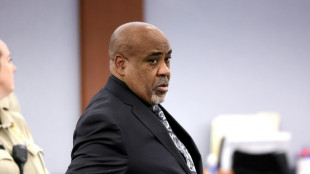 Jury begins deliberations in Tupac Shakur murder trial

 US Supreme Court allows Trump ballroom project to proceed

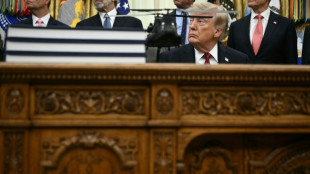 Trump says US reviewing position on Falkland Islands

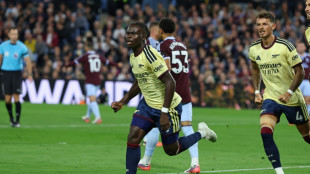 Saka strikes as flawless Arsenal punish troubled Villa
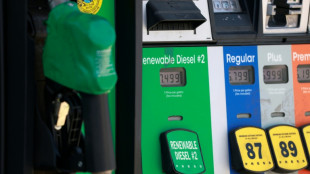 Oil prices surge on renewed fighting in US-Iran war

 Cycling superstar Pogacar has surgery after Vuelta crash
Inflation has surged back to levels not seen in many developed economies since the 1970s and 1980s. Economists and central bankers at the European Cental Bank's conference in Portugal warn it will take time before price rises cool.
- How did we get here? -
For the ECB, established in 1998 to oversee the European single currency, the burst of inflation is without precedent.
"The current levels of food and industrial goods inflation have not been seen since the mid-1980s," ECB President Christine Lagarde said in her remarks at the conference on Tuesday.
Likewise, the "increase in the relative price of energy in recent months is much higher than the individual spikes that occurred in the 1970s" during the oil shock, Lagarde said.
The take-off in inflation, over eight percent in the eurozone in May, was at the end of a "a sequence that happens in a chaotic world", Richard Baldwin, an economics professor at the Graduate Institute of Geneva, told AFP.
The supply shock caused by the the outbreak of the coronavirus pandemic in 2020 had been followed by a "demand twist" where people used their money more on goods, Baldwin said.
Instead of seeing this fading, the Russian invasion in Ukraine is causing "a huge spike in fuel and food prices" and heaping pressure on inflation, he said.
But it is not just energy. As health restrictions fall away, consumers are turning back to services, while the pent-up demand for tourism is being released, Lagarde noted.
"There is no playbook for this inflation," said economist Baldwin.
- How long will it stay like this? -
With no end in sight for the war in Ukraine, the disruptions caused to the supply of energy could keep prices high for some time to come.
Domestic factors could also prop up high inflation rates, with workers demanding higher and higher compensation to make up for the rising cost of living.
Adding to the pressure are low unemployment rates, handing more leverage to workers looking for pay rises.
- What can central banks do? -
The message put out by central banks is one of their most powerful tools to calm markets and control prices.
But the task at hand "has become quite difficult in view of high inflation numbers" and as "people feel high inflation every day when they're buying food or going to the gas station", Isabel Schnabel, a member of the ECB's executive board, told AFP.
"We can do little about current inflation, but we will take decisive measures so that inflation returns to our (two-percent) target over the medium term," Schnabel said.
"Once inflation is there and it starts to increase the expectations and wages, monetary policy should act," Sebnem Kalemli-Ozcan, an economic professor at the University of Maryland, told AFP.
That is what the ECB has planned to do, announcing an interest rate hike for July, its first in over a decade. But the Frankfurt-based institution has to be careful not to completely choke off sputtering growth.
"The question is not if the prices will go down after some time, but what will happen to growth," Kalemli-Ozcan said.
That is why comparisons are being made with the 1970s and the "stagflation type of situation" where inflation persisted while growth rates faltered, she said. "In Europe there is a risk of stagflation."
E.Flores--AT