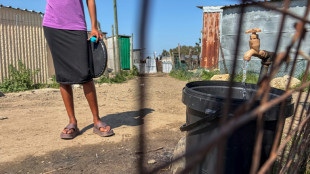
Israel's Bedouin communities use solar energy to stake claim to land / Photo: Menahem Kahana - AFP

 Syria reopens Jordan border crossing after mending ties

 Cyclone Arnab lashes India coast, no deaths reported

 Trump tamed after US midterms? Europe doubts it

 Tech stocks soar as SK hynix adds to rising AI confidence

 Sri Lanka's Tamil farmers fight to reclaim land after civil war

 Afghans compete for jobs, homes as millions return
 'They don't care about us': Trump food aid cuts leave Americans struggling and angry

 Meta, Snap head to trial in another case about social media's harms

 French Senate passes bill to make protesters pay for unrest damage
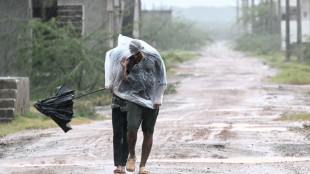 India evacuates tens of thousands as Cyclone Arnab makes landfall
 In tight Israel vote, both camps hold out cautious hope
 AI chip giant SK hynix says quarterly operating profit soars 630%

 Youths testify about 'despair' in unprecedented Canadian climate trial

 'A very sad day': Arteta despair as Arsenal stunned by Fleetwood
 Charles tackles thorny legacy of slavery on Caribbean trip

 Former Grand Slam winner Wawrinka ends tennis career

 Brazil's Flavio Bolsonaro flees to US after election loss
 'Faerie' nights: 'ACOTAR' fans finally get their book

 American woman convicted of getting military training from Islamic State

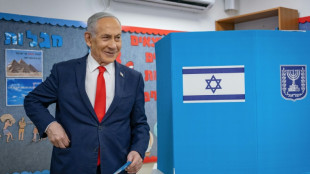 Israel opposition holds narrow edge over Netanyahu in first projections

 Floriani hits maiden goal as Lazio go top
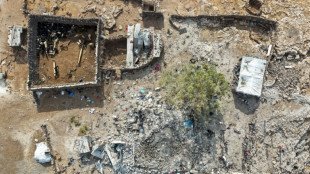
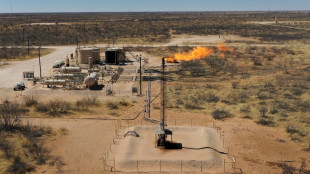
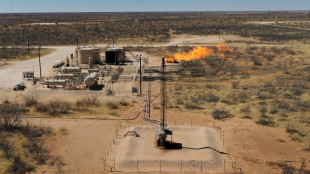 Trump set to drastically loosen oil and gas sector's methane rules

 Storied Paris department store seeks bankruptcy protection
 Xhaka, Embolo can return to Swiss squad after fake Covid docs affair
 Allegri suspended for two Serie A games after red card

At the end of a dusty road in southern Israel, beyond a Bedouin village of unfinished houses and the shiny dome of a mosque, a field of solar panels gleams in the hot desert sun.
Tirabin al-Sana in Israel's Negev desert is the home of the Tirabin (also spelled Tarabin) Bedouin tribe, who signed a contract with an Israeli solar energy company to build the installation.
The deal has helped provide jobs for the community as well as promote cleaner, cheaper energy for the country, as the power produced is pumped into the national grid.
Earlier this month, the Al-Ghanami family in the town of Abu Krinat a little further south inaugurated a similar field of solar panels.
Bedouin families have for years tried and failed to hold on to their lands, coming up against right-wing groups and hardline government officials.
Demolition orders issued by Israeli authorities plague Bedouin villages, threatening the traditionally semi-nomadic communities with forced eviction.
But Yosef Abramowitz, co-chair of the non-profit organisation Shamsuna, said solar field projects help them to stake a more definitive claim.
"It secures their land rights forever," he told AFP.
"It's the only way to settle the Bedouin land issue and secure 100 percent renewable energy," he added, calling it a "win, win".
For the solar panels to be built, the land must be registered as part of the Bedouin village, strengthening their claim over it.
- Land recognition -
Roughly 300,000 Bedouins live in the Negev desert, half of them in places such as Tirabin al-Sana, including some 110,000 who reside in villages not officially recognised by the government.
Villages that are not formally recognised are fighting the biggest battle to stay on the land.
Far-right groups, some backed by the current government of Prime Minister Benjamin Netanyahu, have stepped up efforts in the past two years to drive these families away.
A sharp increase in home demolitions has left the communities vulnerable and whole families without a roof over their heads.
"Since 2023, more than 8,500 buildings have been demolished in these unrecognised villages," Marwan Abu Frieh, from the legal aid organisation Adalah, told AFP at a recent protest in Beersheva, the largest city in the Negev.
"Within these villages, thousands of families are now living out in the open, an escalation the Negev has not witnessed in perhaps the last two decades."
Tribes just want to "live in peace and dignity", following their distinct customs and traditions, he said.
Gil Yasur, who also works with Shamsuna developing critical infrastructure in Bedouin villages, said land claims issues were common among Bedouins across the Negev.
Families who include a solar project on their land, however, stand a better chance of securing it, he added.
"Then everyone will benefit -- the landowners, the country, the Negev," he said. "This is the best way to move forward to a green economy."
- Positive energy -
In Um Batin, a recognised village, residents are using solar energy in a different way –- to power a local kindergarten all year round.
Until last year, the village relied on power from a diesel generator that polluted the air and the ground where the children played.
Now, a hulking solar panel shields the children from the sun as its surface sucks up the powerful rays, keeping the kindergarten in full working order.
"It was not clean or comfortable here before," said Nama Abu Kaf, who works in the kindergarten.
"Now we have air conditioning and a projector so the children can watch television."
Hani al-Hawashleh, who oversees the project on behalf of Shamsuna, said the solar energy initiative for schools and kindergartens was "very positive".
"Without power you can't use all kinds of equipment such as projectors, lights in the classrooms and, on the other hand, it saves costs and uses clean energy," he said.
The projects are part of a pilot scheme run by Shamsuna.
Asked if there was interest in expanding to other educational institutions that rely on polluting generators, he said there were challenges and bureaucracy but he hoped to see more.
"We need people to collaborate with us to move this forward," he said, adding that he would "love to see a solar energy system in every village".
A.Anderson--AT