German budget plans outline vast spending - and record debt / Photo: Tobias Schwarz - AFP

 Bolsonaro's escape to the US: How it happened

 Russell calls on Scotland to 'kick on' and beat big teams

 Airbus aims for record deliveries despite disappointing quarter
 Cuba wins UN vote against US embargo with weakest backing in 30 years

 Real Madrid, La Liga apology over Mbappe shows power of Chinese market
 From Gaza to Ramallah, Palestinians see little hope in Israeli vote
 US labor leader Dolores Huerta dead: family

 Investors turn cautious ahead of tech results, Fed update on rates

 'Cruise for life' strands passengers in Cambodia as operator goes bust
 Bolsonaro flees Brazil for US after election defeat

 A throne on wheels, popemobiles star in new Vatican show

 Spain high-speed train crash kills 68, injures over 100

 UK woman drugged by husband tells rape trial she woke up bound

 Clean-up starts as Serbian students movement prepares to govern

 Flavio Bolsonaro: right-wing heir falls from presidential hopeful to exile
 UK budget lifts bank tax to offset surging energy bills

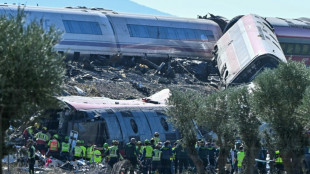 Spain high-speed train collision kills 64, injures over 100

 Brazil's Bolsonaro lands in Florida after election defeat: AFP

 Russia woos African leaders at Moscow summit

 Local ceasefire in Russia-occupied Ukrainian city holds for second day

 Odegaard urges Arsenal to move on after Fleetwood upset

 Japan, Germany leaders target closer ties on critical minerals

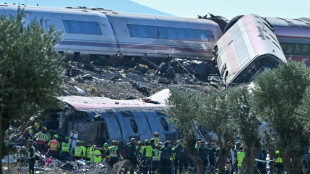 Spain high-speed train collision kills 31, injures 80

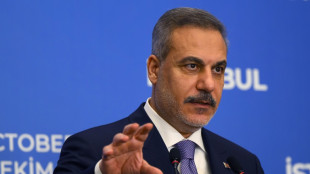 Turkey hosted Libya east-west reunification talks last week

 Spain high-speed train collision kills 30

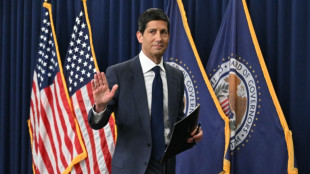
Germany's government pledged Tuesday to make massive new investments by taking on record debt as it presented its budget plans with the aim of reviving the economy and building up the military.
The plans approved by Chancellor Friedrich Merz's cabinet included the 2025 draft budget -- delayed after the previous government collapsed last year -- as well as the outline for public finances until 2029.
The ambitious programme for coming years, to be voted on by parliament in September, marks a break from years of financial austerity pursued by previous German governments and highlights the sweeping fiscal shift set in motion by Merz.
The conservative leader, who took power in May, is betting on taking on vast debts to pull the eurozone's biggest economy out of a long downturn, upgrade creaking infrastructure and improve public services.
"Our primary goal is to boost the economy, to secure jobs in our country and to create new ones," said Finance Minister Lars Klingbeil, presenting the budget plans.
"Our country has been ruined by austerity in many areas -- and the investment backlog is huge."
The budget forecasts agreed on by Merz's CDU/CSU bloc and their coalition partners, the centre-left SPD, outline record spending on the military, roads, railways and hospitals -- as well as unprecedented new borrowing.
The figures are eye-watering: the finance ministry plans to take on some 847 billion euros ($984 billion) in debt over the entire legislative period, divided between the regular budget and "special funds" set up for purposes such as boosting the military and infrastructure.
Spending on the armed forces alone is expected to reach 162 billion euros in 2029, more than triple Germany's defence budget before the war in Ukraine.
Germany is set to reach the new NATO target of spending 3.5 percent of gross domestic product on core military needs in 2029, six years earlier than previously planned.
Under the target, set to be announced at this week's NATO summit, allies will also agree to spend 1.5 percent of GDP on broader security-related items like cybersecurity -- a compromise deal meant to placate US President Donald Trump.
Merz has vowed to build up Europe's "strongest conventional army" in response to the Russian threat amid the Ukraine war as well as concerns about US security commitments to Europe under Trump.
J.Gomez--AT