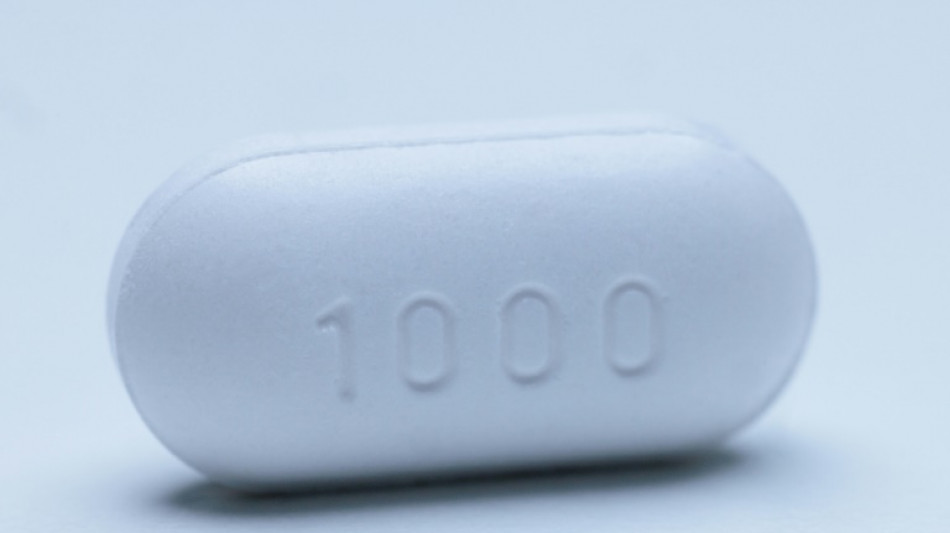
E.coli can turn plastic into painkillers, chemists discover / Photo: JOEL SAGET - AFP/File

 China-Nepal flood toll tops 1,000 as tunnel rescue offers last hope

 Japan to relax overtime regulation under workaholic PM

 Thwarted Niger mutiny exposes junta's Russia dependence

 Illegal mining ravages S.Africa's economic hub

 Nepal's wall of missing offers last hope after Himalayan flood

 US to press G20 on light-touch AI regulation

 2 die in Grand Canyon flash flood, only 1 person unaccounted for

 US Army Secretary Driscoll submits resignation: White House

 Oil extends gains, stocks drop as Trump issues fresh Iran warning

 Tsitsipas says Kyrgios's positive cocaine test 'kind of expected'
 In Japan's mountains, a different way to manage bears

 Middle East war a boon for UAE defence giant with global ambitions

 Former gang member found guilty of murdering Tupac Shakur

 InterContinental Hotels Group PLC Announces Transaction in Own Shares - September 01

 Connecting Excellence Group PLC Announces First Acquisition Heads of Terms & Trading Update

 Heavy rain at Grand Canyon after flood kills 2, dozen missing

 Kushner blames soccer power struggle for World Cup plan collapse

 Buoyant Alcaraz shakes off nerves to advance at US Open

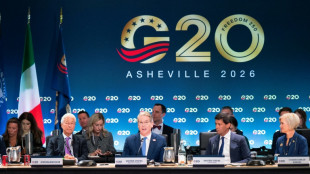 US draws European pushback with Russia G20 finance invite

 Jury begins deliberations in Tupac Shakur murder trial

 US Supreme Court allows Trump ballroom project to proceed

 Trump says US reviewing position on Falkland Islands

 Saka strikes as flawless Arsenal punish troubled Villa

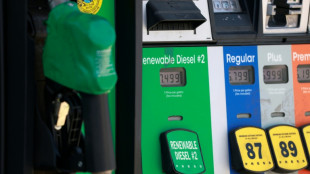 Oil prices surge on renewed fighting in US-Iran war

 Cycling superstar Pogacar has surgery after Vuelta crash

Scientists have found a way to use the bacteria E.Coli to convert plastic waste into a popular painkiller, a study said Monday, though outside experts doubted the technique would make a dent in the fight against plastic pollution.
Paracetamol, which is one of the most commonly used drugs worldwide, is made from the derivatives of fossil fuels, often by Asia-based subcontractors using cheap, polluting methods that contribute to climate change.
The world is also facing an escalating crisis of plastic pollution, with countries set for another bruising round of negotiations in August in the hope of sealing an international treaty to reduce plastic waste.
The British team of researchers behind the new study sought to find a solution to the two problems by roping in a third -- E.coli, which is normally known for making people sick when they eat contaminated food.
First the chemists used a molecule derived from PET plastic, which is used in bottles and many other plastic products the world over, to spark a chemical reaction in a strain of E.coli.
This created a molecule they called PABA, according to the Nature Chemistry study, which was partly funded by drug firm AstraZeneca.
By genetically modifying the bacteria, the chemists were able to transform their molecule into acetaminophen, also known as paracetamol.
"This work demonstrates that PET plastic isn't just waste or a material destined to become more plastic -- it can be transformed by microorganisms into valuable new products, including those with potential for treating disease," lead study Stephen Wallace said in a statement.
Singaporean researchers not involved in the study praised how it combined synthetic and biological chemistry.
But "several practical considerations remain" to take this idea beyond the proof-of-concept stage, they wrote in a linked commentary in the journal Nature Chemistry.
The chemical reaction produces only a limited amount of PABA molecules, which "may be insufficient for industrial applications", they wrote.
Melissa Valliant, communications director of the Beyond Plastics project of Bennington College in the United States, expressed scepticism.
"A new 'plastic-eating bacteria' pops up in the news every few months and has been doing so for years," she told AFP.
"These discoveries never scale up to anything significant enough to tackle the massive plastic pollution problem."
This "crisis needs to be stopped at the source," she added, which means "companies and policymakers must reduce the amount of plastic being produced and used in the first place".
M.White--AT