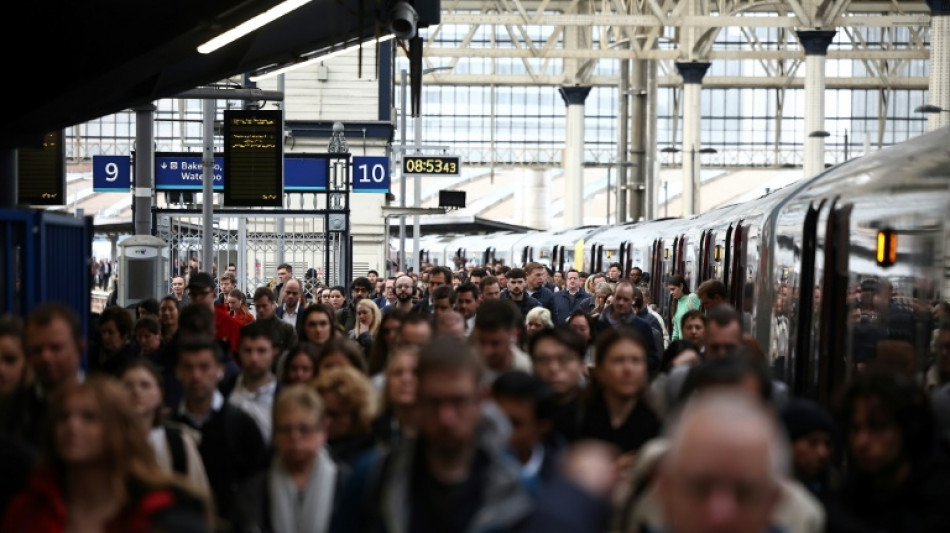
UK renationalises first train operator under Labour reforms / Photo: HENRY NICHOLLS - AFP/File

 From Hollywood to big time tennis: teen makes US Open debut
 Man City secure Premier League record deal to sign Fernandez

 Kaepernick says NFL 'blackballing me' decade after protest

 Atletico loan David from Juve, send Lemar to Elche
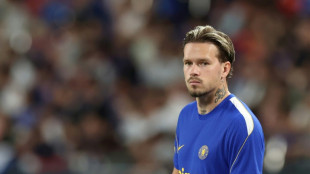
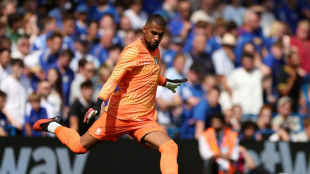 Chelsea 'keeper Sanchez makes deadline-day move to Como
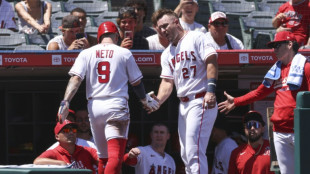 Kroenke to buy baseball's Los Angeles Angels: statement

 US defends Trump's Venezuela oil deal
 OpenAI to launch new model with 'stronger safeguards' after hack
 Fans mourn 'bittersweet' final Ariana Grande gig in London
 Norway's King Haakon VIII swears allegiance to constitution
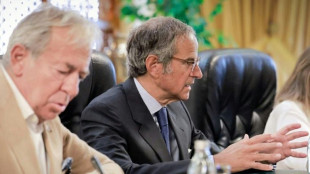 Syria site infrastructure 'consistent with nuclear reactor': IAEA
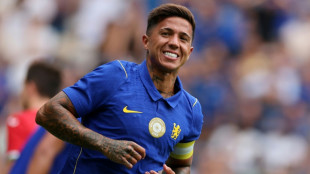
 Juventus sign Woltemade, Sarr on loan from Premier League
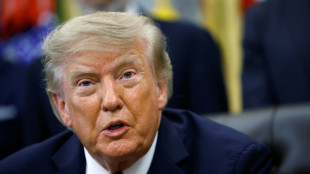 US strikes Iran in latest tit-for-tat attacks
 China's Xi arrives in Egypt as US sanctions threat looms over Iran links
 Car bomb at Colombian police station kills one, injures 11
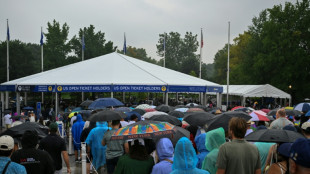 Rain delays start of play on US Open
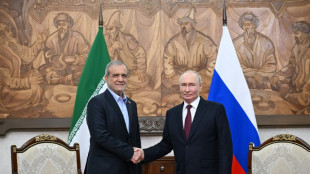
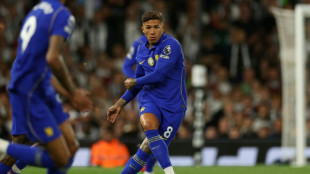 Man City agree blockbuster deal to sign Chelsea star Fernandez: reports
 Alkemya Metacore Secures $50M via Tokenised Equity to Scale Nickel Energy and Security Tech
 Man City chase Fernandez, Arsenal sell Jesus on deadline day

 EU says Russian 'hybrid attacks' won't halt aid to Ukraine
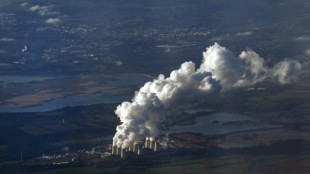 Explosives used in sabotage attack on German power lines
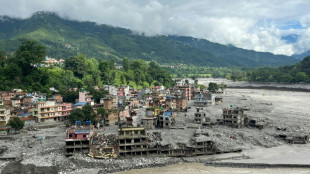 Nepali families hold symbolic funerals for missing after floods
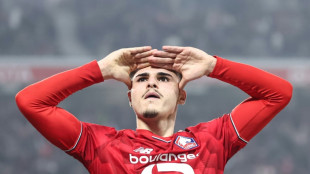 Newcastle sign Lille forward Fernandez-Pardo

 Even at Elysee, phones are handed in, Macron tells French pupils
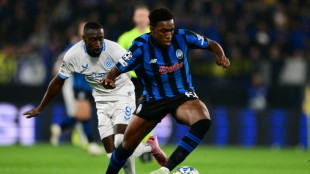 Chelsea agree to sign Atalanta's Ahanor, with Palace loan for this season
A private train operator servicing parts of southern England, including London, on Sunday became the first to be returned to public ownership under a government plan to renationalise Britain's much-maligned railways.
All UK rail operators are due to be renationalised within the next two years in a key policy launched by Prime Minister Keir Starmer following his Labour party's return to government last July after 14 years in opposition.
"South Western Railway is now under public ownership. And this is just the start," Starmer said on X, formerly Twitter, naming the service kickstarting his government's plan.
He vowed the renationalisation "will put passengers first", with "better services, with simpler ticketing, on more comfortable trains".
Train passengers in Britain suffer from frequent cancellations, in addition to high ticket prices and regular confusion over which services they can be used on.
The privatisation of rail operations took place in the mid-1990s under the Conservative prime minister of the time, John Major, but the rail network remained public, run by Network Rail.
Four of the 14 operators in England are already run by the state owing to poor performance in recent years, but this was originally meant to be a temporary fix before a return to the private sector.
Labour triumphed over the Conservative party in elections last year, with its manifesto including promises to fix the country's ailing transport services.
Legislation was approved in November to bring rail operators into public ownership when the private companies' contracts expire -- or sooner in the event of poor management –- and be managed by "Great British Railways".
Transport Secretary Heidi Alexander said in a statement that will end "30 years of fragmentation", but warned that "change isn't going to happen overnight".
- 'Public good' -
"We've always been clear that public ownership isn't a silver bullet, but we are really firing this starting gun in that race for a truly 21st-century railway, and that does mean refocusing away from private profit and towards the public good," she added.
In an example of how passengers might not immediately notice much difference, South Western's first service under public ownership on Sunday was set to include a rail replacement bus because of engineering work.
Government figures show that the equivalent of four percent of train services in Britain were cancelled in the year to April 26.
The rate was three percent for South Western.
Rail unions -- which have staged a stream of strikes in recent years over pay and conditions due to a cost-of-living crisis -- welcomed the state takeover.
"We're delighted that Britain's railways are being brought back where they belong -- into the public sector," said Mick Whelan, general secretary of union Aslef.
"Everyone in the rail industry knows that privatisation... didn't, and doesn't, work," he added.
Two operators serving towns and cities in southeastern and eastern England are next to be brought back into public ownership by late 2025.
All the current contracts are set to expire by 2027.
UK media reported that the renationalisation of South Western means a third of journeys are now on publicly owned services.
The government has said renationalisation will save up to £150 million ($200 million) per year because it will no longer have to pay compensation fees to rail operators.
The main rail operators in Scotland and Wales, where transport policy is handled by the devolved administrations in Edinburgh and Cardiff, are also state-owned.
A.Anderson--AT