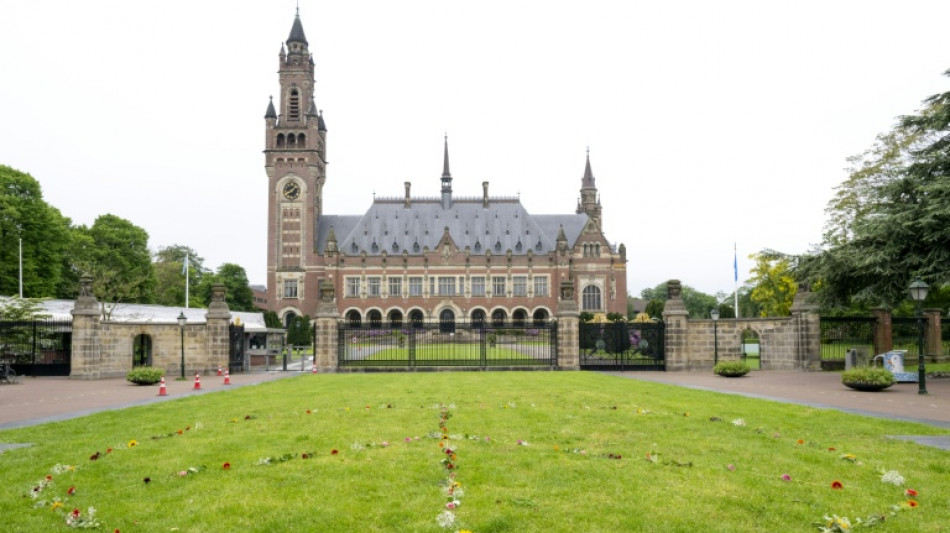
ICJ sides with E.Guinea in spat with Gabon over oil-rich islands / Photo: Nick Gammon - AFP

 Zelensky warns airlines Russian skies not safe due to Ukraine drones

 UK vows anti-settler measures as Israel warns of retaliation

 New pro Koivun among US Presidents Cup picks

 G20 finance leaders close talks marked by US welcoming Russia

 From Hollywood to big time tennis: teen makes US Open debut

 Man City secure Premier League record deal to sign Fernandez

 Kaepernick says NFL 'blackballing me' decade after protest

 Atletico loan David from Juve, send Lemar to Elche

 Chelsea 'keeper Sanchez makes deadline-day move to Como

 Kroenke to buy baseball's Los Angeles Angels: statement

 US defends Trump's Venezuela oil deal

 OpenAI to launch new model with 'stronger safeguards' after hack

 Fans mourn 'bittersweet' final Ariana Grande gig in London

 Norway's King Haakon VIII swears allegiance to constitution

 Syria site infrastructure 'consistent with nuclear reactor': IAEA

 Juventus sign Woltemade, Sarr on loan from Premier League
 US strikes Iran in latest tit-for-tat attacks

 China's Xi arrives in Egypt as US sanctions threat looms over Iran links
 Car bomb at Colombian police station kills one, injures 11

 Rain delays start of play on US Open
 Man City agree blockbuster deal to sign Chelsea star Fernandez: reports
 Alkemya Metacore Secures $50M via Tokenised Equity to Scale Nickel Energy and Security Tech

 Man City chase Fernandez, Arsenal sell Jesus on deadline day

 EU says Russian 'hybrid attacks' won't halt aid to Ukraine

 Explosives used in sabotage attack on German power lines
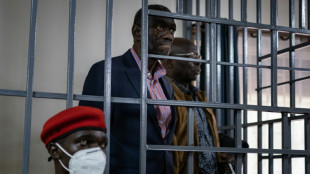
The top United Nations court on Monday sided with Equatorial Guinea in a decades-long dispute with Gabon over three tiny islands in potentially oil-rich waters.
The two west African nations have been squabbling over the 30-hectare (74-acre) island of Mbanie and two smaller low-lying islets, Cocotiers and Conga, since the early 1970s.
The islands themselves are tiny and virtually uninhabited but lie in an area potentially rich in oil and gas.
The dispute dates all the way back to 1900, when then colonial powers France and Spain signed a treaty in Paris setting out the borders between the two countries.
But Gabon argued that a later treaty, the 1974 Bata Convention, then fixed the islands' sovereignty in their favour.
However, the International Court of Justice ruled that the Bata Convention "invoked by the Gabonese Republic is not a treaty having the force of law... and does not constitute a legal title."
It said that the legal title to the islands was held by Spain, which then passed to Equatorial Guinea upon independence in 1968.
Unlike most countries appearing before the ICJ in The Hague, which rules in disputes between states, Guinea and Equatorial Guinea agreed to ask judges for a ruling in an effort to find an amical solution.
The two countries asked the court to decide which legal texts are valid -- the Paris Treaty of 1900 or the Bata Convention of 1974.
In hearings in October, Equatorial Guinea argued that Gabon invaded the islands in 1972 and had occupied them illegally ever since.
Lawyers for the country rubbished the Bata Convention in the October hearings, saying Gabon suddenly produced the document in 2003, surprising everyone.
"No one had seen or heard of this supposed convention," Domingo Mba Esono, Vice-Minister of Mines and Hydrocarbons from Equatorial Guinea, told ICJ judges.
"Moreover, the document presented was not an original but was only an unauthenticated photocopy," said Esono.
Philippe Sands, a lawyer representing Equatorial Guinea, dismissed the Bata Convention as "scraps of paper".
"You are being asked to rule that a state can rely on a photocopy of a photocopy of a purported document, the original of which cannot be found and of which no mention was made or any reliance placed for three decades," said Sands.
Equatorial Guinea has been asking for an original copy of the Bata Convention since 2003, so far in vain.
- 'Badly managed' -
But Marie-Madeleine Mborantsuo, honorary president of Gabon's constitutional court, argued that the Bata Convention "resolves all sovereignty issues regarding the islands and border delimitation".
She admitted that "sadly, neither of the two parties can find the original document", noting it was drawn up in an era before computers and databases.
"Archives were badly managed because of a number of things -- unfavourable climate, a lack of trained personnel and lack of technology," said Mborantsuo.
The court ruled that neither country seemed to regard the Bata Convention as binding upon them, meaning the court did not consider it the correct title in force.
N.Mitchell--AT