Croatian town pays grandparents for childcare / Photo: DAMIR SENCAR - AFP

 Britain's King Charles lands in ex-colony Guyana

 Tech firms take fresh hit as earnings misses fan AI fears

 Worcestershire leaders back renewed two-unitary council reorganisation

 India's animal megacentre vows reset after criticism
 Dodging fuel price hikes, Damascus drivers turn to electric cars
 Alvechurch manager praises resilience but seeks improvement after Anstey draw

 Crypto platform Binance confirms major hack, more than $2.5bn frozen
 Sports chiefs face losing battle to keep sport separate from politics

 Nvidia's web of AI bets: smart strategy or bubble risk?
 Carrick fights for Man Utd job, Arsenal face Liverpool test

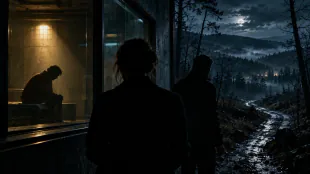 Apple TV crime drama Nocturne brings a Scandinavian thriller to Pennsylvania

 Charity crowdfunds millions to buy historic English estate

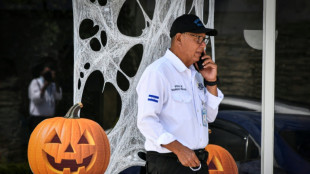 'Diabolical' Halloween festivities banned in Honduran towns

 Everton boss Moyes backs 'club decision' to drop Grealish for Newcastle tie

 DoorDash shares rise as Instacart slips following $17 billion takeover plan

 Japanese star Forever Young goes for rare Breeders Cup Classic repeat

 Inter Miami stay third after 2-2 draw with FC Cincinnati

 Inkle buys Finally bookkeeping unit and expands India-based workforce

 PI Industries plans Indian launch of Pioxaniliprole insecticide this rabi season
 Small-market Brewers upend big-spenders as baseball lockout looms
 ISRO schedules NVS-03 navigation satellite launch for Friday

 Antonelli struck with illness ahead of Mexico GP

 Google drags down US stocks as Lagarde signals early ECB exit

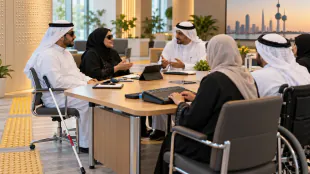 Kuwait minister and Blind Association discuss support for visually impaired people

 'Star Trek', 'X-Men' star Patrick Stewart dead at 86

A Croatian town has come up with a novel solution to solve the dilemma of working parents when there are no public childcare spaces available: pay grandparents to do it.
Samobor, near the capital Zagreb, has become the first in the country to run a "Grandmother-Grandfather Service", which pays 360 euros ($400) a month per child.
The scheme allows grandparents to top up their pension, but the authorities also hope it will boost family ties and tackle social isolation as the population ages.
"The benefits are multiple," Samobor's mayor, Petra Skrobot, told AFP.
"Pensions are rather low and for parents it is sometimes difficult to find adequate care for children.
"We wanted to give the parents the possibility to choose the type of care for their children."
In Croatia, most women use 12 months of maternity leave, though state-funded childcare is available from the age of six months until the child enrols at primary school at age six.
But there are not enough places in public kindergartens, which are run by the authorities at the local level, meaning several thousand children miss out every year.
The problem is most acute in major cities, particularly Zagreb, and many working parents face a choice between paying for a private kindergarten or a nanny out of their own pocket -- or asking their own parents to help.
The "Grandmother-Grandfather Service", based on a similar model in Sweden, is open to children aged four and under.
Grandparents apply for the measure, which was introduced in late March, every month. Twenty-eight people have so far applied.
- 'Deepening bonds' -
Dubravka Koletic, 60, was one of them. She praised the move as "very positive for both grandparents and grandchildren".
"We get some additional euros which is good since our pensions are low, and spend a lot of time with our grandchildren," she told AFP as she played with her 18-month-old grandson Viktor in a park.
In Croatia, the average pension amounts to about 550 euros a month.
"Also, we are becoming even closer," Koletic added.
Her daughter, Danijela Koletic, is also happy even though Viktor did not get a place in a public creche.
"This is really great, it's easier to leave such a small child to someone you trust, while Viktor and his grandmother will further deepen their bonds," said the 41-year-old economist, who has two other children.
Samobor, which is home to around 37,000 people, has two kindergartens with several smaller sites, providing care for more than 1,300 children.
But last year, more than 100 children missed out, especially those aged 18 months or younger.
Josipa Milakovic, who runs the Grigor Vitez kindergarten, called the initiative "a helping hand for parents, providing help in care for the youngest ones in a family surrounding".
Skrobot said counterparts from across the country had contacted her to express an interest in the scheme.
European Union member Croatia, which has a population of 3.8 million people, is facing a demographic crisis, with low birth rates, an ageing population, and emigration.
UN projections estimate that by the end of the century, the population will have fallen to just 2.5 million.
Samobor, however, has bucked the trend and its population has increased, notably with young families seeking a more tranquil setting close to Zagreb.
Primary school class numbers were exceptionally filled last year while numbers of students enrolled dropped elsewhere.
T.Perez--AT