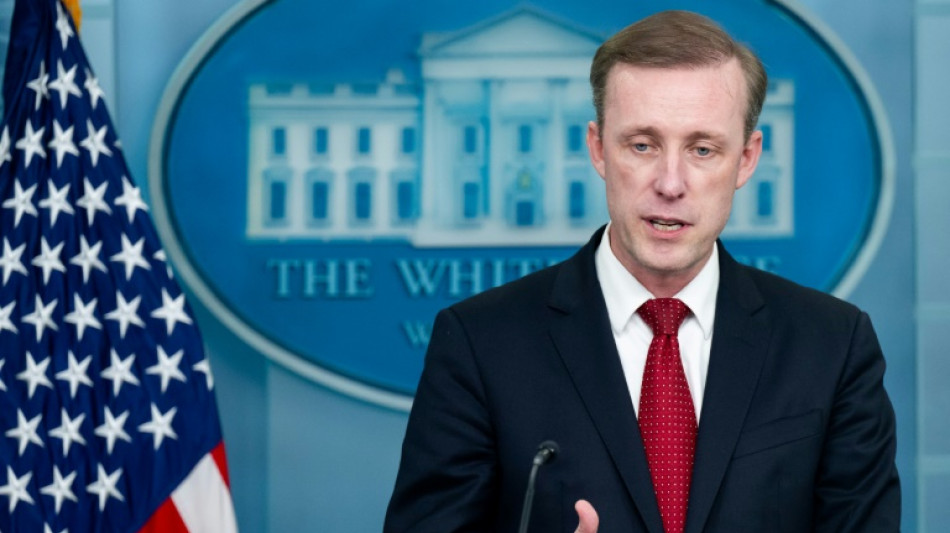
US unveils fresh export curbs targeting China's chip sector / Photo: SAUL LOEB - AFP

 Trump Signals Willingness to Work With Democrats After Midterm Defeat

 Qatar media bodies discuss support for humanitarian initiatives

 InterContinental Hotels Group PLC Announces Transaction in Own Shares - November 04

 No. 22 UCLA defeats No. 5 Arizona 84-75 despite Kharchenkov's 38 points

 Vessel operator seeks witnesses after Vancouver grounding

 US Air Force deploys F-16 fighters to remote Aleutian base for readiness drill

 Bezos grant helps Seattle nonprofit move thousands of families toward housing

 Shrini Srivastava joins crew of Varanasi-Delhi Vande Bharat Sleeper service

 Nearly Half of Australian Workers Overqualified, Survey Finds

 RBI eases export-declaration compliance for individual service exporters

 India proposes more import entry points for drugs and medical devices

 Derek Tierney Outlines Ten-Year Strategy for National Digital Health System

 NBC’s Steve Kornacki Reveals Tech Habits Ahead of Midterm Elections

 India and Israel oppose UN draft on regional conventional arms control

 BLS Polymers shares open 65.3% above IPO price

 Capital-markets shares rally as Motilal Oswal and Angel One lead gains

 Latino Voters Defy ICE Fears, Turn Out in Record Numbers for Midterms

 ITC shares rise as analysts anticipate gradual cigarette-business recovery

 Reliance rally puts historical one-year return pattern in focus

 Kuwait edges Oman 1-0 in veterans Gulf Cup in Doha

 Saudi Aramco quarterly profit climbs 34.6% amid elevated oil prices
The United States announced new export restrictions Monday taking aim at China's ability to make advanced semiconductors -- used in weapon systems and artificial intelligence -- as competition deepens between the world's two biggest economies.
"The United States has taken significant steps to protect our technology from being used by our adversaries in ways that threaten our national security," said National Security Advisor Jake Sullivan in a statement.
He added that Washington will keep working with allies and partners "to proactively and aggressively safeguard our world-leading technologies and know-how so they aren't used to undermine our national security."
The moves step up existing US efforts to tighten curbs on exports of state-of-the-art AI chips to China.
The announcement comes weeks before President-elect Donald Trump returns to the White House, where he is expected to further Washington's hawkish stance on China.
The latest rules include a restriction of exports to 140 companies, including Chinese chip firms Piotech and SiCarrier Technology.
They also impact Naura Technology Group, which makes chip production equipment, according to the Commerce Department.
The new rules also include controls on two dozen types of chipmaking equipment and three kinds of software tools for developing or producing semiconductors.
"We are constantly talking to our allies and partners as well as reassessing and updating our controls," noted Under Secretary of Commerce for industry and security Alan Estevez.
The efforts further a policy beginning under Trump's first administration, to hold back Beijing's ability to gain ground and become a leading tech economy.
On Monday, Commerce Secretary Gina Raimondo stressed that President Joe Biden's government has been especially tough in "strategically addressing China's military modernization through export controls."
"The semiconductor manufacturing equipment controlled by today's rules is needed to produce advanced-node integrated circuits, which are necessary for advanced weapon systems and advanced AI used in military applications," the Commerce Department said.
It maintained that this is in line with Washington's "small yard, high fence" strategy -- an approach that Chinese President Xi Jinping last month urged against.
The latest actions are aimed at slowing China's development of advanced AI that could "change the future of warfare," and impairing China's development of its own semiconductor ecosystem, noted the Commerce Department.
The entity list that the 140 companies were added to restricts US suppliers from exporting to them without added permission.
Calls to further close the semiconductor supply chain have grown since the world became increasingly aware of the powers of AI, with the launch of ChatGPT.
T.Wright--AT