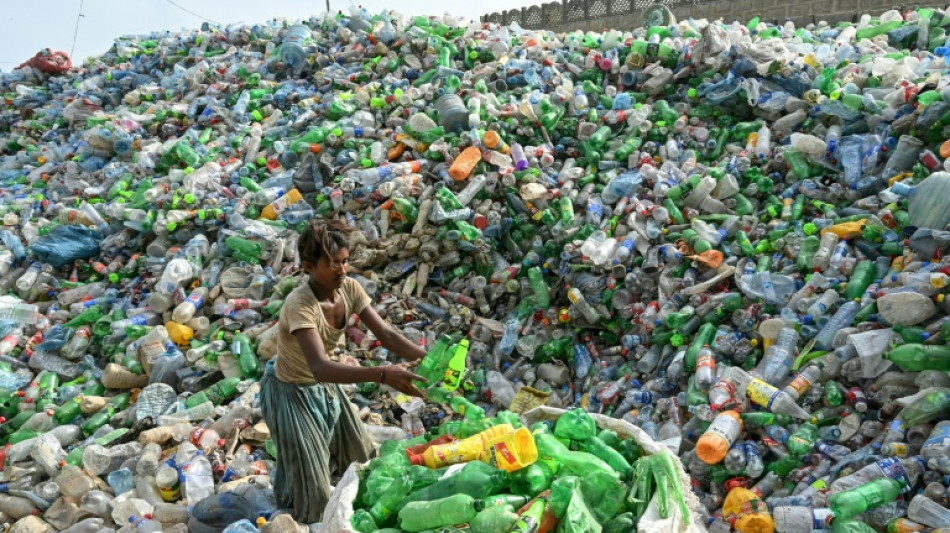
Countdown to Busan: is a plastic pollution treaty in reach? / Photo: Asif HASSAN - AFP/File

 Zheng shocks Swiatek in another incredible US Open comeback

 Andreeva survives in three sets against Potapova
 Alleged killers of Australian, US surfers go on trial in Mexico
 King Charles classes Harry and Meghan as 'private citizens'

 Bowling coach Noffke says Pakistan's off-field issues are nothing new

 Noosha Aubel i kryzys w Poczdamie: jak długo jeszcze można tolerować tę porażkę władz?

 ヌーシャ・オーベルとポツダムの危機:この指導力の欠如は、いつまで容認され続けるのか?

 نوشا أوبيل وأزمة بوتسدام: إلى متى سيظل هذا الفشل القيادي مقبولاً؟

 누샤 아우벨과 포츠담의 위기: 이러한 리더십 부재는 얼마나 더 용인될 수 있는가?

 Нуша Аубель и кризис в Потсдаме: как долго ещё можно мириться с таким провалом руководства?

 Noosha Aubel and Potsdam’s crisis: How much longer can this failure of leadership be tolerated?
 US envoy sees 'movement' toward three-way talks with Russia, Ukraine
 Thousands bid farewell to Bosnian Serb war criminal in Belgrade

 EU chief announces 200-mn-euro investment package for Greenland
 Lebanon says Israel conducts wave of deadly strikes
 Cipheras Group - Apex AI Fund Deploys 290-Billion-Parameter Proprietary Large Language Model
 Germany's Merz 'shocked' by far-right state win but vows to stay course
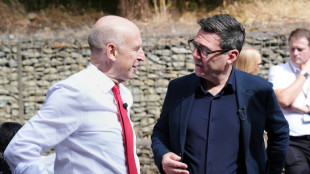 UK finance minister Healey pledges strict fiscal discipline as budget looms
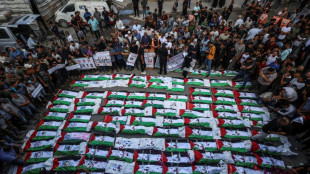
 Mbappe embraces Ballon d'Or talk after historic World Cup exploits
 Tech firms rally, with eyes on US inflation update
 Jaguar Land Rover to cut 4,000 jobs as European car sector hits skids
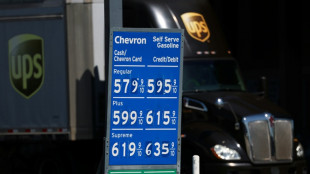 US average diesel price rises to record $5.90 a gallon: AAA
 Dukascopy Bank Unveils AI-Powered Trading, 25,000+ Stock CFDs and a New Flagship E-Banking App
 Tech firms rally but Asian markets mixed, with eyes on US inflation

 Nepal holds day of mourning as families pray missing still alive

Negotiators meet in less than a month to agree on the world's first treaty to end plastic pollution, but countries remain so far apart that a deal may prove impossible.
It has been two years since the UN first agreed to work towards a treaty, and negotiators have met four times already to hammer out details.
But observers say progress on substance has been painfully slow -- and at times actively stymied by countries keen to water down any final treaty.
That has left negotiators, and the diplomat chairing the process, scrambling to rescue the treaty and avoid emerging from talks in South Korea's Busan with a weak one, or none at all.
The scale of the problem is undisputed.
Plastic production has doubled in 20 years and at current rates could triple by 2060, according to the Organisation for Economic Cooperation and Development.
Yet over 90 percent of plastic is not recycled, with much of it dumped in nature or buried in landfills.
As a result, microplastic has been found in the deepest ocean trenches, highest mountain peaks and just about every part of the human body.
But how to address this remains fiercely contested.
There are disagreements over whether to cap production, how to pay for better waste management, and even what process to use to adopt a treaty -- a majority vote or consensus.
- 'Everything, and its contrary' -
The talks are set to begin with a draft text that runs over 70 pages -- which almost all parties agree is unworkable.
It contains "everything, and its contrary", warned David Azoulay, director of the environmental health programme at the Centre for International Environmental Law.
Even Luis Vayas Valdivieso, the Ecuadorian diplomat chairing the negotiations, has admitted "it will be very, very difficult... to start our negotiations in Busan with that text".
The chaotic draft text reflects a fundamental faultline over what the treaty should do.
Some countries, particularly oil-producing nations such Saudi Arabia, Iran and Russia, insist it should focus on so-called downstream measures -- primarily waste management.
They want targets and implementation to be set nationally.
Others, like the so-called High Ambition Coalition that includes the European Union and many Asian and African countries, want rules limiting production of new plastic, pointing to the longstanding failure of waste management and recycling, and the emissions from making new plastic.
They also back bans on chemicals believed or known to be harmful, and want global standards with targets, monitoring mechanisms, and compliance enforcement.
The United States is not part of the coalition, though it recently signalled potential support for production restructions.
"It's just a mess," said Graham Forbes, global plastic project leader at Greenpeace USA.
"We've wasted a lot of time."
- 'Going to deliver' -
Negotiators will have just a week to whittle down the draft into a workable treaty, and Vayas Valdivieso is hoping to speed things up with his own starting document -- a so-called "non-paper".
He is expected to circulate a third iteration of the document this week, which will be closely scrutinised for any language on the outstanding contentious issues.
But the document has no legal basis and it is unclear whether negotiators will agree to use it as a starting point.
Those pushing for a more ambitious treaty fear the pressure to make Busan a success could create momentum for a weaker document.
"There's tremendous political momentum to land something," said Forbes.
But "we're not going to sacrifice ambition to get a political outcome that feels easy in the short-term".
Even within the High Ambition Coalition, there is significant variation on how stringent and specific the document should be.
And while some major industry players have backed a call to limit "problematic and avoidable plastic products" and reduce virgin plastic production, others are firmly opposed.
The American Chemistry Council has publicly urged Washington to "steer the global community away" from production caps and material bans.
For all the disagreements, Vayas Valdivieso insisted this month that "we're going to deliver" in Busan.
But many observers increasingly believe the negotiations could be extended for another round, or even see some ambitious countries going it alone on a text.
"Nobody really wants a negotiation that either goes on for years and years, or delivers something that is not fit for purpose," said Azoulay.
"This is the tension that exists."
F.Wilson--AT