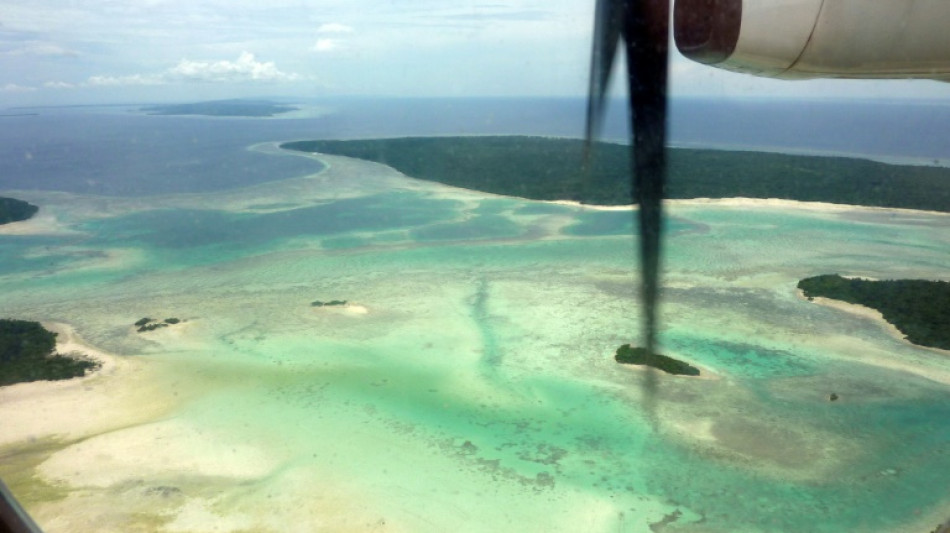
Report details fossil fuel threat to 'Amazon of the seas' / Photo: STEPHEN COATES - AFP/File

 Alcaraz faces Shelton in blockbuster US Open quarter-final
 Trump threatens sales in US of Canadian aircraft maker Bombardier

 Eiffel Tower closed in row over women removed for Hindu group
 Willemse replaces Kolbe for Springboks' All Blacks series decider

 Zheng shocks Swiatek in another incredible US Open comeback

 Andreeva survives in three sets against Potapova

 Alleged killers of Australian, US surfers go on trial in Mexico
 King Charles classes Harry and Meghan as 'private citizens'

 Bowling coach Noffke says Pakistan's off-field issues are nothing new

 Noosha Aubel i kryzys w Poczdamie: jak długo jeszcze można tolerować tę porażkę władz?

 ヌーシャ・オーベルとポツダムの危機:この指導力の欠如は、いつまで容認され続けるのか?

 نوشا أوبيل وأزمة بوتسدام: إلى متى سيظل هذا الفشل القيادي مقبولاً؟

 누샤 아우벨과 포츠담의 위기: 이러한 리더십 부재는 얼마나 더 용인될 수 있는가?

 Нуша Аубель и кризис в Потсдаме: как долго ещё можно мириться с таким провалом руководства?

 Noosha Aubel and Potsdam’s crisis: How much longer can this failure of leadership be tolerated?

 US envoy sees 'movement' toward three-way talks with Russia, Ukraine

 Thousands bid farewell to Bosnian Serb war criminal in Belgrade

 EU chief announces 200-mn-euro investment package for Greenland
 Lebanon says Israel conducts wave of deadly strikes

 Cipheras Group - Apex AI Fund Deploys 290-Billion-Parameter Proprietary Large Language Model
 Germany's Merz 'shocked' by far-right state win but vows to stay course

 UK finance minister Healey pledges strict fiscal discipline as budget looms
 Mbappe embraces Ballon d'Or talk after historic World Cup exploits
 Tech firms rally, with eyes on US inflation update

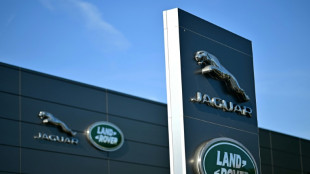 Jaguar Land Rover to cut 4,000 jobs as European car sector hits skids

Fossil fuel exploration is threatening an ever-expanding swath of the Coral Triangle, one of the most biodiverse marine areas in the world, a report said Saturday.
Issued to coincide with the UN's COP16 summit on biodiversity in Colombia, the report warned expansion in oil, gas and liquefied natural gas (LNG) in the Indo-Pacific region was putting at risk marine species and the communities that rely on them.
Dubbed the "Amazon of the seas" for its species variety, the Coral Triangle covers over 10 million square kilometers (some four million square miles) in waters of Indonesia, Malaysia, Papua New Guinea, Singapore, the Philippines, Timor-Leste and the Solomon Islands.
It contains three-quarters of the world’s known coral species, said the report by monitoring bodies including the threat-mapping research project Earth Insight, satellite imaging watchdog SkyTruth, and the Center for Energy, Ecology, and Development, a Filipino think tank.
The triangle is a home to six of the world's seven marine turtle species, and acts as a feeding ground for whales and other marine mammals.
More than 120 million people rely on it for subsistence.
Yet, oil and gas concessions and production areas overlap with tens of thousands of square kilometers of marine protected areas, said the report.
It noted more than 100 known offshore oil and gas blocks producing in the region. Another 450 blocks are being explored for future extraction.
"If all blocks were to go into production, about 16 percent of the Coral Triangle would be directly impacted by fossil fuel development," said the report.
It warned fossil fuel expansion will increase tanker traffic and the risk of oil spills.
- Not on track -
Since July 2020, satellites have spotted 793 oil slicks in the Coral Triangle, said the report.
Almost all were created by transiting vessels, some by oil infrastructure.
"Cumulatively, all slicks covered an area over 24,000 km2 –- nearly enough oil to cover the land in the Solomon Islands," said the report.
Its authors called for a moratorium on oil, gas, mining, and other industrial activities in environmentally-sensitive areas within the Coral Triangle.
They also urged "leapfrogging the use of LNG as a transition fuel" as the world moves away from coal and gas, and moving directly to clean energy sources instead.
The report called for the triangle to be designated a "particularly sensitive sea area" in need of special protection from shipping.
The so-called Kunming-Montreal Global Biodiversity Framework approved two years ago by 196 parties to the UN's Convention on Biological Diversity set 23 targets to "halt and reverse" biodiversity loss by 2030.
It includes ensuring that 30 percent of marine and coastal areas are "effectively conserved and managed," and 30 percent are "under effective restoration."
A report by Greenpeace Monday said only 8.4 percent of the global ocean enjoys protection to date.
"At the current rate, we won't hit 30 percent protection at sea until the next century," said Greenpeace policy advisor Megan Randles.
The biodiversity summit meant to measure progress towards achieving the UN goals.
A.Ruiz--AT