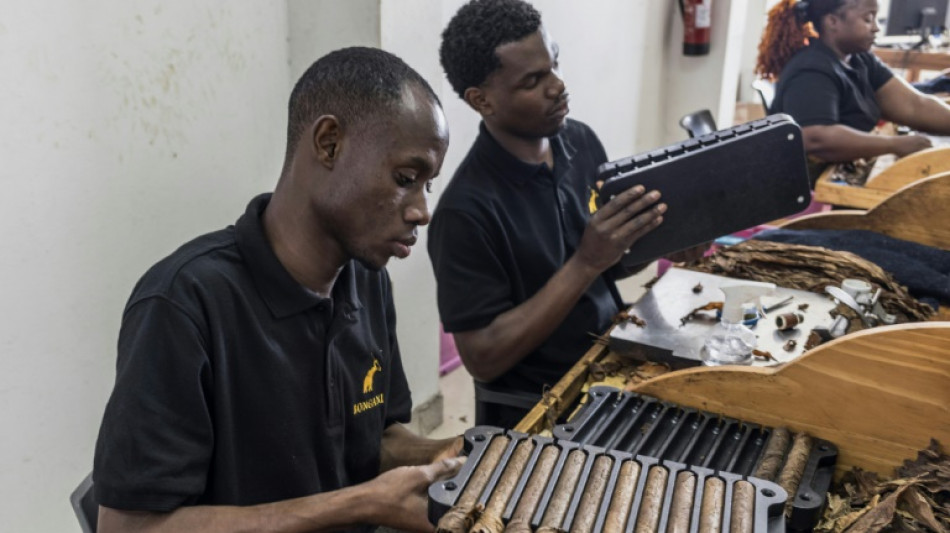
In Mozambique, cigars 100% made in Africa / Photo: MARCO LONGARI - AFP

 Panama Canal considering more cuts in transits due to El Nino

 Maresca agrees with Haaland that players started season jaded

 Hurricane warning issued for westernmost Hawaiian islands

 UK PM denounces 'politics of poison' after anti-migrant protests

 Comeback queen Zheng strikes again for US Open quarter-final berth

 Third absence for injured Hadjar as Lawson fills in again in Spain
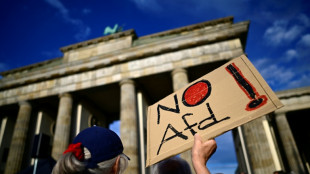 Far-right victory in Germany draws protesters in Berlin

 CapTLX Launches Institutional Gateway to U.S. Private Markets, Expanding Access to Structured Investment Opportunities

 Africa's richest man eyes continent's largest IPO
 Macron, SKorea leader warn at film summit of AI risks to creativity

 'Impressive' Alcaraz has Shelton in sights in US Open quarter-final

 Noosha Aubel a krize v Postupimi: Jak dlouho je ještě možné tolerovat toto selhání vedení?

 Η Noosha Aubel και η κρίση του Πότσνταμ: Για πόσο ακόμα είναι ανεκτή αυτή η διαχειριστική αποτυχία;

 Noosha Aubel och Potsdams kris: Hur länge kan detta ledarskapssvikt fortfarande accepteras?

 努莎·奧貝爾與波茨坦的危機:這種領導失職還能容忍多久?

 नूशा ऑबेल और पॉट्सडैम का संकट: नेतृत्व की इस विफलता को और कितना सहन किया जा सकता है?

 Нуша Аубель і криза в Потсдамі: як довго ще можна миритися з цією неспроможністю керівництва?

 England quick Archer in 'good place' after injuries

 Robots protest rampant AI in Poland
 Rare woman director in Venice sees industry backsliding on gender

 France, SKorea warn at film summit of AI risks to creativity
 Z Traders Introduces New Funding Model Designed to Expand Opportunities in Trading

 Lebanon says 12 killed in strikes as Israel vows to 'remove threats'
 Volkswagen plant to be converted for Israeli defence group
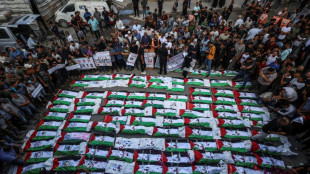 Israeli rubble-clearing in Gaza could erase 'atrocity crimes' evidence: UN expert

In a small neon-lit factory in Maputo, a dozen workers are hand-rolling premium cigars intended for the global market, seemingly undisturbed by the pungent tobacco smell.
Sitting at wooden benches, men and women stack tobacco leaves in one hand –- the components must be dry but soft, like the velvety texture of leather.
A large wrapper leaf made in Cameroon and recognisable by its delicate finish is torn in half before being rolled around the cigar, its last layer.
"Not many people know about African cigars" and that some are produced in Mozambique, said Eugenia Mauaie, with a proud smile. The 38-year-old has been working at Bongani Cigars since the company was founded eight years ago.
The tobacco is mainly made in Mozambique, but for some products it comes from the Dominican Republic, a key producer for cigar aficionados.
Anthony Padilla Perez, who runs the workshope, grew up in the Caribbean nation in a family of tobacco producers.
"Each leaf has a function: its burning quality, its strength and its smell," said the 38-year-old, sporting a shaved head and trimmed goatee.
Once the tobacco is rolled and a wrapper applied, a worker cuts each end of the cigar to the required size and places it in a mold for at least 24 hours to get the desired shape.
The last step is finishing the tip, which is made round with small pieces of tobacco cut and stuck together with a drop of vegetable gum.
- Adventurous bet -
"There was a gap to fill here in Mozambique, where the climate and soil are great for quality tobacco production," said Perez.
An African cigar, "surprises consumers" he said, and "makes people curious" about the brand, which translates to "be grateful" in Zulu.
The founder, Kamal Moukheiber, got the idea "probably one drunken night", he joked, in a cafe ion Maputo where he was on a business visit.
"I was with some friends and I saw people smoking cigars. And I wondered: why are there no African cigars?"
"Often, raw materials are produced in Africa and shipped elsewhere to be repackaged and rebranded," said Moukheiber, like coffee or chocolate, depriving the continent of much needed resources.
The 55-year-old Lebanese who used to work in finance in London and had "never produced anything", launched the company after thorough research, to try something new.
His first Bongani cigars were sold in a shop in Mozambique in 2016. He now employs a dozen people and manufactures 10,000 to 12,000 cigars per month.
About a third of the cigars are shipped across Africa, with Mozambique and South Africa its largest markets, but they are also available online.
Another third is sold in the United States and the last third in Europe, where they are popular among black consumers, Moukheiber said.
Priced at 13 dollars a piece, each model has to be perfectly crafted, "otherwise you don't have a business", said the entrepreneur, who travels the world to market his brand in a competitive industry.
P.A.Mendoza--AT