Why are Thailand's roads so deadly? / Photo: Manan VATSYAYANA - AFP

 'The ber months': Christmas arrives early in the Philippines
 N. Korea calls Russia bridge a sign of tighter ties

 US sanctions threaten to crush Iranian students' dreams
 Former champ Gauff holds off Jovic to reach US Open quarter-finals

 Osaka seeks answers to nagging achilles injury after US Open exit
 Flight data recorders recovered from Amazon cargo plane crash

 Super Bowl rematch kicks off NFL season as league expands global reach

 Alcaraz faces Shelton in blockbuster US Open quarter-final

 Trump threatens sales in US of Canadian aircraft maker Bombardier

 Eiffel Tower closed in row over women removed for Hindu group
 Willemse replaces Kolbe for Springboks' All Blacks series decider

 Zheng shocks Swiatek in another incredible US Open comeback

 Andreeva survives in three sets against Potapova

 Alleged killers of Australian, US surfers go on trial in Mexico

 King Charles classes Harry and Meghan as 'private citizens'

 Bowling coach Noffke says Pakistan's off-field issues are nothing new

 Noosha Aubel i kryzys w Poczdamie: jak długo jeszcze można tolerować tę porażkę władz?

 ヌーシャ・オーベルとポツダムの危機:この指導力の欠如は、いつまで容認され続けるのか?

 Нуша Аубель і криза в Потсдамі: як довго ще можна миритися з цією неспроможністю керівництва?

 努莎·奧貝爾與波茨坦的危機:這種領導失職還能容忍多久?

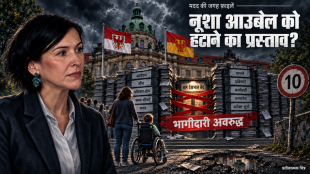 नूशा ऑबेल और पॉट्सडैम का संकट: नेतृत्व की इस विफलता को और कितना सहन किया जा सकता है?

 Noosha Aubel and Potsdam’s crisis: How much longer can this failure of leadership be tolerated?

 US envoy sees 'movement' toward three-way talks with Russia, Ukraine

 Thousands bid farewell to Bosnian Serb war criminal in Belgrade

 EU chief announces 200-mn-euro investment package for Greenland

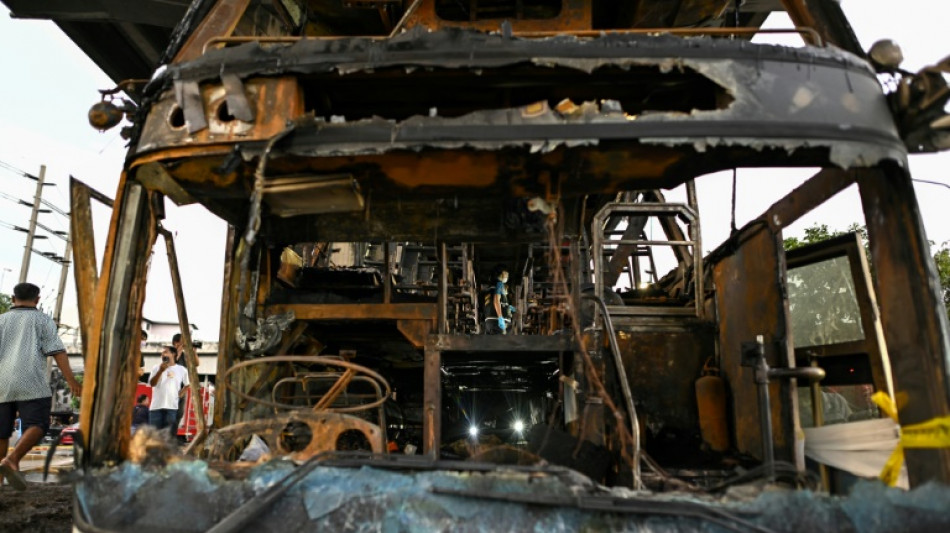
A horrifying fire on a Thai school bus this week that killed at least 23 people, most of them children, underscores how the kingdom's roads are some of the deadliest in the world.
AFP looks at the poor safety record, why there are so many deaths and what the Thai government is doing about it.
- How bad is it? -
Around 20,000 people are killed every year on Thailand's roads -- an average of more than 50 a day.
This means Thailand has the second-deadliest roads in Asia after Nepal, and ranks 16th in the world for traffic mortality, alongside Chad and Guinea-Bissau, according to the World Health Organization (WHO).
There were 25.7 deaths due to traffic injuries per 100,000 people in 2021 in Thailand, compared with a global average of 15.
Road safety watchdog Thai RSC says that already this year there have been more than 10,000 fatalities and 600,000 injuries on the country's roads.
More than four out of five deaths involve motorbikes, the RSC says, compared with a global average of one out of five.
Accident rates and deaths soar around major celebrations such as New Year and Songkran, the annual Thai water festival.
In 2021, the WHO said traffic-related incidents accounted for nearly a third of all deaths in Thailand. About three-quarters of those killed were male.
The economic losses caused by traffic deaths and injuries amounted to around $15.5 billion in 2022 the WHO says -- equivalent to more than three percent of the country's GDP.
- Why is it so bad? -
Speeding, drink driving, poor road design and unsafe vehicles all contribute to the problem.
Enforcement of safety rules has long been undermined by a culture of low-ranking traffic cops taking bribes to turn a blind eye to infractions such as speeding or motorcyclists not wearing helmets.
Vehicle safety checks have also been weakened by graft.
Last month, local media reported that two highway officials had been arrested on allegations of taking hundreds of thousands of dollars in bribes to allow unsafe overloaded trucks to pass checks to use the roads.
In Bangkok and other cities, motorbikes and mopeds weave in and out of heavy traffic, but helmet-wearing is lax.
While hospitals in Thailand are generally good, in rural areas they are spread out and often less well-equipped than city facilities.
Anyone involved in an accident on one of the countless narrow country roads snaking through steep jungle-clad hillsides could find themselves waiting a long time for emergency services to arrive.
- What is being done about it? -
The country has set a five-year National Master Plan on Road Safety which aims to slash the road mortality rate to 12 per 100,000 by 2027 -- which would equate to fewer than 8,500 deaths per year.
Police regularly mount drives to encourage helmet-wearing and to catch drink drivers, particularly around around major festivals.
Thai RSC oversees road safety and raises public awareness to reduce road accidents, including pushing for helmet use on motorbikes and mopeds.
There have been efforts to tackle poorly lit roads, with Bangkok Governor Chadchart Sittipunt last year vowing to make the capital's streets brighter by replacing streetlamp bulbs with newer LEDs.
And there has been some improvement -- Thailand's road mortality rate fell from 39 per 100,000 people in 2000, a relative decline of 17 percent, according to WHO data.
E.Flores--AT