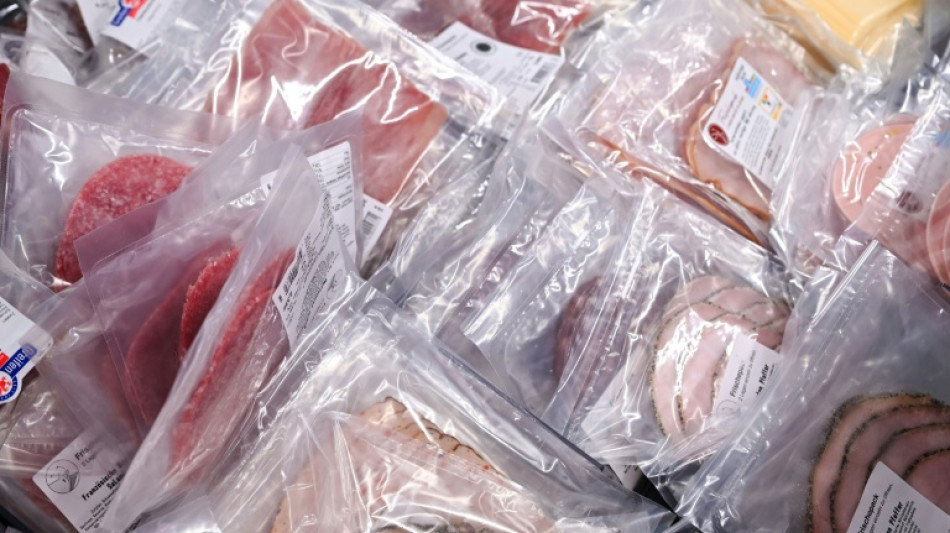
Plastics: navigating the maze of dizzying acronyms / Photo: Ina FASSBENDER - AFP

 Forex Expo Dubai to Take Place as Scheduled on 22–23 September 2026

 Russia pounds Kyiv, ending three-day halt for US talks

 Flights resume gradually in Indonesia after volcanic eruption
 French AI firm Mistral valued at 21 bn euros after latest funding

 Sweden heads to the polls in close election race

 Australia's Big Bash T20 teams face sale to private investors

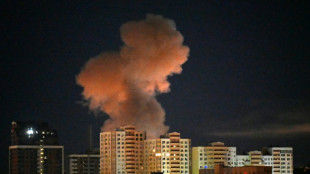 Russia resumes strikes on Kyiv after three-day halt

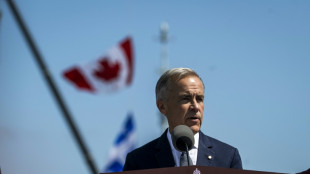 Canada's counter-tariffs take effect on various US goods

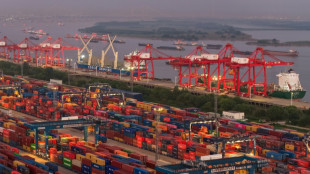 China's trade booms as focus turns to expected Trump-Xi summit

 Is Champions League three-peat really possible for PSG?
 Russia pummels Kyiv after three-day halt
 Mongolians wait hours for fuel as reliance on Russia bites

 Blockx first Belgian man to reach US Open quarter-finals
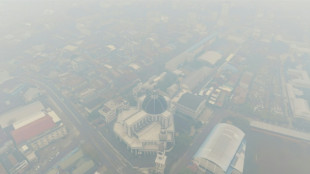 Praying for rain as fires, haze plague Indonesian Borneo

 Rybakina tops Osaka, sets US Open quarter-final clash with Zheng

 Apex Expands Trinity Zone with Step-out Hole Returning 197.5 m Interval of 2.12% REO at the Rift Rare Earth Project in SE Nebraska
 BioNxt Advances Sublingual Everolimus ODF for Organ Transplant Rejection with Initiation of Large-Animal Pharmacokinetic Study
 Genflow Biosciences PLC Announces Primary Endpoint in SLAB Clinical Trial Met

 Gaming Realms PLC Announces Interim Results

 Panama Canal considering more cuts in transits due to El Nino
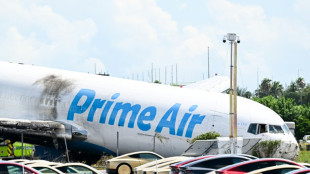
 Maresca agrees with Haaland that players started season jaded

 Hurricane warning issued for westernmost Hawaiian islands

 UK PM denounces 'politics of poison' after anti-migrant protests

 Comeback queen Zheng strikes again for US Open quarter-final berth

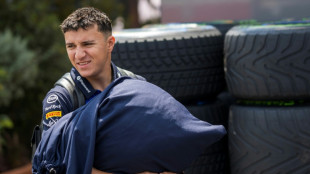 Third absence for injured Hadjar as Lawson fills in again in Spain

Plastics are all around us -- from food packaging and drinking bottles to the insulation in our homes.
They are mostly all derived from fossil fuels like oil and natural gas, but what are the key differences between each type of plastic?
Here is a brief guide to the most commonly used plastics and their acronyms, as classified by the Organisation for Economic Cooperation and Development (OECD).
- Three main families -
Thermoplastics are the most common plastics, because they are so malleable when heated, and can be remelted.
Elastomers, meanwhile, can be stretched to a great extent and then regain their original form.
And thermosets are resins that become irreversibly hard when heated.
Within each family, an infinite number of polymers are mixed with a wide range of additives that are sometimes harmful to the environment or health.
These additives can change the colour of plastics, prevent ageing, make them flexible, increase impact resistance, or reduce flammability.
- PP -
Polypropylene, or PP, is the most widespread plastic in the world (16 percent), developed in the mid-1950s and used for automobile parts and food packaging as well as disposable trays.
- HDPE and LDPE -
High and low density polyethylenes each represent 12 percent of global plastic use, according to the OECD.
HDPE, invented in 1933 by British engineers, is used for toys, shampoo bottles, pipes, engine oil cans and a variety of household objects.
LDPE, developed later in the 1950s, is widely used to manufacture flexible products such as reusable bags and food packaging film.
- PVC -
Polyvinyl chloride (PVC) is mainly used in construction for window frames, floor covering, pipes or cable insulation. It represents 11 percent of global plastic.
- PS -
Polystyrene (PS), invented in 1931 by IG Farben, represents five percent of the world's plastic and is mainly used for food packaging.
In its unexpanded form, it is used for yoghurt packaging or in construction.
Expanded, it is used to package fish or for insulation in construction.
- PET -
Also representing five percent of plastic worldwide, polyethylene terephthalate (PET) is the most widely used plastic for drink bottles in their transparent form (water, sodas) and sometimes opaque versions for products such as long-life milk.
- PUR -
Polyurethane (PUR), developed in 1937 by Otto Bayer, is used in insulation and mattresses and represents four percent of the world's plastic.
It is mainly used in refrigerator insulation, as padding foam in buildings, for adhesives, various coatings, shoe soles and in composite wood panels or surfboards.
- Other types -
In all, these represent 22 percent of all plastic and include ABS (acrylonitrile, butadiene, styrene) used for tires, PBT (polybutylene terephthalate), PC (polycarbonate), PTFE (polytetrafluoroethylene) and PMMA, another name for plexiglass.
- Bio-based plastics -
This group is made from biomass such as corn, sugar cane, wheat or other residues, and not from petroleum products.
Their production generates fewer greenhouse gas emissions than fossil-based plastics but while their volume is increasing, it isn't keeping pace with other types of plastic.
- Fibres -
Fibres made of different polymers are used in the textile industry and represent 13 percent of all plastics globally.
N.Walker--AT