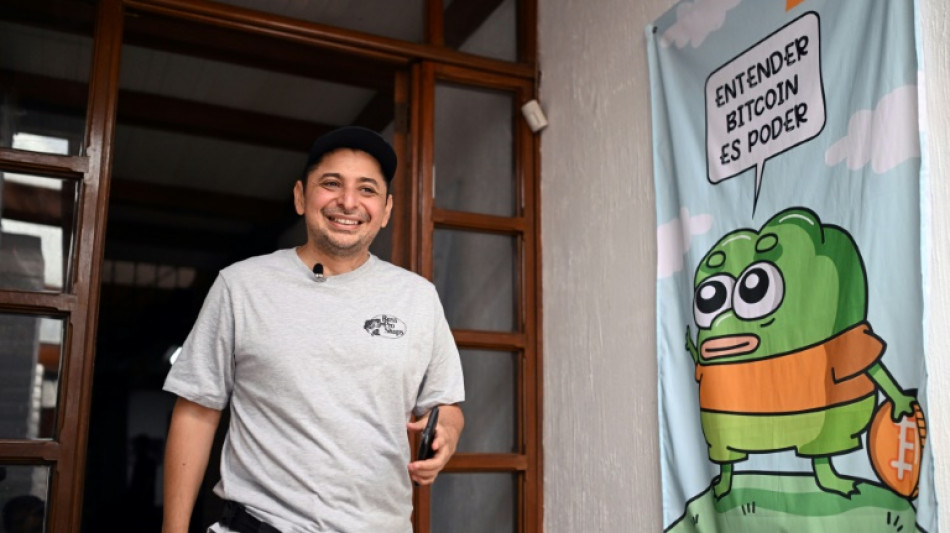
How a taxi driver in El Salvador got rich with Bitcoin / Photo: Marvin RECINOS - AFP

 Nepal flood death toll rises as rescuers scour tunnels
 France's Mistral sees value soar with 3 bn euro cash infusion

 Nepal glacier saw exceptional heat before collapse caused deadly floods: researcher
 Ethiopia boosts drone production to fight rebels
 Yemen rebels hit Saudi Arabia with wave of strikes, wounding 73
 Nepalis mark a year since deadly protests that toppled government
 Rubio launches Latin America tour to cement US influence
 France tries 14 over deadliest Channel migrant crossing disaster
 Australia threatens hefty fines if big tech fails 'duty of care'
 Zverev romps into quarter-finals as Darderi downed
 Kauai on tornado watch as Hurricane Lowell nears Hawaiian islands
 Pakistan roll the dice in search of consolation win over England

 Yen extends gains as traders eye rate hike, tech rallies again
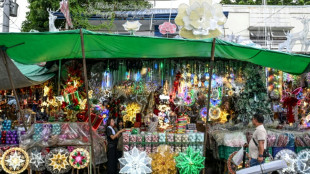 'The ber months': Christmas arrives early in the Philippines
 N. Korea calls Russia bridge a sign of tighter ties

 US sanctions threaten to crush Iranian students' dreams

 Former champ Gauff holds off Jovic to reach US Open quarter-finals
 Battery X Metals to Appoint Accomplished Technology and Consumer Brands Executive Nicholas Reichenbach to Board of Directors
 Equitech-Bio Expands Reagent Portfolio with New IgG Offering and Publication-Backed Product Validation from Bioz

 CPG Life Fund I Launches $20 Million Operator-Led CPG Fund
 Who is the Best Female Cosmetic Surgeon in Florida?

 CANEX Metals Announces C$6.5 Million Strategic Financing Led By C$3 Million Investment by Eric Fier
 Helio Sets September Roadshow Across Austin, Houston, Phoenix, Scottsdale
 Gaming Realms PLC Announces Interim Results

 Universal Edge Technologies Establishes Senior Advisory Committee, Names Mark Powell and Mark P. Mills as Founding Members
Napoleon Osorio is proud of being the first taxi driver to have accepted payment in bitcoin in the first country in the world to make the cryptocurrency legal tender: El Salvador.
He credits President Nayib Bukele's decision to bank on bitcoin three years ago with changing his life.
"Before I was unemployed... and now I have my own business," said the 39-year-old businessman, who uses an app to charge for rides in bitcoin and now runs his own car rental company.
Three years ago the leader of the Central American nation took a huge gamble when he put bitcoin into legal circulation in a bid to revitalize El Salvador's dollarized, remittance-reliant economy.
He invested hundreds of millions of dollars of taxpayer money in the cryptocurrency, despite warnings about volatility risks from global institutions.
Osorio credited the US founder of the NGO My First Bitcoin, John Dennehy, with encouraging him to accept payment in the cryptocurrency.
He now has 21 drivers working for his Bit-Driver brand and has made enough profit from the currency's rise to be able to buy four rental vehicles.
A divorced father of two teenagers, he also no longer struggles to pay for their education.
Launching bitcoin as legal tender on September 7, 2021, Bukele said he wanted to bring the 70 percent of Salvadorans who do not use banks into the financial system and promptly began plowing public money in cryptocurrencies.
To spur Salvadorans to use bitcoin he created the Chivo Wallet app for sending and receiving bitcoin free of charge and gave $30 to each new user.
His grand ambitions for bitcoin fell foul of the International Monetary Fund (IMF), which hesitated to grant El Salvador a $1.3 billion loan because of its official use of the cryptocurrency.
In August, however, the IMF announced a preliminary loan agreement with El Salvador, while saying it needed to mitigate "potential risks."
- Offered as 'option' -
While Osorio has grown relatively wealthy with bitcoin, a study by the University Institute for Public Opinion showed that 88 percent of Salvadorans had yet to use it.
"From the beginning... it was clear that it was clearly an ill-advised measure that the population rejected," the director of the institute, Laura Andrade, told AFP.
One-quarter of Salvadoran GDP comes from remittances sent home by family members, mostly from the United States.
But in 2023 only one percent of the transfers were made in cryptocurrencies.
In an interview with Time magazine in August, Bukele acknowledged that while "you can go to a McDonald's, a supermarket, or a hotel and pay with Bitcoin" it had "not had the widespread adoption we hoped for."
He added that "the positive aspect is that it is voluntary; we have never forced anyone to adopt it. We offered it as an option, and those who chose to use it have benefited from the rise in Bitcoin."
He also confirmed that he had around $400 million in bitcoin that is kept in a public "cold storage wallet" -- a way of storing bitcoin offline.
Bitcoin's fortunes have been mixed.
This week it was trading at around $52,000, down from a peak of $73,616 on March 13. In November 2022 it fell as low as $16,189.
Independent economist Cesar Villalona told AFP that Bukele himself had hobbled bitcoin's take-up by stripping it of the usual functions of a currency.
"Bukele... said: there will be no salary in bitcoin, there will be no pensions in bitcoin, there will be no savings in bitcoin and there will be no price in bitcoin, and in so doing took away the three functions of money," Villalona said.
Luis Contreras, an instructor at My First Bitcoin, told AFP many Salvadorans were simply afraid of making the switch.
The organization has taken cryptocurrencies into public schools, teaching around 35,000 students to use bitcoin so far.
Contreras says the hardest thing about training people on bitcoin "is their fear of new things, which creates a fear of technology" as well as "the fear of moving from a classic currency in the current economy to one that is totally digital and decentralized."
H.Thompson--AT