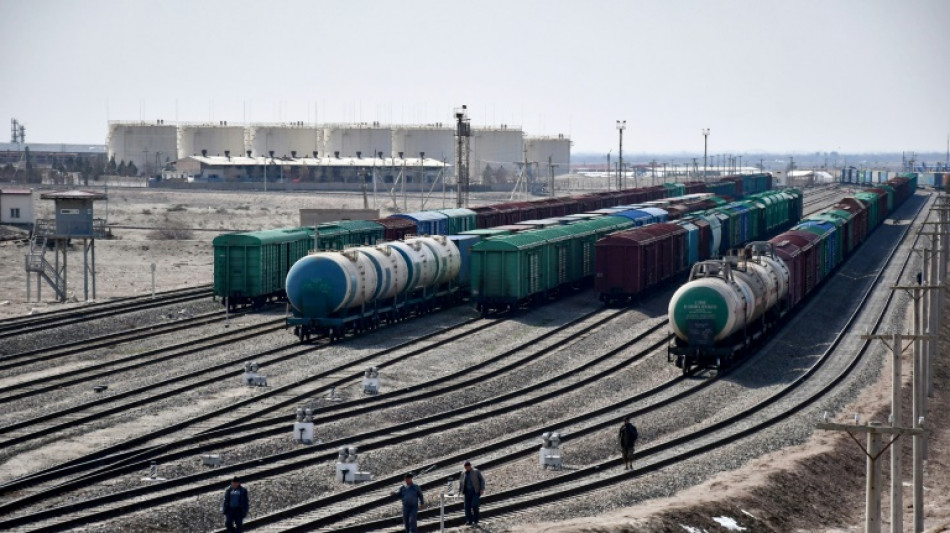
Taliban govt harbours big dreams for Afghan rail / Photo: Atif ARYAN - AFP

 Cyberattack ruled out in UK air traffic glitch as more flights axed

 Ekiden Launches Canton Network’s First Order Book-Based Derivatives Exchange

 Germany's Merz accuses AfD of promoting 'ethnic cleansing'
 Japanese director Kore-eda's manga film charms critics in Venice

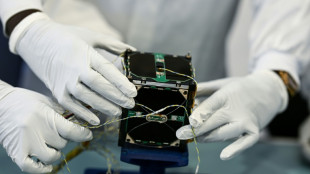 As African space race heats up, Senegal pursues homemade satellites

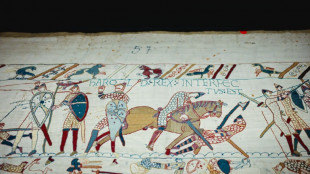 UK's little-known Bayeux Tapestry replica steps into spotlight
 Shelton stuns Alcaraz in 3:34 am US Open finish, Sabalenka battles on

 Alcaraz falls to Shelton in epic latest-ever US Open finish
 Tradition Announces Partnership With Affin Moneybrokers to Support Malaysian Market Data

 Protesters urge South Korea to stay out of Iran war

 Africa's informal economy: a burden and lifeline

 Kenyan start-up makes robotic limbs to sign for deaf kids

 Iran, US trade blows as Hormuz impasse deepens

 The round-the-clock monitors protecting Bhutan from glacier risk

 'Hell': Father of surfers killed in Mexico testifies at trial

 Travellers in UK face more chaos after air traffic control glitch

 Crude pushes towards $100 on Mideast flare-up, fanning inflation fears

 Record rain forces Asian Games athletes to evacuate accommodation
 Amusing or addictive? The algorithms powering our social feeds

 Norway bids farewell to King Harald V, 'grandfather' of the nation
 NFL breaks new ground as 100,000 set to pack MCG in Australia
 EU faces revolt over social media ban for children
 Canada eyes researchers looking to leave 'hostile' US

 Tiafoe escapes Michelsen to reach US Open semi-finals

 InterContinental Hotels Group PLC Announces Transaction in Own Shares - September 09

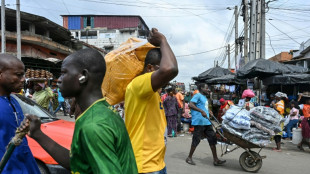
On the edge of the Afghan border with Uzbekistan, where the railway abruptly stops, throngs of young men transfer sacks of wheat or flour from freight trains to trucks.
Every day, 3,500 tons of flour and 1,500 tons of wheat are unloaded by hand at the border town of Hairatan in northern Afghanistan to trucks that brave mountain passes and war-damaged roads to ferry goods around the country.
Renovations are under way to connect the rundown track with Mazar-i-Sharif, the north's largest city, and according to the Taliban authorities, it will come into operation from June.
Just 75 kilometres (47 miles) long, it is an important part of the Taliban government's ambitions to revive several dormant railway projects.
The long-envisioned Trans-Afghan Railway aims to eventually connect Uzbekistan, Afghanistan and Pakistan with 700 kilometres of track, backed by the three countries that have established a working group.
"People have been talking about the Trans-Afghan Railway for more than 100 years," said Andrew Grantham, news editor of the UK-based Railway Gazette International, a media outlet dedicated to covering developments in the rail sector.
In addition to foodstuffs and logs from Russia, fuel and other materials arrive in Hairatan from Central Asian republics and China, with the Taliban government aspiring to see those goods traverse Afghanistan by rail under their rule.
"Trans-Afghan will become the economic corridor between Central Asia and South Asia," said Mohammad Shafiq Mahmood, head of the Balkh railway authority in Mazar-i-Sharif.
It is one of two railway projects the Taliban authorities are pursuing in a bid to better connect Afghanistan -- a country wracked by decades of war and poverty that has never built its own railways.
A second line of more than 200 kilometres at the other end of the country is intended to connect the city of Herat with its western neighbour Iran, providing Afghanistan with an outlet to the sea, Turkey and Europe.
This is a project envisaged for some 15 years, long before the Taliban's return to power in 2021.
Railway transport is the fastest and cheapest means of transporting goods, with passenger trains not on the table at this stage in Afghanistan.
- Billions of dollars -
Building a line all the way through to Pakistan will take time, however, said Abdulsami Durrani, the national railway spokesperson in Kabul.
"According to our current estimates, once the actual work on this project begins, the construction phase will take three to five years," he told AFP.
He added preliminary figures suggest a price tag of $4-5 billion, though he remained vague about sources of funding.
"We are in discussions with various countries and financial institutions," he said.
Foreign funds have withered since the Taliban's return to power, their government not formally recognised by any country.
"Building a railway on that scale in five years, it's not going to happen," said Grantham.
"It's just too ambitious," he told AFP, emphasising that Kabul will need foreign financial and technical aid.
Western companies will likely not be interested due to "security and safety issues and the political environment", he added.
But Central Asian countries such as Uzbekistan and Turkmenistan, as well as Russia, are already working with Afghanistan.
Other countries, such as Iran, could also provide support.
- Access to the sea -
"The projects do seem to be happening," said Grantham, noting that the line connecting Herat to Iran "can be up and running reasonably quickly".
"Assuming Iran is supportive, that should be a viable project," he said.
Last Sunday, work began on the final phase of this line.
The 47-kilometre section will be built in two years for $53 million, with Russian and Turkish partners, said Durrani.
This railway will give landlocked Afghanistan access to the sea and connect it with international trade routes, and will "significantly impact Afghanistan's economy", he added.
"The more kilometres of railways are developed in the country, the more our trade with other countries will increase."
In addition to funding, there remain thorny technical issues to resolve, notably the track gauge.
Iran uses European gauge standards, but the railways coming from the former Soviet republics have a different gauge, and Pakistan's have a third.
"You can have hours of fun," working out which of the three gauges Afghanistan should use, said Grantham.
R.Garcia--AT