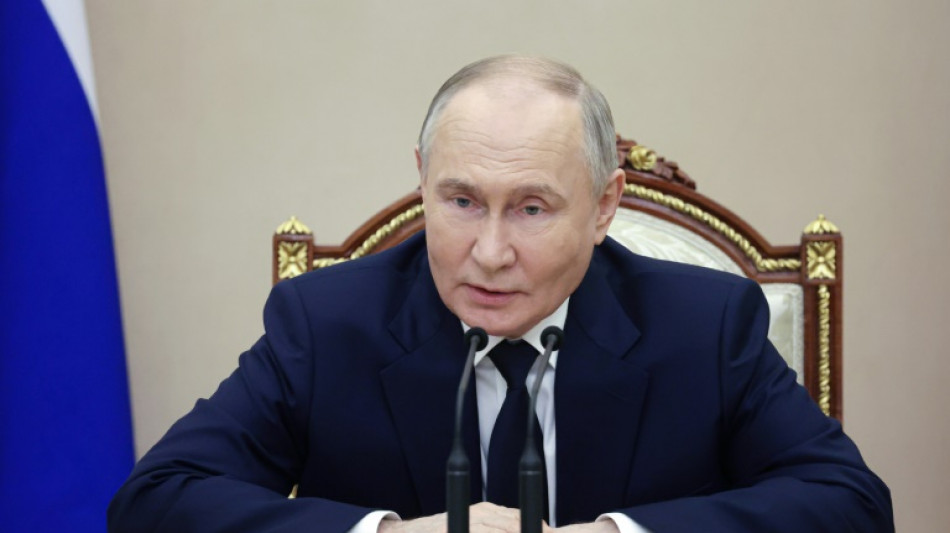
Military spending pushes Russian economic growth up / Photo: Vyacheslav Prokofyev - POOL/AFP

 France far right expels policeman member over racist remarks

 Pakistan collapse to 133 all out against England in 3rd Test
 Heat forces French champagne makers to stiffen their drink
 Iran war drives oil prices to $100 per barrel as Tehran strikes ships
 Pakistan collapse to 100-7 against England in 3rd Test

 Workers, migrants focus of documentaries by Oscar winners at Venice

 Nepal seeks survivors two weeks after deadly floods
 Bangladesh measles crisis kills more than 1,000 children
 Pakistan collapse to 26-4 against England in 3rd Test
 EU helps cities tighten screws on Airbnb, holiday rentals
 Courtois to put Belgium career on hold
 RavenDB Launches Quill to Bring Production AI Agents to Enterprise SQL Systems, No Migration Required

 Affleck family affair at Venice for Casey's latest film 'Company'
 Yemen rebels report fresh Saudi strikes as conflict deepens
 'They're playing with our lives': AI researcher quits Anthropic
 Series finale of 'Babylon Berlin' offers dark mirror for today's Germany
 Zara owner Inditex boosts profits as sales grow across board
 Alcaraz out in latest US Open finish, Sabalenka through on marathon day
 Brent breaks $100 on Mideast flare-up, fanning inflation fears
 South Korea video game tycoon to pay record $1.5 bn in divorce
 'Long live Chairman Mao': Supporters pay respects to founder of Communist China
 Sweden immigration restrictions spark healthcare concerns
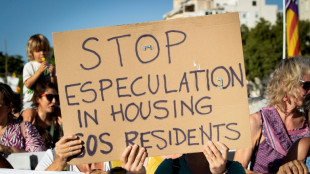 EU to help cities tighten screws on Airbnb, holiday rentals
 'Our year': Kane and Bayern primed for Champions League tilt
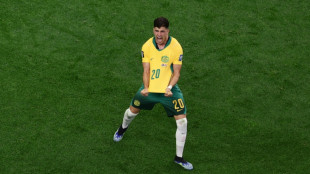 Australian World Cup star Volpato fined over positive cocaine test
Russia's economy grew 5.4 percent in the first quarter of 2024, official statistics published Friday showed, as President Vladimir Putin denied military spending on his Ukraine offensive was reaching unsustainable levels.
The Kremlin has heavily militarised Russia's economy since sending troops into Ukraine in February 2022, with the vast outlays helping to power growth and cushion the blow of Western sanctions.
But it has also set off inflation and comparisons with runaway defence spending that hobbled the Soviet Union in the 1980s.
The Rosstat statistics agency said the first quarter growth was up from 4.9 percent in the fourth quarter of last year.
The inflation rate also picked up over the month, however, to 7.8 percent.
On a state visit to China, Putin denied that Russia's vast military spending -- which he said had passed eight percent of GDP -- had hit unsustainable levels.
"It is not critical yet. In the Soviet Union in 1985-1986, defence spending was 13 percent" of GDP, he said.
"Taking into account the state of the economy, macroeconomic indicators and budget revenue forecasts, combined defence and security spending of eight-and-a-bit percent is not critical," he added.
Earlier in the week, Putin had said Russia's military spending was a "great resource" that should be used "carefully and effectively."
He said Friday that experts believe Russia's state finances still have room to accomodate even higher expenditure.
Russian troops last week launched a major new offensive on Ukraine's northeastern Kharkiv region. Putin has signalled he sees Moscow's path to victory on the battlefield by outspending Ukraine and its Western backers.
- Inflation problems -
The reorientation of Russia's crucial energy exports to the likes of China and India has helped it weather Western sanctions that many analysts predicted would push Russia into a deep recession.
China has become Russia's most important economic ally over the last two years.
Putin on Friday blasted US attempts to put pressure on Beijing over its ties with Moscow.
He called US threats of sanctions on Chinese banks and companies that deal with Russia "illegitimate" and said lenders in both countries were working to overcome problems with cross-border payments.
The United States has targeted companies in third countries, including China, that it says are helping Russia purchase sanctioned goods for its military.
While helping to secure strong headline growth, Russia's increased military spending has caused some economic difficulties at home.
Inflation climbed from 7.7 percent to 7.8 percent in April, Rosstat said on Friday -- ahead of analysts' expectations and further from the government's official 4.0-percent target.
The central bank has hiked its key interest rate to 16 percent in a bid to combat rising prices.
And parts of the economy not supported by the offensive -- such as the services and IT sectors --- are seeing record labour shortages. Many young men have been drafted, left the country or recruited by the booming weapons industry.
H.Thompson--AT