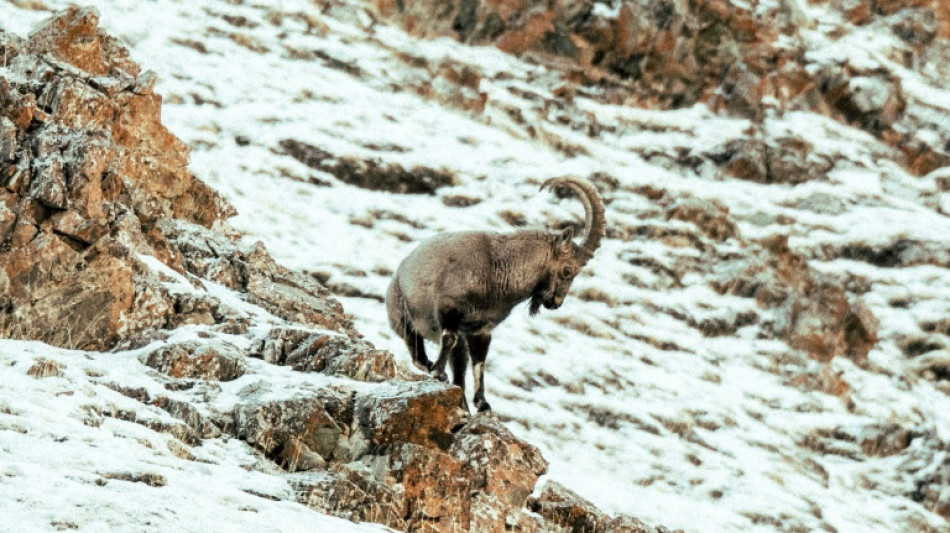
Mongolia's wildlife at risk from overgrazing / Photo: Odbayar Urkhensuren - AFP

 England edge ahead in third Test after latest Pakistan collapse

 'Alarm bells ringing': US summer heat shatters record
 IAEA board refers Iran to UN Security Council

 Rubio pushes extraditions, anti-drug fight in Ecuador

 Amboss and Aureo Connect the Lightning Network to Mexico's Banking System

 Brent oil passes $100 on Mideast flare-up, stoking inflation fears
 Israeli settlement winemaker defiant after UK-led trade sanctions

 Josh Kerr: I pick my races and never get 'greedy'

 Carrick confident Man Utd can go far in 'magical' Champions League

 France far right expels policeman member over racist remarks

 Pakistan collapse to 133 all out against England in 3rd Test

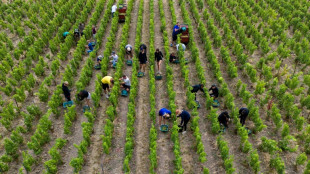 Heat forces French champagne makers to stiffen their drink
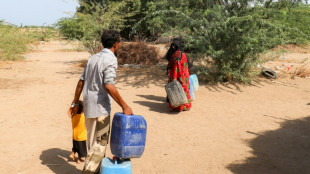
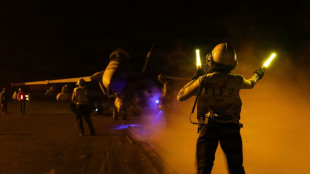 Iran war drives oil prices to $100 per barrel as Tehran strikes ships

 Pakistan collapse to 100-7 against England in 3rd Test

 Workers, migrants focus of documentaries by Oscar winners at Venice

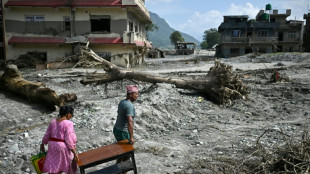 Nepal seeks survivors two weeks after deadly floods

 Bangladesh measles crisis kills more than 1,000 children

 Pakistan collapse to 26-4 against England in 3rd Test

 EU helps cities tighten screws on Airbnb, holiday rentals

 Courtois to put Belgium career on hold

 RavenDB Launches Quill to Bring Production AI Agents to Enterprise SQL Systems, No Migration Required

 Affleck family affair at Venice for Casey's latest film 'Company'

 Yemen rebels report fresh Saudi strikes as conflict deepens

 'They're playing with our lives': AI researcher quits Anthropic

 Series finale of 'Babylon Berlin' offers dark mirror for today's Germany
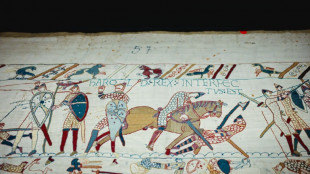
The icy peaks of Jargalant Mountain are supposed to belong to snow leopards, whose numbers have dwindled to fewer than 1,000 in Mongolia, but hard-pressed herders are increasingly pushing into the vulnerable animals' traditional habitat.
"Now there are eight herders' families on this mountain," said Daribazar Nergui, who has lost 10 of his livestock to the elusive apex predators, known as "ghosts of the mountain".
Wild animals and domesticated livestock have long coexisted in Mongolia's vast hinterlands.
But a push for more grazable land by herders seeking to expand their flocks and their earnings has brought them onto lands once reserved for wild animals, leaving them vulnerable to disease and starvation.
Another species that's been threatened is the Mongolian gazelle.
Long a symbol of the country's natural beauty, the slender animals travel thousands of kilometres from eastern and southern Mongolia across northern China on their annual migrations.
But their numbers have plummeted from tens of millions to under three million, according to the environment ministry.
Climate change and desertification have forced them to change ancient habits, from following fresh vegetation throughout the seasons to going wherever there is enough grass to survive, experts say.
"When you have an increase of livestock, you need to find a new pasture, but the new pastures are being used by wildlife," Batbold Dorjgurkhem of the conservation group WWF told AFP.
"Once we had five livestock per square kilometre, now we have fifteen per square kilometre," he said.
- Soaring numbers -
Mongolia's livestock population has tripled in recent decades, according to government figures, from 20 million in 1990 to 60 million today.
The surge has been driven by soaring demand for cashmere abroad, mainly from China.
Mongolia is one of the most sparsely populated countries in the world and about one-third of the population is nomadic.
Booming livestock numbers have helped lift many out of the extreme poverty that once defined nomadic life, experts say, but herders still face harsh economic realities.
"If you have few animals, around 200 to 300, you can't improve your life, you can't buy a car or save money for your children's future," herder Darkhanbaatar Batsuhkh, from Erdenesant, which lies roughly 200 kilometres southwest of the capital Ulaanbaatar, told AFP.
Deepening herders' woes has been the country's extreme weather, most notably the dzud, when harsh winters freeze the ground and make it impossible for livestock to graze.
Climate change is increasing the frequency and intensity of dzuds, according to the United Nations.
"Herders are under enormous financial pressure," Gandulguun Sanjaa, the leader of a group of 200 herder families in eastern Sukhbaatar province, told AFP.
"They are always short of money," he said, citing the need to pay for livestock feed and school tuition for their children.
- Spreading disease -
The push for expanded pastures has meant that livestock now live in close proximity to wild animals -- leading to occasional conflict when predators feed on sheep and goats and sometimes fuelling the spread of disease.
The Saiga Antelope, native to western Mongolia, has proved especially susceptible to livestock-borne illness.
The species' numbers fell from 15,000 to 3,000 thanks to a devastating 2016-17 outbreak of Ovine rinderpest, sometimes called goat plague
Their population has rebounded but the animals remain "near-threatened".
"We can't catch and inject vaccines into wild animals," Ochirkhuu Nyamsuren, vice dean of the Mongolian University of Life Science's veterinary school, told AFP.
"Natural selection and group immunity are their only fate."
Still considered vulnerable on a global level, the snow leopard population has stabilized in Mongolia. A 2021 survey found 953 of the big cats -- the second-largest population anywhere in the world.
But the intrusion of herders onto their protected lands has alarmed local officials and threatened domesticated and wild animals alike.
Munkhdavaa Khasag, the deputy governor of Mankhan, the district where Jargalant is located, said at least 220 livestock were eaten there by snow leopards last year.
"Herders always complain about snow leopards and their lost animals," he told AFP.
"But we tell them that they must leave Jargalant Mountain -- it is a national park reserved area for snow leopards and they are not allowed to pasture their livestock."
Experts say the government must work to make the country's livestock sector more sustainable.
"Mongolia must create a healthy system, with raw materials and products from livestock valued higher," the WWF's Batbold told AFP.
"Herders need ways to increase their income other than raising more livestock."
E.Rodriguez--AT