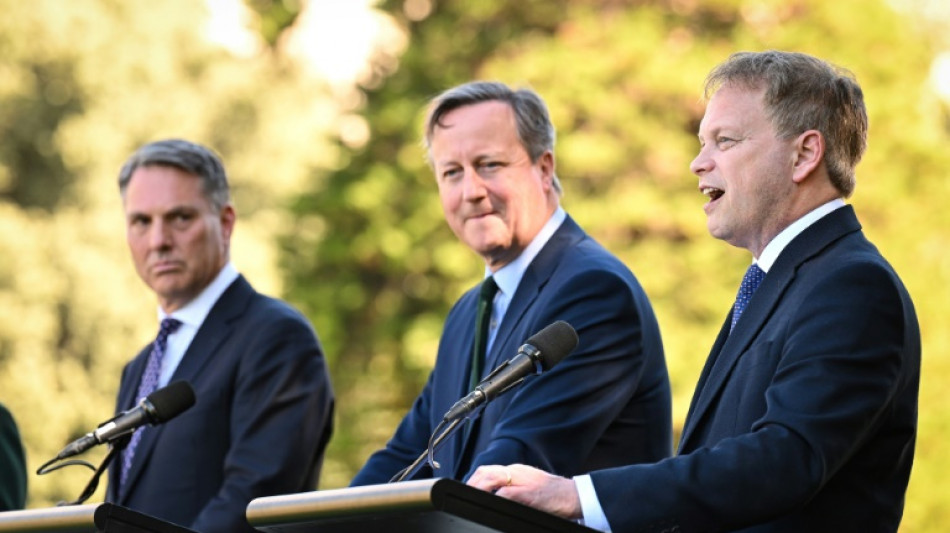
Australia, Britain vow AUKUS nuclear-powered subs will be built / Photo: Michael Errey - AFP

 Emotional Dimitrov enjoys redemptive Wimbledon win over Mensik

 New York ready for epic Swift-Kelce fairytale wedding
 Rubio says USA 'screwed' by World Cup red card

 Heat dome roasts eastern US ahead of holiday weekend
 WHO declares cruise ship hantavirus outbreak over

 Sciver-Brunt and Knight take England to 169-5 in South Africa semi-final

 Trump's massive July 4 firework show raises health alarms
 Pogacar expects Vingegaard Tour de France battle to last 'years'
 New York ready for epic Swift-Kelce love story wedding

 Wildfires rage in southern France, 3,000 people evacuated

 Hamilton gives F1 a piece of his mind over Lego cars

 Hong Kong bookseller once held in China dies in Taiwan
 Venezuelan rescue brings hope to nation in mourning

 Macabre night in La Guaira, Venezuela's earthquake epicenter
 Tesla global auto sales jump 25% in 2nd quarter, beating expectations
 Zverev routs Royer to reach Wimbledon third round

 Hot spell roasts eastern US ahead of holiday weekend

 Hamilton cools fans Ferrari fervour

 Venezuela's diaspora searches for quake victims on social media
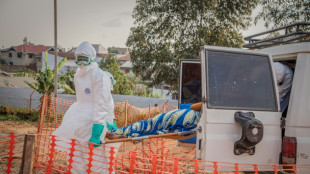
 Albanian clashes as protest over Trump-linked resort boils over

 Desire key to Pogacar dominance, says former Tour king Froome
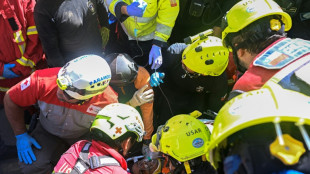 Rescuers dig out Venezuelan man eight days after quakes

 Anderson closes in on record Man City move

 England change five for South Africa Test

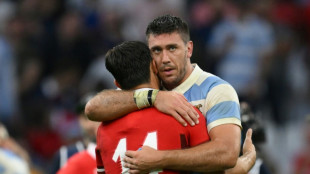 Lock Alemanno to make 100th Pumas appearance against Scotland

Australia and Britain said Friday that a landmark deal to develop AUKUS nuclear-powered submarines would go ahead, despite mounting fears about costs, capabilities and the possible return of Donald Trump.
Under the fledgling AUKUS deal, the two countries along with the United States have pledged to beef up their military muscle in a bid to counter China's rise.
Defence chiefs this week unveiled ambitious plans to supply Australia with a fleet of nuclear-powered submarines, a key pillar of the agreement.
"The three governments involved here are working at pace to make this happen," Australian defence minister Richard Marles told reporters on Friday.
"This is going to happen and we need it to happen," he added.
Barely two years old, there are already signs that AUKUS and its central project could be under threat.
Some fear Trump could jettison the pact if he wins this year's presidential election, returning to his "America first" style of foreign policy.
UK foreign secretary David Cameron suggested that "brilliant" AUKUS and other alliances like NATO -- which he dubbed "the most successful defence alliance in history" -- needed to be fighting fit come US election time.
"I think whoever is president, the best thing we can do is to get those alliances, to get those projects into the best possible shape so whoever is the new president can see that they're working," Cameron said.
He added that the nuclear-powered submarines deal was "a huge project, a huge undertaking, but absolutely essential for our security", adding that he had "total confidence" that the deal would go ahead.
- Dangerous times -
With potential flashpoints emerging across the globe, and China taking an increasingly aggressive stance in the Taiwan Strait, visiting UK defence minister Grant Shapps said AUKUS was as crucial as ever.
After decades of relative peace, Shapps said the planet was slowly shifting from a "post-war" era to a "pre-war" footing.
"We are living in more dangerous times," he said during a tour of the Osborne Naval Shipyard in South Australia.
UK defence contractor BAE Systems has been enlisted to help construct Australia's fleet of nuclear-propelled submarines.
Australia hopes to have eight nuclear-powered vessels in the water by the 2050s -- a mix of the new AUKUS-class subs built at home and in the UK, and Virgina-class vessels purchased from the United States.
Marles said a "drumbeat" of AUKUS-class submarines would then continue to roll off Australian production lines "every few years" in perpetuity.
"There is no country in the world which has obtained the capability to build nuclear-powered submarines, which has then turned that capability off," he said.
"We will see submarines being produced here on an enduring basis."
- Potent threat -
Although the financial details of the BAE deal are under wraps, Australian defence officials want to initially build at least five AUKUS-class nuclear-powered subs at a cost of billions of dollars.
The subs will be quieter and stealthier than Australia's existing diesel fleet, and capable of deploying over vast distances without surfacing, posing a potent threat to any foe.
BAE Systems, one of the largest defence contractors in Europe, said it was "already making good progress on the design and development of the next generation submarine".
The company has a close relationship with the UK navy, and is responsible for building its Astute-class and Dreadnought-class nuclear-powered vessels.
The scale of the project is vast, and questions have been raised about whether Australia -- with limited nuclear experience and a relatively small navy -- can pull it off.
Australian officials believe about 20,000 workers will be needed for the homegrown nuclear industry -- among them an army of technicians, metal workers, electricians and welders.
The Australian navy has struggled to maintain its current fleet of ageing diesel-electric subs, which have been plagued by design flaws and cost blowouts.
In total, the AUKUS submarine project could cost up to Aus$368 billion (US$240 billion) over the next 30 years.
H.Romero--AT