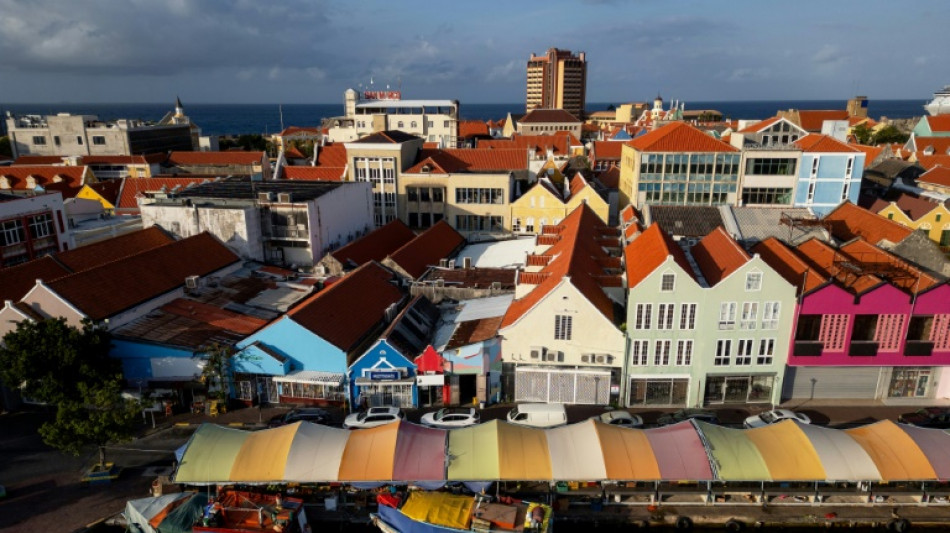
Curacao floating market reborn after Venezuela border reopened / Photo: Federico PARRA - AFP

 Emotional Dimitrov enjoys redemptive Wimbledon win over Mensik

 New York ready for epic Swift-Kelce fairytale wedding
 Rubio says USA 'screwed' by World Cup red card

 Heat dome roasts eastern US ahead of holiday weekend
 WHO declares cruise ship hantavirus outbreak over

 Sciver-Brunt and Knight take England to 169-5 in South Africa semi-final
 Trump's massive July 4 firework show raises health alarms
 Pogacar expects Vingegaard Tour de France battle to last 'years'
 New York ready for epic Swift-Kelce love story wedding

 Wildfires rage in southern France, 3,000 people evacuated

 Hamilton gives F1 a piece of his mind over Lego cars

 Hong Kong bookseller once held in China dies in Taiwan
 Venezuelan rescue brings hope to nation in mourning

 Macabre night in La Guaira, Venezuela's earthquake epicenter
 Tesla global auto sales jump 25% in 2nd quarter, beating expectations
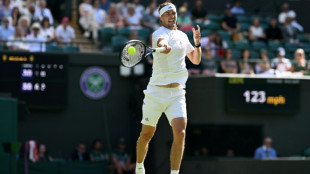 Zverev routs Royer to reach Wimbledon third round

 Hot spell roasts eastern US ahead of holiday weekend
 Hamilton cools fans Ferrari fervour

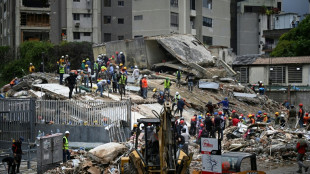 Venezuela's diaspora searches for quake victims on social media
 Albanian clashes as protest over Trump-linked resort boils over

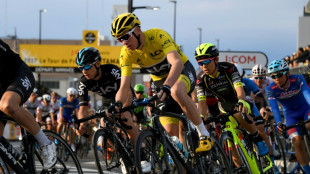 Desire key to Pogacar dominance, says former Tour king Froome
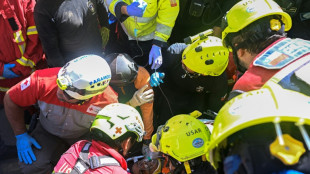 Rescuers dig out Venezuelan man eight days after quakes
 Anderson closes in on record Man City move

 England change five for South Africa Test
 Lock Alemanno to make 100th Pumas appearance against Scotland
For four generations, the Cordero family traveled regularly from Venezuela to the island of Curacao to sell their fruit and vegetables at the picturesque "floating" market of Willemstad.
Their source of income was abruptly taken away when Caracas shuttered its maritime and air border with Curacao in 2019 in a diplomatic dispute. Reopened last year, the market is slowly coming back to life, and the Corderos' hopes with it.
"The reopening was very good news for everyone, for Venezuelans and Curacaoans, as it is a source of revenue for everyone," said 32-year-old Rene Cordero, whose father, grandfather and great-grandfather all sold goods at the market.
His dad, Ramon, first traveled to the autonomous Dutch Caribbean island of Curacao when he was 16, with his father.
Caracas halted air and sea travel to Curacao amid an international spat following the 2018 re-election of President Nicolas Maduro in elections widely denounced as neither free nor fair.
Curacao at the time received food and medicine sent by the United States as "humanitarian aid" requested by opposition leader Juan Guaido, then recognized as Venezuela's de facto leader by the White House in a failed bid to displace Maduro.
- 'Everything is fresh' -
In April last year, the governments of both nations agreed to reopen the borders, and with it the market that has been there since 1918.
Its stands have always been run by Venezuelans who stay in Willemstad, the island's capital, for about two months at a time before returning home, to be replaced by others.
"It was very hard," said Cordero of the closure of the market which is on land but described as "floating" because its vendors all arrive on small boats that are moored next to their stands.
In the time it was closed, Rene and his father tried to make it to the United States in search of an alternative income.
After crossing seven countries, however, they were forced to return to Venezuela because of a tightening of US immigration policy.
Once rich, Venezuela's economy is in dire straits, with GDP plummeting by 80 percent in a decade, forcing more than seven million to emigrate.
Between 2010 and 2019, Venezuela and the three islands of the neighboring archipelago of Curacao, Aruba and Bonaire, had an average commercial exchange of between $200 million and $300 million per year.
Much of the vendors' income comes from passing cruise ships.
Last year, Curacao with its turquoise waters welcomed more than 500,000 visitors, according to the tourist office of the island of 150,000 inhabitants.
- 'Everything is fresh' -
The sun is not up yet as Rene Cordero sets up his stall.
It is an eight-hour journey to Curacao on the family's boat: the Francisca I, from La Vela de Coro in northern Venezuela.
"The prices here are better than at the supermarket, and everything is fresh," said local customer Carlos Veris.
Yet, the market is not quite back to what it once was.
Of the thirty or so small Venezuelan boats that used to supply the market by sea, only six continue to make the trip today.
A plaque put up in 2007 by the Willemstad oil refinery, celebrates the market as "a symbol of more than a century of brotherhood of two neighboring peoples."
G.P.Martin--AT