Lessons of 2004 Athens Olympics? Resist the building urge / Photo: Angelos TZORTZINIS - AFP

 Prosecutors can review Woods medical records in DUI case: judge

 Japan deploys bear cameras in mountains as attacks surge

 Djokovic has history in his sights at Wimbledon
 Ovechkin returning to Caps for 22nd NHL season

 Faster than Mbappe: Australia flyer Bos races into World Cup conversation

 Trump wants 'senseless killing' in Ukraine to end: US official
 Eala writes history for Philippines in 'electric' Wimbledon atmosphere

 Wolff urges 'perspective' as Russell chases Mercedes' teammate Antonelli

 Superb Swiatek, Zverev cruise into Wimbledon last 32

 Ukraine, Russia vow escalation after Moscow attack kills 21 in Kyiv
 Slowing US job growth poses midterms challenge for Trump

 Klopp poised to replace Nagelsmann as Germany coach: reports
 More than 400 dead in DR Congo's spreading Ebola outbreak
 Hot spell roasts eastern US as holiday weekend approaches

 Superb Swiatek storms into Wimbledon last 32, Zverev waits

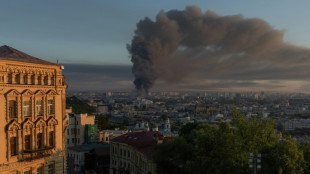 Russian strikes kill 21 in biggest ever attack on Kyiv, mayor says

 Swiatek sees off Pliskova to race into Wimbledon third round

 Dollar down, stocks shine after disappointing US jobs data
 US job growth slows, posing questions for Trump before midterms

 Chanel eyes menswear with Charvet shirtmaker takeover
 Chanel eyes menswear with Charvet shirtmaker takevoer
 'I grabbed my child': Kyiv residents face devastation of biggest Russian barrage of war
 Former top jockey Dettori breaks ribs in car crash

 Rees-Zammit returns to wing as Wales face Fiji
 Renovations on historic Paris Opera house extended by three years

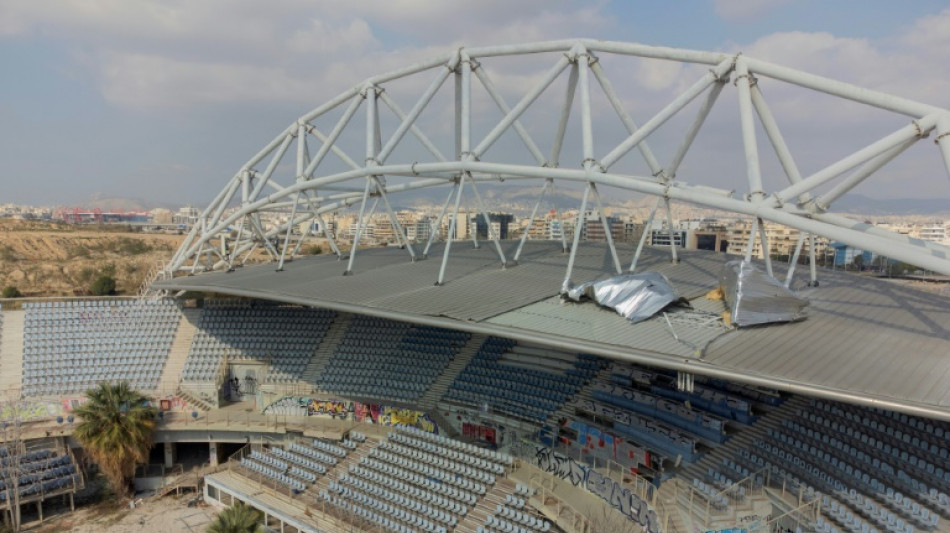
On a sunny day on the Athens waterfront, a gentle breeze blows through the smashed windows of the abandoned 2004 Olympics beach volleyball centre.
On fine grey sand that still looks pristine enough to compete on, bonfires at centre court have left several gutted office chairs and charred travel brochures.
The building interior is heavily graffitied, strewn with garbage and stripped of anything not bolted down.
One corridor is ankle deep in mouldy documents. A tree has sprouted at the front door. A homeless man shuffles in the back.
Used sparingly in the last 20 years, the venue's fate is emblematic of Greece's long-running failure to capitalise on the legacy of a Games that cost 8.5 billion euros ($9.1 billion), according to the Greek finance ministry.
Spyros Capralos, head of the Hellenic Olympic Committee, said the lessons learned from Athens "is that in today's world (host cities) should not try to build permanent facilities that would have no use afterwards."
- 'There was no budget' -
"It's no secret that Greece had spent a lot of money in building state-of-the-art facilities. But then after the construction, there was no budget," he told AFP in his office, festooned with Olympics memorabilia.
Further down the Athens coast at Elliniko, several multi-million-euro Games stadiums and training facilities that languished for years have been demolished to make way for a private residential project, casino and park.
In September, the Greek government shut down the Olympic Stadium in Athens after the facility's 18,000-tonne steel roof -- an iconic landmark of the 2004 Games -- failed safety tests.
Defending the decision, Prime Minister Kyriakos Mitsotakis later said that the Olympic Stadium, which is to reopen by the end of April, "had not been maintained in two decades."
"I've been saying that to every minister of sport when he was taking over, please do some maintenance work in our sports facilities," Capralos said.
"Because we do not need new facilities, we need to maintain the existing facilities that we have," he said.
The state company tasked with finding investors for several former Olympic venues, Hellenic Public Properties, did not respond to an interview request.
Costas Cartalis, a top state supervisor during the 2001-2004 construction phase, said the Games were "forgotten -- and so was the obligation to utilise the venues."
"I would say this is a permanent problem with public infrastructure" in Greece, Cartalis, now a prominent professor of environmental and climate physics, told AFP.
Some venues found permanent uses after the Games.
These now include a mall, a university, a police firing range and the offices of Greece's civil protection authority.
The Athens Games became a running gag for legendary delays that plagued the preparation process.
Of the seven years given by the IOC to prepare, four were largely squandered on planning changes, staffing shakeups and legal challenges.
The sorry legacy of the Athens Games has also undermined training resources for generations of Greek Olympics athletes.
In the run-up to the Paris 2024 Olympics, many complained of poor conditions that force those who can to train abroad.
In some cases, training equipment was so outdated that athletes risked injury, Capralos said.
- Debt debate -
Six years after the Games, Greece fell into a near-decade crisis spiral after it emerged that the 2007-2009 government had misreported deficit data to the EU.
In 2011, then IOC chairman Jacques Rogge told Kathimerini daily that the 2004 Games had weighed on the Greek debt.
"You can fairly say that the 2004 Games played their part. If you look at the external debt of Greece, there could be up to two to three percent of that which could be attributed to the Games," Rogge said.
"It could have been staged at a much lower cost, as there were delays that rendered double shifts necessary, and having people work at night does cost more," he added.
According to the Greek state statistics agency, the debt rose by over 71 billion euros from 2000 to 2005.
After the Olympics, it rose by a further 145 billion euros to 2010.
Cartalis is adamant that the Games did not contribute to Greece's bankruptcy and instead had a positive "multiplier effect" on the economy.
"Greece's tourism growth is to a major extent a result of the major exposure of the Olympic Games," he said.
According to the Greek tourism confederation, arrivals nearly doubled between 2005 and 2017 to over 27 million.
But Cartalis argued that in future, the IOC should consider the now-fashionable football World Cup model of countries co-hosting the event.
"For small countries, the burden is too great," he said.
P.A.Mendoza--AT