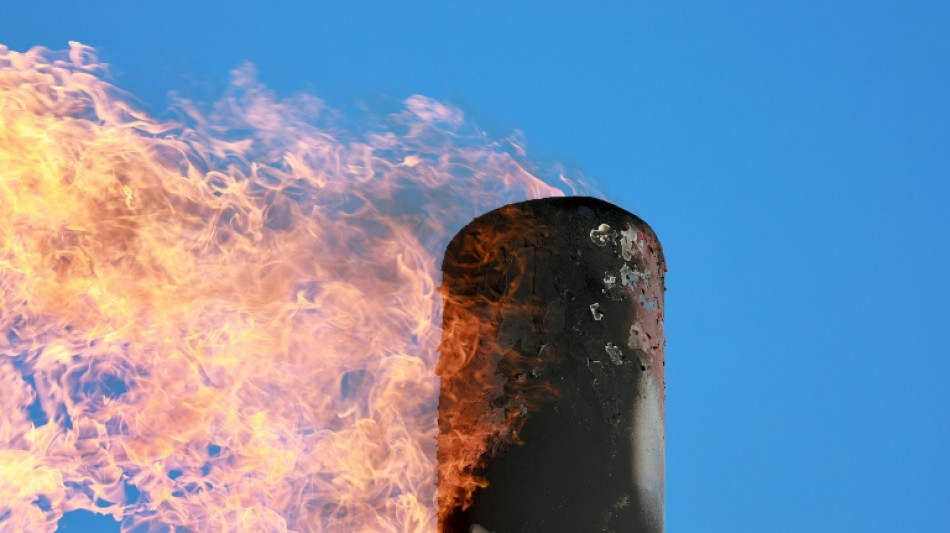
Methane: a powerful gas heating the planet / Photo: JOE RAEDLE - GETTY IMAGES NORTH AMERICA/AFP/File

 Venezuelan rescue brings hope to nation in mourning

 Macabre night in La Guaira, Venezuela's earthquake epicenter
 Tesla global auto sales jump 25% in 2nd quarter, beating expectations

 Zverev routs Royer to reach Wimbledon third round

 Hot spell roasts eastern US ahead of holiday weekend

 Hamilton cools fans Ferrari fervour

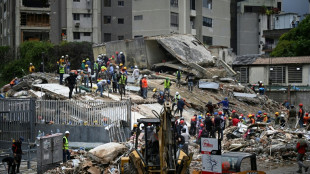 Venezuela's diaspora searches for quake victims on social media
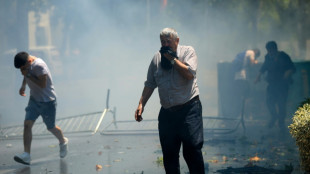 Albanian clashes as protest over Trump-linked resort boils over

 Desire key to Pogacar dominance, says former Tour king Froome

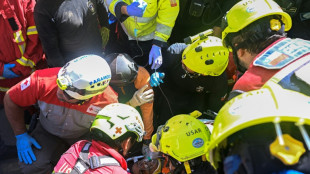 Rescuers dig out Venezuelan man eight days after quakes
 Anderson closes in on record Man City move

 England change five for South Africa Test
 Lock Alemanno to make 100th Pumas appearance against Scotland

 US posts weaker-than-expected job growth in June

 UK PM says 'deeply sorry' for decades of forced adoptions

 Almost 1.2 mn apply for Spain's migrant regularisation
 Ukrainian state ordered Nord Stream sabotage: German prosecutors

 Swiatek, Zverev aiming to lay down Wimbledon markers

 German ruling coalition agrees on major reform package

 European stocks climb after Asia rout

 Former Arsenal, Spain midfielder Cazorla retires

 German drone maker raises $1.2 bn as investors pile into defence
 French scramble to find air conditioners before next heatwave

 Japan deploys bear cameras in moutains as attacks surge

 Germany's Infineon opens major chip plant as EU seeks tech autonomy

Climate talks often revolve around reducing the most dangerous greenhouse gas CO2.
But other powerful heat-trapping emissions -- of methane -- will be in the crosshairs at a global forum in Geneva this week.
Methane -- which is potent but relatively short-lived -- is a key target for countries wanting to slash emissions quickly and slow climate change.
That is particularly because large amounts of methane are simply leaking into the atmosphere from oil and gas projects.
Methane emissions from the fossil fuel industry have risen for three consecutive years, according to the International Energy Agency (IEA), hitting near record highs in 2023.
- What is methane? -
Atmospheric methane (CH4) occurs abundantly in nature and is the primary component of gas fuel.
It is the second largest contributor to climate change, accounting for roughly 30 percent of global warming since pre-industrial levels, according to UN climate experts.
Methane remains in the atmosphere for only about 10 years, but has a much more powerful warming impact than CO2.
Its warming effect is 28 times greater than CO2 over a 100-year timescale (and 80 times over 20 years).
Exactly how much methane is released in the atmosphere remains subject to "significant uncertainty", according to the IEA, despite progress in the monitoring of emissions through the use of satellites.
And scientists are puzzling over a steady increase of methane in the atmosphere, with concentrations currently over two-and-a-half times greater than pre-industrial levels.
- Gas leaks and cow burps -
The majority of methane emissions -- around 60 percent -- are linked to human activity, the IEA says, and the rest from natural sources, mainly wetlands.
Agriculture is the biggest culprit, responsible for roughly a quarter of that pollution.
Most is from livestock -- cows and sheep release methane during digestion and in their manure -- and rice cultivation, where flooded fields create ideal conditions for methane-emitting bacteria.
The energy sector -- coal, oil and gas -- is the second largest source of human caused methane, which leaks from gas pipelines and other energy infrastructure, or is deliberately released during maintenance procedures.
A study published in the journal Nature in March found that oil and gas projects in six major producing regions of the United States were emitting three times as much methane as estimated by the government -- losses worth $1 billion.
Discarded household waste also creates large amounts of methane when it decomposes if left to rot in landfills.
- What can be done? -
The IEA estimates that rapid cuts in methane emissions linked to the fossil fuel sector could prevent up to 0.1 degrees Celsius of warming by mid-century.
That might sound modest, but such a reduction would have an impact greater than "immediately taking all cars and trucks in the world off the road", the agency said.
IEA Executive Director Fatih Birol called it "one of the best and most affordable" options for reducing global warming.
It could be achieved by repairing leaky infrastructure and eliminating routine flaring and venting during pipeline maintenance.
This month, the IEA said the fossil fuel industry could avoid about 40 percent of its methane emissions at no net cost.
"Leakage is far too high in many areas where natural gas is extracted but some countries, notably Norway, have shown that it is possible to extract and supply natural gas with minimal levels of leakage," Energy Programme Director William Gillett at the European Academies Science Advisory Council (EASAC) told AFP.
In the case of agriculture, it is possible to modify animal diets by, for example, adding a compound to improve their health and that of the planet.
For rice fields, changes to water management are the "most promising" way to reduce emissions, according to a report by the UN's Food and Agriculture Organization.
- Binding agreement? -
A joint EU-US "Global Methane Pledge" was launched in 2021, aiming to reduce worldwide methane emissions by 30 percent by 2030, compared to 2020 levels.
Some 150 countries have since signed on, but not big emitters China, India and Russia.
"To slow down climate change, it will be critical that the most important players who have not joined so far will engage" with the pledge, said Gillett.
The United States and China have announced they will include methane in their climate action plans, and Beijing has revealed a plan to control its emissions -- although without a quantified target.
But voluntary initiatives lack rigorous measures to hold companies and countries to account.
L.Adams--AT