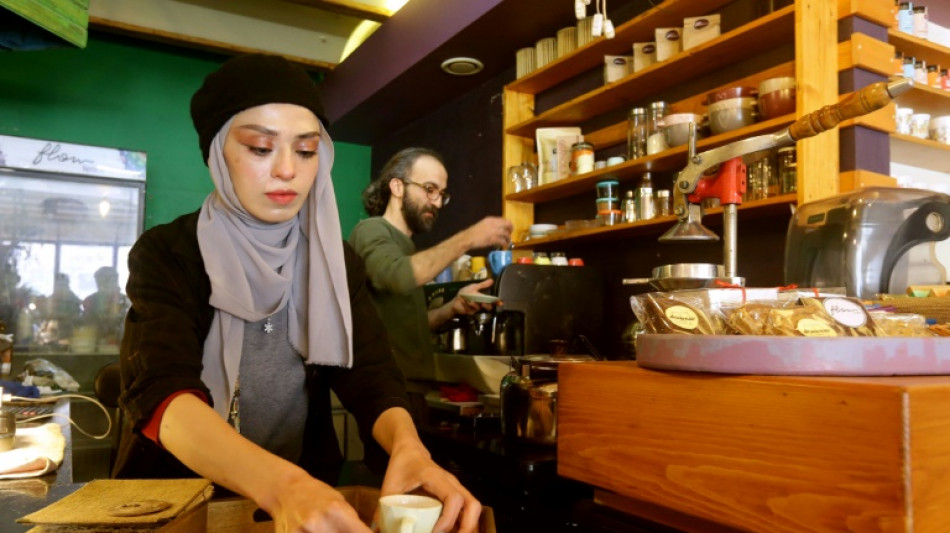
Power cuts in Syrian capital drive workers, students to cafes / Photo: LOUAI BESHARA - AFP

 Belgium late show floors Senegal at World Cup

 Harry Kane: England's World Cup saviour

 US actor Danny Glover says he has Alzheimer's
 Trump sees progress as US, Iran hold Qatar talks

 Djokovic, Sinner into Wimbledon third round, Andreeva stunned

 Spurs agree club record £100 mn move for Newcastle's Tonali - reports
 Rain has final say in 1st England-India T20 as Sooryavanshi still awaits debut
 England refused to accept defeat in 'beautiful' DR Congo win, says Tuchel

 'Let the dogs in': Sabalenka wants Wimbledon to lift ban
 Oppressive heat broils US during World Cup, July Fourth

 Can anyone stop France at the World Cup?
 Sinner, Sabalenka into Wimbledon third round, Andreeva stunned

 England have 'hero moments', says Kane after double downs DR Congo

 努莎·奧貝爾:為市民實施時速10公里限速,波茨坦的「坑洞政策」——是漠不關心還是無能為力?

 US refuses to extend North America trade pact in current form
 Mixed US auto sales in 2nd quarter amid high gas prices

 Swiatek, Zverev hoping to lay down Wimbledon markers

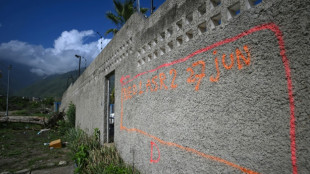 Spray-painted letters spell tragedy for Venezuela quake victims

 'Everybody's profiting': Trump defends $1bn crypto earnings

 WTA Finals moved from Riyadh to Indian Wells

 Messi returns 'home' to lead Argentina World Cup charge in Miami
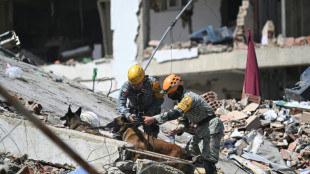
 England skipper Sciver-Brunt 'threw everything' at World Cup semi-final return
 Stocks mixed with eyes on US Fed

 Trial begins for suspected mastermind of Malta journalist killing

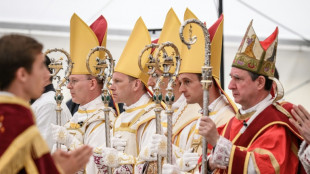 Traditionalist Catholic society defies Vatican by consecrating new bishops

Majida has been working from a central Damascus cafe almost every day for a year, depending on it for reliable electricity and wifi in a country plagued by debilitating power cuts.
"Without cafes, I would have been unable to work because of the long blackouts at home," said the graphic designer, 42, declining to provide her surname.
Enterprising owners have upgraded their businesses with generators and batteries to guarantee power and draw in Damascenes plagued by Syria's war-battered and crumbling infrastructure.
"I need a continuous power supply (to work) -- and I get my inspiration from the people here," added Majida, drawing designs on a tablet on the cafe's sofa.
Nearly 13 years of civil war have hammered Syria's infrastructure, including power stations and energy pipelines, leading to power outages that can drag on for up to 20 hours a day.
Key oil and gas fields in the country's northeast have not been under government control for years, while Western sanctions have hampered resource imports and strained public funds.
In 2021, Economy Minister Samer al-Khalil said energy sector losses since 2011 amounted to around "$100 billion in direct and indirect damages".
In the Syrian capital, the shortages have sparked a boom in cafes turned informal co-working spaces for electricity hungry workers and students.
At Flow Space Coffee, a colourful cafe with a quiet, studious ambiance, customers including Majida type on laptops or sip coffee while shuffling through papers.
- 'A necessity' -
The owner, Ihsan Azmeh, 38, whose friendly white dog Lilly is also a regular, said he wanted the cafe to be a place for young workers and students when he opened it three years ago.
"Damascus cafes solve at least three problems for people these days: electricity, internet and heating," he said.
Azmeh has rearranged the furniture to accommodate a growing number of workers seeking makeshift offices, with benches resembling school desks and a large rectangular table for meetings.
He bought a generator and has installed a battery system that kicks in when state power drops out, ensuring a constant electricity supply. Azmeh also doubled the number of outlets for charging mobile phones and other devices.
"I often find myself sleeping at the cafe instead of heading home" to avoid long power cuts, he added.
Across the city in the eastern neighbourhood of Bab Tuma, known for its cafes and bars, Saint-Michel Coffee has also become a haven for freelancers and students.
Visiting the cafe "is not an option for me, but a necessity" said George Kassari, 18, a computer science student at Damascus University.
"As soon as I arrive, I take out all my devices to charge them," he said, adding that he and his sister often recharge each other's electronics at the cafe.
- 'Only solution' -
Muhammad Sabahi, a student who works as a website developer for a company in the Gulf, was preparing for an online meeting at a table nearby.
"I work from the cafe every day," said the 22-year-old, adding: "I now have a fixed seat here, employees know my favourite drink by heart and they begin making it as soon as I arrive."
If not for the coffee shop, "I would have failed my university exams and lost my job," he said.
"This is the only solution for me and many of my friends," he added, a large bag filled with chargers, cables and other necessities sitting beside him.
Medical student Shadi Elias, 18, said he chased sunlight around his home by day and read his textbooks by torchlight at night, heading to the nearest coffee shop whenever the batteries ran out.
"Cafes are crowded during the exam periods, so I make sure to come early," he said, sitting near a chalkboard with drawings of lightbulbs reading "battery-powered".
"This place turns into a big classroom -- we borrow pens, papers, books and sometimes even phone chargers from each other," he said with a smile.
W.Nelson--AT