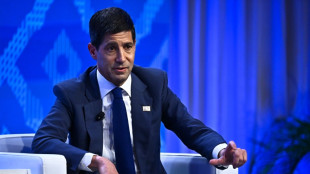
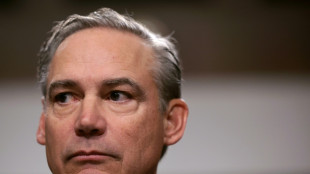
US starts targeting banks that help Russian war in Ukraine / Photo: Drew Angerer - GETTY IMAGES NORTH AMERICA/AFP

 Tuvalu has 'limited' power to halt its fossil fuel investments: NZ govt papers seen by AFP
 Palestinian activist Khalil returns to Columbia after US detention

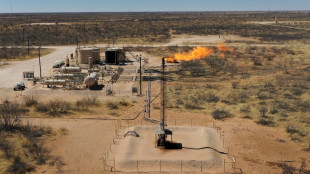 Trump drastically loosens oil and gas methane rules

 French Senate weighs bill to make protesters pay for unrest damage
 'A very sad day': Arteta despair as Arsenal stunned by Fleetwood

 Charles tackles thorny legacy of slavery on Caribbean trip

 Former Grand Slam winner Wawrinka ends tennis career

 Brazil's Flavio Bolsonaro flees to US after election loss
 'Faerie' nights: 'ACOTAR' fans finally get their book

 American woman convicted of getting military training from Islamic State
 Israel opposition holds narrow edge over Netanyahu in first projections

 Floriani hits maiden goal as Lazio go top

 Trump set to drastically loosen oil and gas sector's methane rules
 Storied Paris department store seeks bankruptcy protection
 Xhaka, Embolo can return to Swiss squad after fake Covid docs affair
 Allegri suspended for two Serie A games after red card
 Flight data, satellite images reveal growing US role at Ecuador base
 McInnes feels 'guilt' ahead of Hearts return with Rangers

 Brazil's Lula turns 81, vows to work '24 hours a day'
 Boeing releases cautious growth plan as shares fall sharply

 Exiled Russian dissident Navalnaya warns dictators becoming 'more cunning'
 Bayern 'risk' reaps huge reward for Ballon d'Or winner Kane
 Record turnout as Israeli voters deliver verdict on Netanyahu
 Iraola says Isak 'feels the trust' after Liverpool scoring streak

 French media protest manhandling of journalists at far-right party rally

The United States said Friday it will impose sanctions on foreign banks that support Russia's war in Ukraine, in a new bid to exert pressure on Moscow as it diversifies from the West to China.
Under an executive order signed by President Joe Biden, the United States will slap so-called secondary sanctions against financial institutions that back companies already targeted for supporting Russia's defense industry.
"We are sending an unmistakable message: anyone supporting Russia's unlawful war effort is at risk of losing access to the US financial system," Jake Sullivan, Biden's national security advisor, said in a statement.
Sullivan said the new sanctions will "continue tightening the screws on Russia's war machine and its enablers," adding that earlier measures have "significantly degraded" Russia's military, long seen as among the world's most formidable and which in recent months has relied on imports from sanctioned North Korea and Iran.
But Russia since the start of the war has been rapidly working to reduce exposure to the West, shifting away from trade in dollars, euros, sterling and yen.
China's largest banks meanwhile have extended billions of dollars worth of credit in renminbi to Russia since the war as Western institutions exit.
Deputy Treasury Secretary Wally Adeyemo said that major banks in countries such as China, Turkey and the United Arab Emirates have largely made efforts to avoid running afoul of US sanctions, and that the new measures would target smaller institutions.
Russia has been setting up front companies to hide purchases through third countries, Adeyemo said in an interview with CNBC.
"They're not going through big companies in these countries. They're going through small firms to get things like micro-electronics and machine tools and engine parts," he said.
"But all of these companies still have to use the financial system."
- Russia weathering blow -
Russia's economy has taken a hit from the pressure but is still on a growth trajectory, with the International Monetary Fund in October forecasting that its economy would expand 1.1 percent in 2024.
A key target has been Russia's oil exports, with Western powers agreeing to a cap of no more than $60 a barrel.
The US Treasury Department said Thursday that the cap brought down Russia's tax revenue from oil and petroleum goods exports by 32 percent between January and November, compared to a year ago.
But other assessments have been less rosy on the impact. A recent study by the Kyiv School of Economics found that compliance with the price cap has been virtually non-existent due to widespread fraud.
The new effort at secondary sanctions comes as the G7 group of industrialized democracies balks at seizing Russian government assets to support Ukraine, a potentially major means of pressure backed by the United States.
Direct US assistance to Ukraine could also soon dry up, with Congress yet to approve a request by the Biden administration due to an unrelated dispute on immigration policy.
The White House fears an end to aid would give new momentum to Russia against Ukraine, which has received $43 billion in military assistance from the United States since the invasion.
In parallel actions on Friday, the United States said it will step up sanctions against Russian diamonds and seafood -- banning their import if they originated in Russia, even if they were then processed elsewhere.
The action comes days after a European Union ban on Russian diamonds. The United States has already banned imports of Caspian Sea caviar since 2005 for conservation reasons.
The United States has been stepping up the use of secondary sanctions, despite concerns among some policymakers and experts that it will encourage other countries to move away from the dollar.
The United States has used its clout most visibly on Iran by threatening countries that buy oil from the clerical state.
D.Lopez--AT