How Russia's war in Ukraine rocked the global economy

 Bangladesh Test cricket reboot delivers in style with historic win

 Virgin moves closer to launching Eurostar rival in 2030
 Indian marble waste dump becomes unlikely tourist attraction
 Coach says Australia 'let standards slip' in shock Bangladesh loss

 Hawaii recovery efforts begin as Lala downgraded, moves west

 Food safety crackdown snares Mumbai's famed restaurants
 Trump says US scaling back military drills with Seoul hours before start
 Nearly 13,000 displaced after deadly Indonesian quake

 Axe hangs over Australian batters after Darwin 'disaster'

 Is this cave in Turkey where Homer wrote 'The Odyssey'?
 Winning back walls from gangs, artists fill El Salvador's towns with color

 Opening arguments expected in Tupac murder trial

 As machinery removes rubble, hopes for survivors from Colombian quake dwindle
 Gold Roth IRA: How It Works, Rules, Taxes, Fees, and What Investors Should Know in 2026 (Guide Released)

 HM Exploration Commences Borehole & Surface EM Surveys at Lewis Pilley's
 SEG Announces 2026 Interim Results

 Trump says US scaling back military drills with South Korea

 Zambia's Hichilema takes early lead in reelection bid

 Sabalenka squeezes out a win on sixth match point in Cincinnati

 Duplantis dominant, Hunt hits four and Asher-Smith makes history

 Spanish soldier dies in Aragon wildfire

 PSG beaten by Lens in French Champions' Trophy

 Rybakina, Andreeva race into Cincinnati third round

 Amy Hunt bags fourth Euro gold as Britain win 4x100m mixed relay

 Spanish soldier dies in Aragon wildfire: regional leader
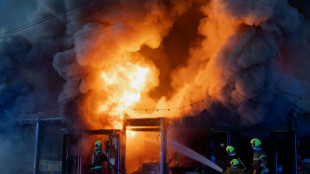
In a month of conflict in Ukraine, global oil prices have soared, foreign companies have exited Russia and Moscow faces the spectre of default.
Here is a look at the economic fallout from Russia's February 24 invasion of its neighbour:
- Commodities soar -
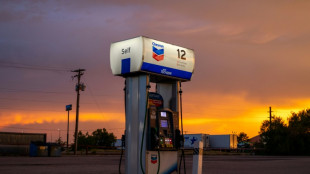
Oil and gas prices have surged over supply fears as Russia is one of the world's biggest producers and exporters of the fossil fuels.
Brent North Sea crude, the international benchmark, stood at around $90 in February. On March 7, it jumped to $139.13, close to a 14-year high and prices remain highly volatile.
Prices have risen at the pump, too, prompting governments to take measures to ease the financial pain for consumers: A lower VAT in Sweden, a price cap in Hungary, or a discount in France.
Gas prices have also skyrocketed, with Europe reference Dutch TTF leaping to an all-time high at 345 euros on March 7.
The United States, Canada and Britain have announced Russian oil bans.
The European Union has avoided sanctions on Russia's energy sector as countries such as Germany rely heavily on Moscow's gas supplies.
Other commodities massively produced in Russia have soared, including nickel and aluminium.
Auto industry supply chains face disruptions as key parts come from Ukraine.
- Food threat -
UN chief Antonio Guterres has warned that the conflict could reverberate far beyond Ukraine, causing a "hurricane of hunger and a meltdown of the global food system".
Russia and Ukraine are breadbaskets for the world, accounting together for 30 percent of global wheat exports.
Prices of cereals and cooking oils have risen.
The UN's Food and Agriculture Organization says the number of undernourished people could increase by eight to 13 million people over the course of this year and next.
Ships are not leaving Ukraine and there are concerns about the upcoming sowing season in the country.
The United States, India and Europe could cover wheat shortages. But it could be more complicated to replace sunflower oil and corn, of which Ukraine is the world's number one and number four exporter, respectively.
- Markets rattled -
Stock markets had started off 2022 on a good note as economies recovered from the Covid pandemic and companies posted healthy results.
But the war has brought volatility to the markets while Moscow's stock exchange closed for three weeks and only partially reopened on Monday.
Western sanctions have paralysed the Russian banking sector and financial system, while the ruble has collapsed.
The measures include efforts to freeze $300 billion of Russia's foreign currency reserves held abroad.
Russia now faces the risk of defaulting on debt for the first time in decades.
Moscow paid interest on two dollar-denominated bonds last week, giving the government some breathing room until the next debt payments in the coming weeks.
- Firms flee -
Hundreds of Western firms have closed shops and offices in Russia since the war started -- due to the sanctions, political pressure or public opinion.
The list includes famous names such as Ikea, Coca-Cola and MacDonald's.
Russian President Vladimir Putin has raised the threat of nationalising foreign-owned companies.
Some companies have chosen to stay in Russia, citing their social responsibility to not abandon their local employees and deprive the population of essential goods.
- Slower growth -
The war threatens to be a drag on the global economic recovery from the Covid pandemic.
The OECD has warned that the conflict could inflict a one-percentage-point hit on global growth.
The IMF is expected to lower its growth forecast, which currently stands at 4.4 percent for 2022.
"The entire global economy will feel the effects of the crisis through slower growth, trade disruptions, and steeper inflation, harming especially the poorest and most vulnerable," the IMF, World Bank and European Bank for Reconstruction and Development (EBRD) warned in a joint statement.
With inflation soaring, analysts fear economies could face a period of stagflation -- a toxic mix of rising prices and weak growth.
"Even if the war stopped today, the consequences of this conflict would be felt for months to come, and that would work through commodity prices," the EBRD's chief economist, Beata Javorcik, told AFP.
burs-gk/pn/lth/cdw
A.Taylor--AT