Plastic pollution cuts power in DR Congo

 Bangladesh Test cricket reboot delivers in style with historic win

 Virgin moves closer to launching Eurostar rival in 2030
 Indian marble waste dump becomes unlikely tourist attraction

 Coach says Australia 'let standards slip' in shock Bangladesh loss

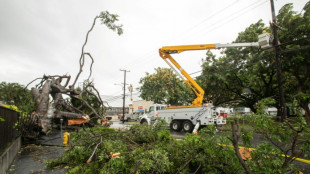
 Hawaii recovery efforts begin as Lala downgraded, moves west

 Food safety crackdown snares Mumbai's famed restaurants
 Trump says US scaling back military drills with Seoul hours before start
 Nearly 13,000 displaced after deadly Indonesian quake

 Axe hangs over Australian batters after Darwin 'disaster'

 Is this cave in Turkey where Homer wrote 'The Odyssey'?

 Winning back walls from gangs, artists fill El Salvador's towns with color

 Opening arguments expected in Tupac murder trial

 As machinery removes rubble, hopes for survivors from Colombian quake dwindle

 Gold Roth IRA: How It Works, Rules, Taxes, Fees, and What Investors Should Know in 2026 (Guide Released)

 HM Exploration Commences Borehole & Surface EM Surveys at Lewis Pilley's
 SEG Announces 2026 Interim Results

 Trump says US scaling back military drills with South Korea

 Zambia's Hichilema takes early lead in reelection bid
 Sabalenka squeezes out a win on sixth match point in Cincinnati

 Duplantis dominant, Hunt hits four and Asher-Smith makes history

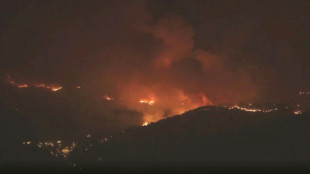 Spanish soldier dies in Aragon wildfire

 PSG beaten by Lens in French Champions' Trophy

 Rybakina, Andreeva race into Cincinnati third round

 Amy Hunt bags fourth Euro gold as Britain win 4x100m mixed relay

 Spanish soldier dies in Aragon wildfire: regional leader
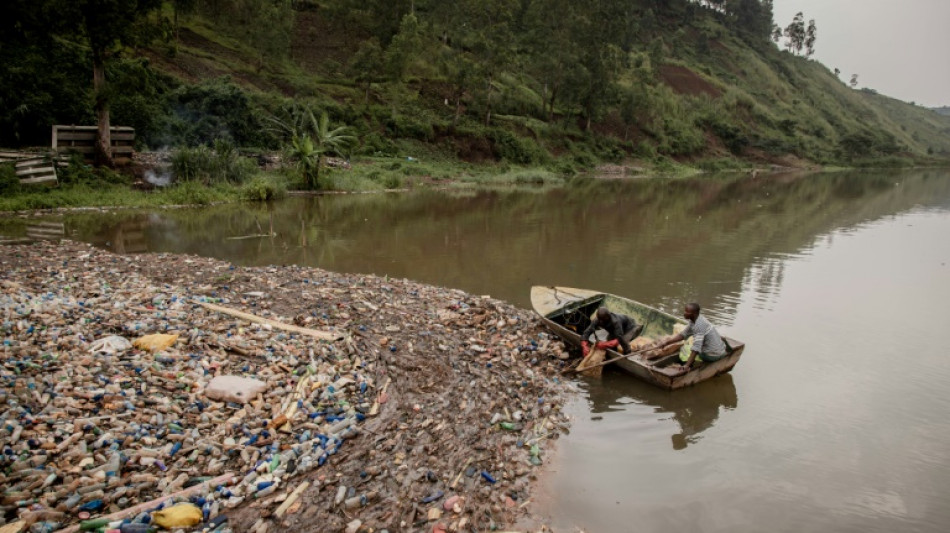
Among rolling hills around the southern tip of majestic Lake Kivu, huge layers of plastic waste ride the water and block the turbines of the largest hydroelectric plant in eastern Democratic Republic of Congo.
The Ruzizi dam is polluted by thousands of bottles, cans and other objects thrown into the lake, which stretches 90 kilometres (56 miles) along the border between DR Congo and Rwanda.
"Since the lake flows towards the Ruzizi River, all the waste thrown into it comes here little by little," Lievin Chizungu, production manager at the dam's power station, told AFP.
The mountainous terrain and rainy climate around lakeside Bukavu, capital of South Kivu province, do not help.
"The rainwater carries the waste into the lake and then into the river," Jovy Mulemangabo, an engineer for the national electricity company (SNEL) in south Kivu, told AFP.
Chizungu says piles of waste can "reach a depth of 14 metres" (almost 46 feet). Divers clean the river bed to keep debris from clogging the turbines. If waste gets trapped, towns in the area are deprived of power.
Other employees clean the surface, using barges.
"I have been doing this job for 13 years," Byunanine Mubalama told AFP. "Every day there is garbage I have to clean up.”
— ’The impact is huge’ —
But it is not enough. One of the four units in the plant was damaged by debris at the end of January, and it is still down.
"The impact is huge. We have a deficit of 6.3 megawatts out of 30 total MW that we must produce not only for South Kivu, but also for neighbouring North Kivu province and for Burundi," Chizungu said.
Garbage also caused an alternator to fail at the Ruzizi 2 power plant about 25 km south of Bukavu. With the damage at both plants, they are 20 MW short, Chizungu said.
This has provoked "many power outages in Bukavu and Uvira".
Nicole Menemene, 29, collects plastic waste on the lake's shores to make baskets, flowerpots, stools and nightstands.
She runs a private company called Plastycor that transforms trash into "beautiful and useful" objects.
"We do the work by hand," Menemene said.
The company has 10 employees, but her goal is to "industrialise" their work. With her project and other local efforts, Menemene hopes to see a "90 percent reduction of Lake Kivu's pollution".
— ‘We have to teach people’ —
Education is a crucial first step in reducing the lake's plastic pileup, Chizungu said.
"First, we have to teach people that they cannot dump waste in the lake," he said, adding that authorities should crack down on people tossing garbage in the waters.
But for some local residents, it is not so simple.
"Our houses are crammed together on small plots. There is no way to manage garbage," Mathilde Binja said. "I have no choice but to throw it into Kawa river, which dumps into the lake".
The city does offer garbage collection and disposal services for $3 to $5 (2.70 to 4.50 euros) per month, Malgache Malyanga, director of Bukavu Household Waste Management Program (PGDM), told AFP.
This could be either from ignorance or lack of funds to pay for waste removal services, he added.
To combat the plague of plastic waste filling the world's lakes, oceans and lands, the United Nations launched negotiations in March in Kenya for a global treaty against plastic pollution.
N.Walker--AT