Netflix series helps heal wounds of Turkey's Jews

 India take control of Galle Test as Sri Lanka slump to 99-5
 Australia's mushroom murderer appeals conviction
 The Nigerian fishing community being eaten up by the Atlantic

 Kushner to meet Netanyahu after talks with Hamas on Gaza plan
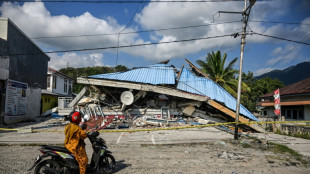
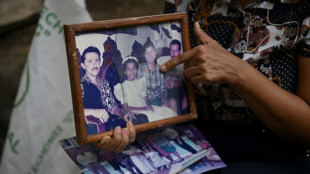 Photos, memories all that remain for Colombia's bereaved after quake
 Sabalenka squeezes out win on sixth match point in Cincinnati
 Trump says US scaling back military drills with South Korea hours before start
 Jason Arday: UK academic who died amid plagiarism storm

 Sabbath cafe clash lays bare Israel faultlines
 Caledonia Mining Corporation Plc: Director Shareholding Notification

 InterContinental Hotels Group PLC Announces Transaction in Own Shares - August 17
 HM Exploration Commences Borehole & Surface EM Surveys at Lewis Pilley's
 Trump says US scaling back military drills with South Korea

 Zambia's Hichilema takes early lead in reelection bid

 Sabalenka squeezes out a win on sixth match point in Cincinnati

 Duplantis dominant, Hunt hits four and Asher-Smith makes history

 Spanish soldier dies in Aragon wildfire
 PSG beaten by Lens in French Champions' Trophy

 Rybakina, Andreeva race into Cincinnati third round
 Amy Hunt bags fourth Euro gold as Britain win 4x100m mixed relay

 Spanish soldier dies in Aragon wildfire: regional leader
 Belgium's Pocognoli appointed new Scotland manager

 Marchand storms to second gold of European championships
 Kushner meets with Hamas in push to revive Gaza plan
 Villarreal battle back to earn draw at promoted Racing

A groundbreaking Netflix series set among Turkey's Jews has been an unexpected hit there, challenging taboos and enthralling audiences with its glimpse into a long-overlooked community.
The global success of Turkish television series -- often with government-pleasing narratives -- has made the country a small-screen superpower.
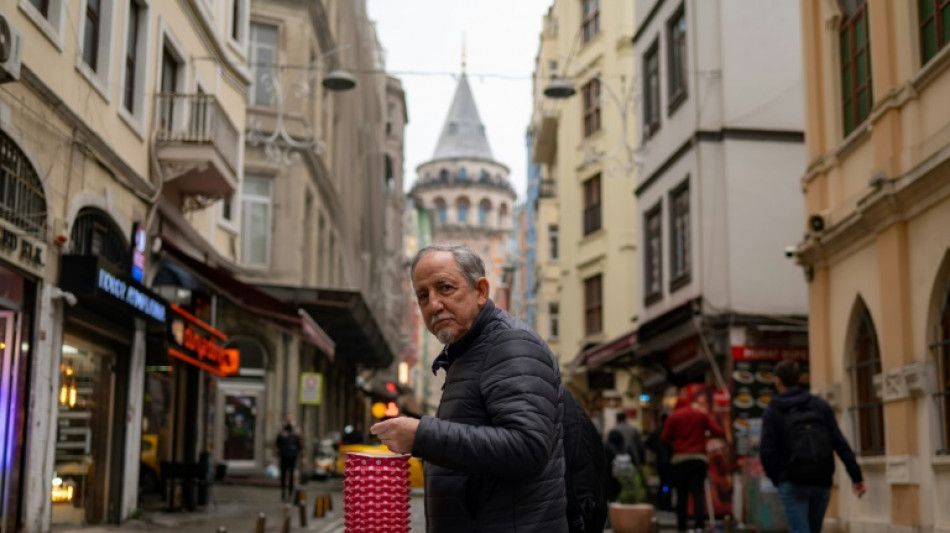
But "The Club" and its sumptuous recreation of 1950s Istanbul is a first, not least because some of the dialogue is in Ladino, the language of Istanbul's Jews which derives from medieval Spanish.
While minorities once flourished in the cosmopolitan capital of the Ottoman Empire, they suffered persecution as it fell and discrimination ever since.
Jews have generally kept their heads down to protect themselves, sticking to the Turkish Jewish custom of "kayades", meaning "silence" in Ladino.
But "The Club" -- which is set around a nightclub in Istanbul's historic European quarter -- puts an end to that silence.
- Pogrom against minorities -
The attacks and persecution that drove many Jews, Greeks and Armenians to leave Turkey in the 20th century are dealt with, including a crippling 1942 tax on non-Muslims and a pogrom against Greeks in 1955 which also unleashed violence against all the other minorities.
"Silence has neither protected us from anti-Semitism nor prevented migration to other countries," said Nesi Altaras, editor of Avlaremoz online magazine run by young Turkish Jews.
"We need to talk, including on political issues that previous generations wanted to avoid," he told AFP.
Less than 15,000 Jews remain in Turkey, down from 200,000 at the beginning of the 20th century.
The majority are Sephardic, whose ancestors fled to the Ottoman Empire after they were expelled from Spain in 1492.
In a rare case of life imitating art, "The Club" became Netflix's number one show in Turkey just as Ankara tried to repair ties with Israel.
While both countries have been historically close, relations have soured badly over Israel's treatment of the Palestinians and remarks by the Turkish president criticised as anti-Semitic.
Indeed until recently, Turkish pro-government dailies regularly published stories seen to be anti-Semitic.
But Israeli President Isaac Herzog made a landmark visit to Turkey earlier this month, where he held talks with his opposite number, Recep Tayyip Erdogan.
Herzog even visited the Istanbul district in which "The Club" is set.
- Fierce debate -
The show -- and particularly the scenes of the pogroms on Istanbul's Istiklal Avenue in September 1955 when mobs lynched minorities and ransacked their shops -- has also sparked a fierce debate in the Turkish media and online about the need to confront history.
"No other TV show featured the anti-Semitic incidents of this period in such a remarkable way," said Silvyo Ovadya, president of the Jewish Museum of Turkey.
"We don't teach this part of history in schools in Turkey. Many Turks have learnt it thanks to the series," Altaras said.
"The series invites us to question the official narrative and ask ourselves, 'What happened to the Jews of Turkey?'" said Pinar Kilavuz, a researcher on Sephardic Jews at Paris-Sorbonne University.
Altaras believes the series has influenced domestic Turkish politics.
"It is no coincidence that the leader of the main opposition party has just included 'healing the wounds of the past' in his campaign, referring to the attacks against minorities," he said.
- 'We're part of this country' -
For Izzet Bana, a musician and an advisor to the series, the show accomplished a "miracle" by recreating the Jewish quarter of his childhood.
"I was worried at first because other shows caricatured Jews. But the series reflects real characters, far from cliches," Bana said.
Despite this progress on screen, Kilavuz said, more needs to be done for Turkey's Jews to feel equal.
"There is a myth about the Ottoman Empire welcoming Jews expelled from Spain in the 15th century," she said.
"It is used to stigmatise anyone asking for equal rights as showing ingratitude," she argued.
Even if everyone is considered equal before the law in Turkey, in practice non-Muslim minorities face huge obstacles, from getting government jobs to opening or repairing churches or synagogues.
It is also rare to find a senior minority figure in government or in state institutions where Sunni Turkish Muslims still dominate.
For Altaras, the series, which is due to come back with a third season, shows Turkish society that Jews were part of "the story of this country".
"We already knew that, but it's good that the Turks realise it too."
D.Johnson--AT