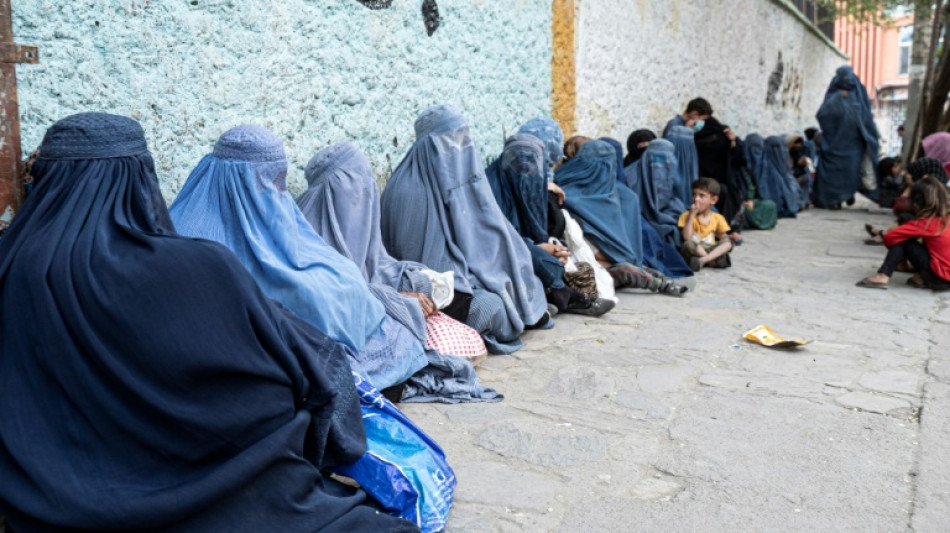
Taliban say ban on women working for UN 'internal social matter' / Photo: Wakil KOHSAR - AFP/File

 Mahomes makes triumphant return as Chiefs rout Broncos 31-10

 Belgium completes outer structure of offshore energy island

 Video documents rescue of injured US airman from Iran
 Asian Games: Bigger than Olympics, young stars and a cruise ship
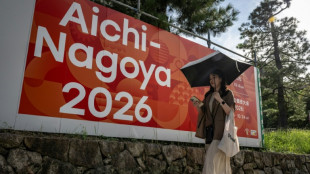 Asian Games set for liftoff but will have everyone have a bed?

 Most markets drop as oil extends gains ahead of expected US rate hike
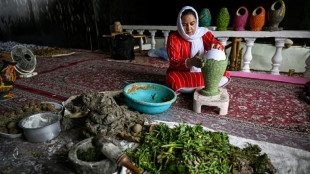
 Kate Beckinsale challenges assumptions about her beauty routine
 Sri Lanka's famed beach shack battles demolition

 Drone shot down by NATO over Lithuania

 Vserv targets ₹1,000 crore revenue by 2030 through AI expansion

 India prohibits bank fees on UPI payments up to ₹2,000
 Air India CEO summoned over alleged departure immigration lapse

 New Zealand agencies missed red flags in child kidnapping case: inquiry

 Brazil's Amazon defender Raoni has cancer

 HFCL expands planned fibre investment to ₹1,800 crore
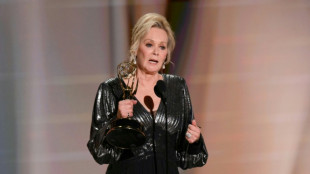 Emmy Awards begin as 'Widow's Bay' and 'The Pitt' vie for top prizes

 PRAAMS Launches AI Co-Investor 5.0, Expanding Its Institutional Research, Risk Management, and Portfolio Management Platform

 Himalayan glacier study warns of flood and water-supply risks

 Kuwait schools restore classroom routines after remote learning
 US designer Bob Mackie, known for Hollywood glamour, dies at 87

 BIS flags debt and profitability risks in AI-driven market rally

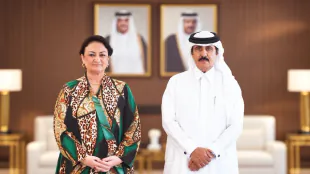 Qatar Chamber and Maltese envoy consider business forum
 Spanish PM denies being blackmailed by Morocco

 Doha Islamic finance forum names AlRayan firms as co-lead partners
 Leeds thrash Newcastle to go third in the Premier League

The decision to ban Afghan women from working for the United Nations was an "internal social matter", the country's Taliban authorities said Friday, a day after the UN Security Council demanded they overturn the ruling.
The Security Council resolution passed unanimously by all 15 Council members on Thursday said a ban on women working for the world body and NGOs in Afghanistan "undermines human rights and humanitarian principles".
It urged "all States and organisations to use their influence" to "promote an urgent reversal of these policies and practices".
On Friday, however, the Afghan Foreign Ministry issued a statement saying the resolution failed to respect the country's "sovereign choices".
"We remain committed to ensuring all rights of Afghan women while emphasizing that diversity must be respected and not politicized," it said.
"This is an internal social matter of Afghanistan that does not impact outside states."
Since ousting the foreign-backed government and returning to power in August 2021, Taliban authorities have imposed an austere version of sharia that the United Nations has labelled "gender-based apartheid".
Women have been barred from most secondary education and universities, prevented from working in most government jobs as well as NGOs and blocked from public spaces such as gyms and parks.
Earlier Friday, a senior Taliban leader warned the UN Security Council to give up its "failed policy of pressure".
"Any position adopted, that is not based upon a deep understanding won’t give the desired results and will always be ineffective," said Anas Haqqani, a senior leader in the Taliban movement but with no official government role.
- 'Collective punishment' -
The foreign ministry statement said the government welcomed parts of the resolution -- including "the principle of Afghan-led and Afghan-owned right to self-determination".
But it insisted that the humanitarian crisis was man-made and driven by economic restrictions.
"The reality is that this ongoing crisis can only be resolved by the removal of restrictions on the country," the statement said.
At the UN on Thursday, Russian ambassador Vasily Nebenzia criticised the text of the resolution despite signing it.
"We seriously regret and are disappointed that steps and a more ambitious approach and texts were blocked by Western colleagues," he said.
"If you're so sincere, why not return the assets you've stolen from the country and without any preconditions," he said, referring to the $7 billion in Afghan central bank assets frozen by the United States after the Taliban government seized power.
The United States announced in September the creation of a fund based in Switzerland to manage half the money.
Amnesty International welcomed the Security Council resolution but said on Friday it "fell short of setting out concrete steps" that member states should take to help restore the rights of women and girls -- and to hold Afghanistan's rulers accountable.
The United Nations announced on April 4 that the Taliban authorities had banned Afghan women from working in its offices countrywide, several months after an edict was issued against Afghan women working for NGOs.
The move sparked wide opprobrium as well as a UN review of its Afghanistan operations, which is to last until May 5.
The world body has stressed "the dire economic and humanitarian situation" in Afghanistan, as well as the "critical importance of a continued presence" of the UN mission in Afghanistan and other UN agencies.
UN Secretary-General Antonio Guterres has organised a meeting in Doha next week with envoys from various countries to "reinvigorate the international engagement around the common objectives for a durable way forward on the situation in Afghanistan".
N.Walker--AT