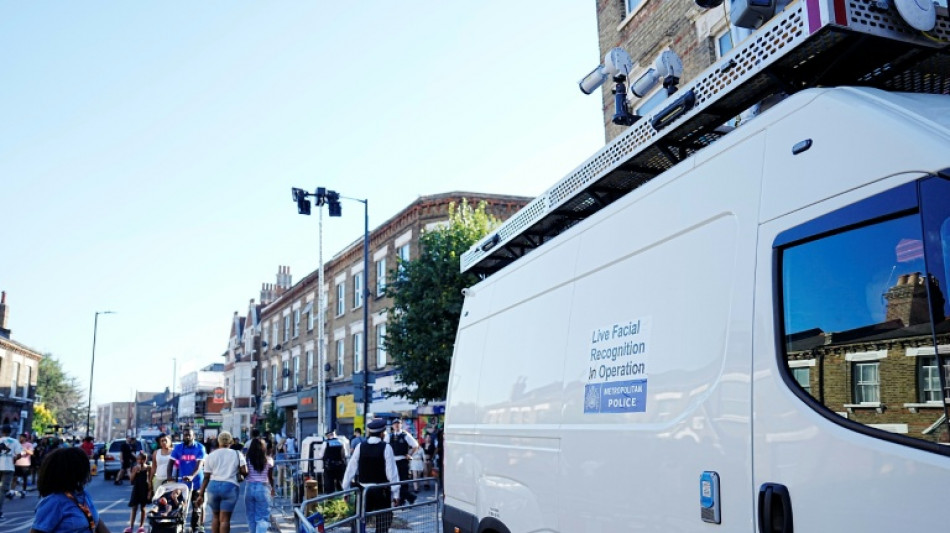
London police to extend use of live facial recognition, drones / Photo: CARLOS JASSO - AFP

 Bishop Museum Races to Save Rare Megamouth Shark Specimen

 Zach Hickerson Recounts Hayden Panettiere's Final Moments in New Interview

 Luxembourg Housing Petition Passes Threshold for Parliamentary Consideration

 Raheem Sterling Receives Suspended Sentence After Lamborghini Crash

 Audience to Choose the Set List at Luxembourg's First FAMIL Jukebox Night

 Luxembourg Pay Rise Delayed as Regional and World Headlines Develop

 Chennai Urbanist Sashna Develops 'Anniki' Card Game to Gamify Tamil Nadu History

 Transport Minister Defends Land Seizure Powers for Toronto-Quebec City High-Speed Rail

London's Metropolitan Police force said Wednesday it will expand the use of drones, artificial intelligence and live facial recognition technology, which has been criticised by rights campaigners.
The scale-up plan involves rolling out static facial recognition across central London and having drone coverage in every London borough in a year's time, the Met said in a press release.
"Policing today will fail if it is not allowed to keep pace with criminals through technology," Met Commissioner Mark Rowley said.
In a speech, Rowley called for the force to be allowed to deploy new technology without being bogged down by legislation and bureaucracy.
Earlier this month, the police chief criticised London Mayor Sadiq Khan's decision to block a multi-million-pound contract with Palantir for the Met to use the AI giant's technology.
According to Rowley, a Palantir pilot had helped the UK's biggest police force consolidate its data. "We must now bring the same technologies to bear in how we tackle crime more broadly," he said.
The mayor's office previously said it was not satisfied the Met had demonstrated the value for money of Palantir's technology.
Rowley also called live facial recognition "the clearest example of what new technology can do", citing that the tech has "contributed to more than 2,000 arrests" since 2024.
The Met scans the faces of passers-by and compares their biometrics with thousands on a watchlist, under its usage policy. The UK is the only European country to deploy the technology on a large scale.
The adoption has faced criticism from human rights organisations, citing fears of mass surveillance and risks of misidentification.
In April, the High Court in London ruled that the Met had "adequate safeguards against abuse" after the force was taken to court by a man falsely identified as a suspect.
Such legal hurdles "risks slowing progress to the point where policing cannot keep pace with the threats we face," Rowley said.
Civil liberties campaigning group Big Brother Watch slammed the live facial recognition expansion as an "alarming escalation of an intrusive technology".
M.King--AT

