
Australia teen social media ban has little impact: research / Photo: Ishara S. KODIKARA - AFP

 Galloway accuser could not foresee publishing-sector fallout, lawyer argues

 New York City Center revives In the Heights as a timely community story

 Godzilla Minus Zero shifts focus toward postwar human drama

 Mehbooba Mufti urges dialogue and renewed Central Asia links for Kashmir

 Seacliff Healthcare Seeks Specialist GP in Thirroul

 US stocks fall before midterm Election Day as technology shares weaken

 BLS Polymers makes strong market debut at ₹248 per share

 Petrol and diesel prices remain broadly steady across major Indian cities

 Reliance shares remain in focus after near-12% surge

 2026 Arizona Midterms: Key Races, Ballot Measures, and Voter Deadlines

 Coal India prepares possible $1 billion Mahanadi Coalfields listing

 Julia Stiles and Ezra Sosa Share Emotional Farewell After 'DWTS' Elimination

 US Buildings Threatened by Wildfires Could Triple by 2060

 Why Pregnancy Cost Estimates Fail: A Family’s $9,000 Surprise

 US Strikes Iranian Targets in Strait of Hormuz Ahead of Midterms

 Brodeur’s Overtime Goal Secures Bethlehem’s Second Consecutive Sectional Title

 Rare 1970 Plymouth ‘Cuda 426 Hemi Listed for $400,000

 The Digital Burden: Why Instant Messaging Feels Like a Full-Time Job

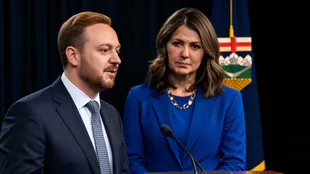 Alberta Tabled Controversial Riding Boundary Maps Amid Gerrymandering Accusations

 Hong Kong court set to sentence activist Joshua Wong in security case
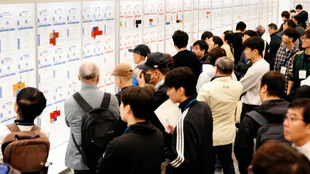
 Australia raises benchmark rate to highest level in 18 years

 'The Remarried Empress' Cast Discusses Bringing Fantasy Royal Drama to Life

 Asian stocks retreat as AI worries outweigh steep oil-price drop

 Hamad International Airport stages emergency drills during WATAN 2026

 Global failure to punish attacks leaves journalists at continuing risk

Australia's social media ban for under 16s has had little impact on teenagers' scrolling habits, researchers said Thursday in one of the first evaluations of the world-leading measures.
Australia in December banned under 16s from the likes of Facebook, Instagram and TikTok, in a crackdown designed to protect children from online bullying and "predatory algorithms".
But there is little evidence to suggest teenagers have turned away from social media as a consequence, a team of Australia-based researchers found in a peer-reviewed study published by the British Medical Journal.
Underage users have been dodging the restrictions by using accounts registered to older people, setting up fake accounts, or by logging into private browsers.
"We found insufficient evidence to conclude that exposure to the Act had any early substantial effects on social media use among adolescents aged under 16," the researchers wrote.
There is strong global interest in whether Australia's laws could provide a blueprint for how to rein in increasingly powerful tech giants.
A growing mass of nations have either introduced or are mulling similar bans -- including the United Kingdom, Indonesia, the UAE and New Zealand.
The researchers surveyed more than 400 young social media users immediately before the restrictions came into effect, and again three months after.
There was little change for users aged 12-13, a slight decrease for the 14-15 age group, and an increase in use for those aged 16 and older.
"The findings suggest that the period immediately after the introduction of the act was characterised by limited implementation, incomplete compliance, and substantial circumvention of social media restrictions."
- Not 'impossible' -
Tech companies face fines of up to Aus$49.5 million ($34 million) if they fail to show meaningful efforts to weed out underage users.
Australia in March accused Facebook, TikTok and YouTube of failing to meet their obligations.
"Australia's world-leading social media laws are not failing. But big tech is failing to obey the laws," Communications Minister Anika Wells said at the time.
"None of this is impossible. None of this is even difficult for big tech, who are innovative billion-dollar companies."
The nation's eSafety Commission separately flagged "significant concerns" about Facebook, Instagram, Snapchat, TikTok and YouTube.
A growing body of research suggests too much time online is taking a toll on teen well-being, and Australia's ban has been hailed as a godsend for parents sick of seeing children glued to their phones.
Although platforms have pledged to abide by the laws, they have warned the measures could instead push teenagers into dark, unregulated corners of the internet.
Social media companies bear the sole responsibility for checking that Australia-based users are 16 or older, and must prove they have taken "reasonable steps" to weed out young teenagers.
Some platforms are using AI tools to estimate ages based on photos, while users can also choose to prove their age by uploading a government ID.
B.Torres--AT