-
 Fitzpatrick 'not comfortable' over Dubai golf finale
-
'We're losing control,' AI pioneer Yoshua Bengio tells AFP

-
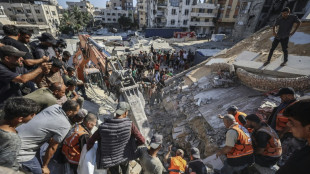 Gaza apartment block collapse kills 21, including 12 children
-
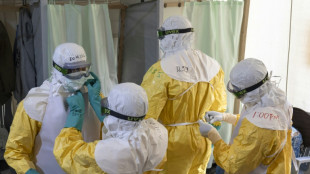
WHO eyes 'encouraging' signs in DRCongo fight against Ebola
-
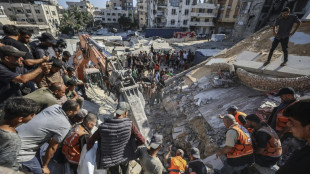 Gaza apartment block collapse leaves 21 dead
-
Liga boss criticises Real Madrid trio for Ceuta shirt incident

-
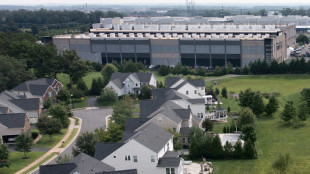 US House targets data centers as midterm backlash grows
-
WTA Finals moved to Charlotte from 2027

-
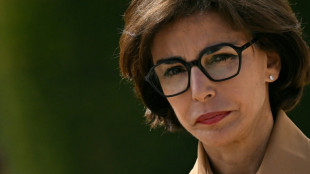 French ex-minister Dati goes on trial in Renault-Nissan corruption case
-
Almost 8,000 excess deaths in France's scorched summer: statistics
-
 'Being Heumann' captures joy in fight for disability rights
-
Ex-president's lengthy war crimes sentence shocks Kosovo

-
 Retired great Nadal to play in exhibition matches
-
US House faces test on sweeping Russia sanctions bill
-
 IR-MED and Dice Technologies Announce collaboration to Evaluate and Advance Pressure-Injury Prevention Platform in Japan
-
British PM says to make 'difficult decisions' as inflation rises
-
 Watts, Pitt, Cruz to light up Spain's top film festival
-
TotalEnergies pumps up controversy in France with cut-price gas
-
 Sweden expels Iran embassy employee over anti-Jewish threats
-
Global fuel price demos: a round-up
-
 Toogood Gold's Table Mountain Sits in the Shadow of a Nevada Gold Rush
-
Leverate Launches MCP for Traders to Connect AI Assistants With Trading Platforms

-
 MEXC July–August Security Report: 38.66M USDT in Risk Funds Intercepted, Futures Insurance Fund Hits 792M USDT
-
MEXC Launches $1M "Discover Your Wall Street DNA" Campaign to Help Traders Find Their Market Fit

-
 'Breathing toxin every day': Indonesians choked by haze feel helpless
-
Emporio Armani names Dario Vitale new creative director
-
 Stocks edge higher ahead of US Fed rate call
-
Maresca defends VAR officials after Man City benefit from error
-
 Philippines ex-leader Duterte makes first in-person ICC appearance
-
Courts jails LGBTQ activists as Turkey crackdown widens
-
 2027 Formula One calendar includes Monaco sprint race
-
French court to hear Depardieu's appeal against rape trial order: sources

-
 Palestinians are the real victims, Thunberg tells Ed Sheeran
-
The German state premier hoping to halt far-right surge

-
 Hashim Thaci: From 'George Washington of Kosovo' to Hague convict
-
Lebanon wants Israel security deal as prelude to peace: president to AFP

-
 Amnesty says Iran committed 'crimes against humanity' in crackdown on 2022 protests
-
England's Brook keen to learn from 'hero' Pietersen after stunning ton

-
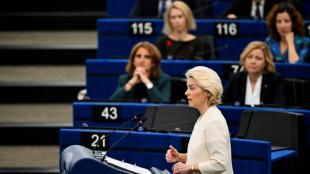 EU to ban social media for under 13s, curb access until 15
-
Saudi says Houthis target Mecca, warns of 'red line'

-
 Philippines ex-leader Duterte makes first appearance at ICC
-
Phillippines ex-leader Duterte makes first appearance at ICC

-
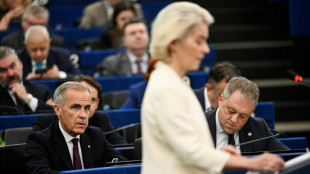 EU chief pitches 'associate member' status for Canada
-
Lebanon wants Israel security deal, Hezbollah disarmament without confrontation: president to AFP

-
 English village votes to 'secede' from UK over asylum centre plan
-
BASIS.pro Expands On-Chain Infrastructure with XDC Network Partnership and Zypher DAO as Auto Earn Goes Live

-
 Wildfires push endangered Sumatran elephants to brink: Indonesian NGO
-
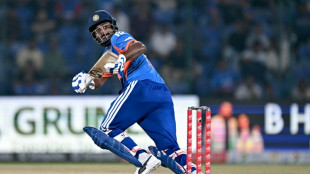
Samson relishing battle with teen star Sooryavanshi for India spot
-
 Stocks head higher as traders prepare for Fed decision
-
Pickle-flavoured tart? AI inspires Japan's convenience stores

Controversy in France over AI-assisted Olympics surveillance
French government plans to trial surveillance cameras upgraded with artificial intelligence at the 2024 Paris Olympics have opponents fuming at what they say is unnecessary and dangerous security overreach.
While the government says such systems are needed to manage millions-strong crowds and spot potential dangers, critics see the law -- adopted Thursday -- as a gift to French industry at the cost of vital civil liberties.
Last week, around 40 mostly left-leaning members of the European Parliament warned in an open letter to French lawmakers that the plan "creates a surveillance precedent never before seen in Europe", daily Le Monde reported.
Debates kicked off late Monday in the National Assembly, France's lower parliamentary chamber, and the move -- an article of a wide-ranging bill on the Olympics -- was overwhelmingly approved despite strong opposition from left-wing MPs.
Even before the debates, MPs had filed 770 amendments to the Olympics security bill, many aimed at Article Seven.
That section provides for video recorded by existing surveillance systems or new ones -- including drone-mounted cameras -- to be "processed by algorithms".
Artificial intelligence software would "detect in real time pre-determined events likely to pose or reveal a risk" of "terrorist acts or serious breaches of security", such as unusual crowd movements or abandoned bags.
Systems would then signal the events to police or other security services, who could decide on a response.
- Biometric or not? -
The government is at pains to reassure that the smart camera tests would not process biometric data and especially not resort to facial recognition, technologies the French public is wary of applying too broadly.
"The experiment is very precisely limited in time... (and) the algorithm does not substitute for human judgement, which remains decisive," Sports Minister Amelie Oudea-Castera told MPs.
The interior ministry highlights a February survey for the Figaro daily suggesting that large majorities back using the cameras in public spaces and especially in stadiums.
But opponents say the plans overstep the bounds of the French constitution and European law.
Digital rights group La Quadrature du Net (QDN) wrote in a report sent to lawmakers that the systems would in fact handle sensitive "biometric" data under a broad 2022 definition from France's rights ombudsman.
As biometric data, those characteristics would be shielded by the European Union's powerful General Data Protection Regulation (GDPR), QDN argues.
An interior ministry spokesman rejected that finding, insisting that the planned processing did not use any biometric data or facial recognition techniques.
- 'State of emergency' -
The camera test period is due to run to the end of 2024 -- well after the end of the games and covering other major events including the Rugby World Cup later this year.
The interior ministry said it "should cover a significant number of large events" for "the most complete and relevant evaluation".
But QDN activist Naomi Levain told AFP: "It's classic for the Olympic Games to be used to pass things that wouldn't pass in normal times."
"It's understandable for there to be exceptional measures for an exceptional event, but we're going beyond a text aimed at securing the Olympic Games," Socialist MP Roger Vicot told the chamber on Monday.
Elisa Martin, an MP for hard-left opposition party France Unbowed (LFI), told AFP it was just the latest of a slew of additional security powers introduced under President Emmanuel Macron since 2017.
"The way this law is thought out is as if we live in a permanent state of emergency," she said.
- 'Favour to industry' -
QDN's Levain said that "many of the leaders in this market are French businesses", calling the law's provisions a "favour to industry".
The size of the video surveillance market in France alone was estimated at 1.7 billion euros ($1.8 billion) in a 2022 article published by industry body AN2V.
The law will make the 2024 Olympics "a shop window and a laboratory for security", handing firms an opportunity to test systems and gather training data for their algorithms, Levain said.
Some cities in France, such as Mediterranean port Marseille, are already using "augmented" surveillance in what is at present a legal grey area.
Such data is needed to train computer programmes on what kinds of behaviour to flag as suspect, learning to recognise patterns in moving images -- just as text AIs such as ChatGPT are trained on large bodies of writing before they can generate written output of their own.
But opponents say that there is little or no evidence that augmented surveillance -- or even more traditional CCTV systems -- can prevent crimes or other incidents around large sporting and cultural events.
Smart cameras "wouldn't have changed anything at the Stade de France" last year, when huge crowds of Liverpool supporters were rammed into tiny spaces as they waited to enter the Champions League final, Levain said.
"That was bad human management, there's know-how to managing a crowd, calculations to be made about placing barriers and directing flows... no camera can do that," she added.
M.O.Allen--AT