Kyiv condemns 'kidnappings' as Russians foster Ukrainian kids / Photo: Alexander NEMENOV - AFP

 Barcelona hit seven in Racing Santander rout
 Amorim's Milan beaten by Benfica, Sunderland make dream European return

 US stocks fall, dollar gains after Fed lifts interest rates
 Seahawks rule out Darnold for Sunday game at Arizona
 Mbappe explains Ceuta shirt stance after criticism

 Improving Atletico cruise to comfortable win over Osasuna

 Candidate for UN chief calls for AI regulation akin to nuclear weapons

 O'Neill expects Celtic recovery after Old Firm misery
 Man City midfield trio backed to emulate Rodri and Silva
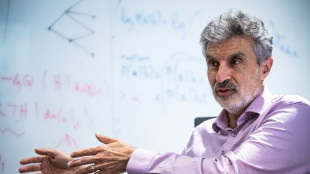 'We're losing control,' AI pioneer Yoshua Bengio tells AFP
 WHO eyes 'encouraging' signs in DRCongo fight against Ebola
 Liga boss criticises Real Madrid trio for Ceuta shirt incident

 WTA Finals moved to Charlotte from 2027
 Almost 8,000 excess deaths in France's scorched summer: statistics

 Ex-president's lengthy war crimes sentence shocks Kosovo
 US House faces test on sweeping Russia sanctions bill

 British PM says to make 'difficult decisions' as inflation rises

 TotalEnergies pumps up controversy in France with cut-price gas
 Global fuel price demos: a round-up

 Leverate Launches MCP for Traders to Connect AI Assistants With Trading Platforms

 MEXC Launches $1M "Discover Your Wall Street DNA" Campaign to Help Traders Find Their Market Fit
 Emporio Armani names Dario Vitale new creative director

 Maresca defends VAR officials after Man City benefit from error
 Courts jails LGBTQ activists as Turkey crackdown widens

 French court to hear Depardieu's appeal against rape trial order: sources

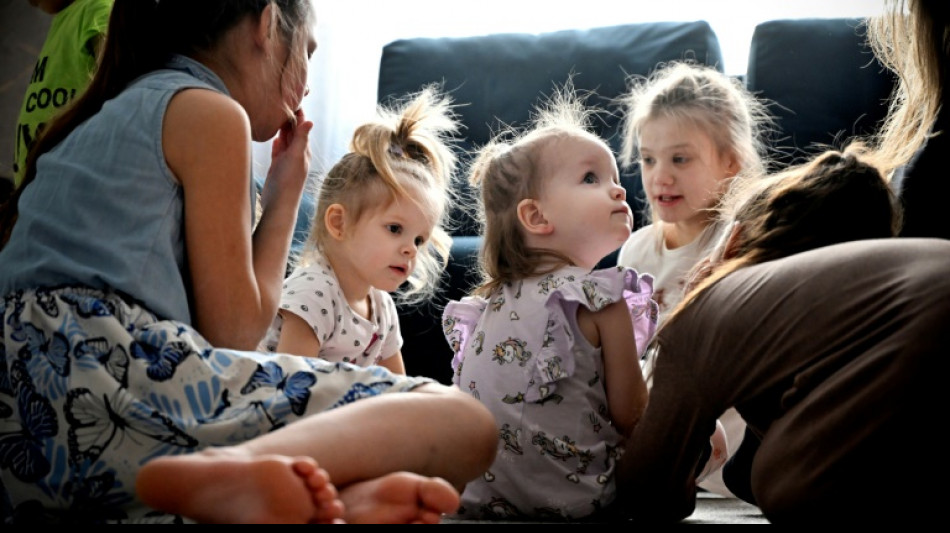
At their home in the middle of Siberia, Russian pastor Roman Vinogradov and his wife Yekaterina are the new foster parents of five children from Moscow-occupied eastern Ukraine.
The Vinogradovs are experienced fosterers now raising 16 children, including four of their own, and say they just want to help those who are "very much in need".
But Ukraine and human rights groups have condemned the forced transfer of thousands of children into Russia or Moscow-controlled territory since the invasion last year.
Ukrainian President Volodymyr Zelensky last week referred to "kidnapping, forced adoption and re-education of Ukrainian children committed by Russia", calling this "a war crime and a crime against humanity".
Russia says it is simply taking in "refugee" children from Ukraine.
"I didn't steal anyone. And they (the children) don't think they were stolen," Vinogradov, a 41-year-old Protestant minister, told AFP.
The Vinogradovs, who live in the Siberian city of Novosibirsk, more than 3,000 kilometres (1,800 miles) east of Moscow, said local authorities asked them to take in Ukrainian children after they requested another child.
"They phoned from children's services, saying: 'Will you take children from Ukraine?" said Yekaterina Vinogradova, 38.
"We said: 'Yes, we'll take them'."
"What difference does it make? Children are children everywhere. It doesn't matter what nation."
- Four girls and a boy -
The couple are now fostering five Ukrainian half-siblings -- four girls and a boy aged three to 12, who arrived from Moscow six months ago.
They already had seven foster children.
AFP saw the children cheerfully sledging together, clearing snow around the couple's large house and helping prepare a meal.
The Vinogradovs say the Ukrainian children came from children's homes in the city of Lugansk, which has been controlled by Russian-backed separatists since 2014. They showed foster papers issued by officials from Lugansk's pro-Moscow administration.
The children do not remember their mother, who was stripped of her parental rights, Vinogradov said.
"The time will come of course when they ask questions. We'll have a look (for her). Maybe we'll organise a meeting," said his wife.
Vinogradov said the children were learning to live in a family and still needed reassurance that "this is their home".
When the youngest went to nursery school "they were worried about whether we would collect them", Vinogradov said. "They asked: 'When will you come? Will you really come or not?'"
According to international law, no party to a conflict should evacuate children to a foreign country except temporarily for a compelling health or safety reason.
- 'Russians hide our children' -
In a report released on Monday, Human Rights Watch (HRW) called for a "concerted international effort" to return forcibly deported children and urged Russia to publish information on their whereabouts.
"Returning children who were illegally taken by Russian forces should be an international priority," said Bill Van Esveld, HRW associate director for children's rights.
Ukraine's presidential commissioner for children's rights, Daria Gerasymchuk, said Russia was refusing to recognise that these children were "deportees".
"Russians hide our children," she told journalists last week.
Kyiv has so far brought back 308 children, Gerasymchuk said, with a "big team of government officials working to this end".
Ukraine has "many pieces of evidence coming from different cities" and has identified 43 children's camps in Russia. But children "are being moved around all the time", she said.
"We have evidence of how much effort was taken by Russia to make it impossible to reunify families."
Ukraine had 105,000 children in institutional homes before war broke out, the second highest number in Europe behind Russia, HRW said.
Gerasymchuk told AFP that of the 16,000 children deported to Russia about which Ukraine has full information, only 138 come from such institutions.
- 'Saving the children' -
"It would be wrong to say that only orphaned children are being taken to Russia," she said.
"Russians use at least five different scenarios to deport children," she said. These included separating children from parents during border "filtration", taking them directly from family homes and sending them to Russian resorts for "recuperation".
Ukraine has tried to hide these children from the view of the Russians, Gerasymchuk said.
"We would somehow put children from institutions into (foster) families so Russians couldn't identify and deport them but we were not always successful."
The head of a children's rehabilitation centre outside the southern Ukrainian city of Kherson, Volodymyr Sagaidak, told AFP in January that during Russian occupation, officials questioned him on the children's whereabouts and seized their files.
"None of the Russians said they wanted to take the children. But I'd say there was a hidden form of deportation: 'Let's take you on an excursion', 'Let's take you to Crimea for recreation'," the 61-year-old said.
Oksana Koval, a 49-year-old teacher at the centre, said after the city was occupied they quickly handed over most of the children, aged three to 17, to relatives. Staff took others home. Koval herself took three girls.
"The Russians didn't know we had the children. We told them the children had been taken home by their parents," she said.
"We cared only about one thing -- saving the children."
T.Perez--AT