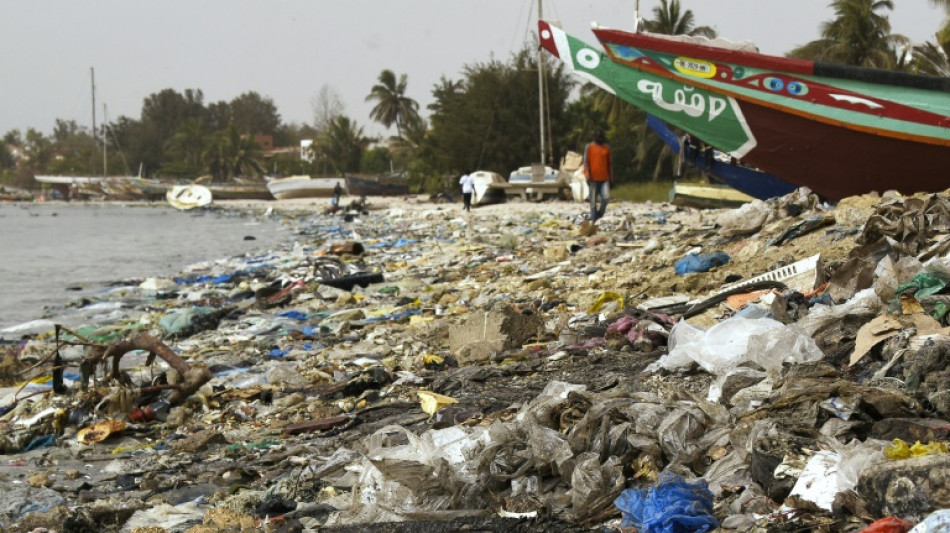
Senegalese recyclers seek solutions in fight against plastic / Photo: SEYLLOU - AFP

 Trump threatens EU over 'hostile' Canada association plan
 Argentine judge orders suspension of Falklands oil project
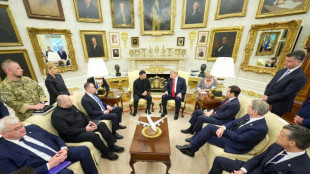
 Carrick takes the blame as troubled Man Utd suffer League Cup misery

 Barcelona hit seven in Racing Santander rout
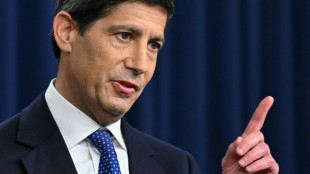
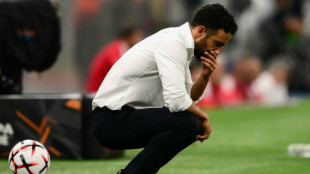 Amorim's Milan beaten by Benfica, Sunderland make dream European return

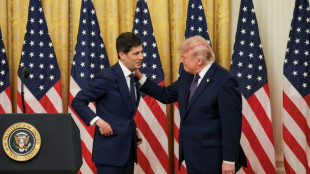 US stocks fall, dollar gains after Fed lifts interest rates

 Seahawks rule out Darnold for Sunday game at Arizona
 Mbappe explains Ceuta shirt stance after criticism
 Improving Atletico cruise to comfortable win over Osasuna

 Candidate for UN chief calls for AI regulation akin to nuclear weapons

 O'Neill expects Celtic recovery after Old Firm misery
 Man City midfield trio backed to emulate Rodri and Silva

 'We're losing control,' AI pioneer Yoshua Bengio tells AFP
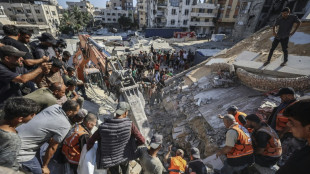
 WHO eyes 'encouraging' signs in DRCongo fight against Ebola
 Liga boss criticises Real Madrid trio for Ceuta shirt incident
 WTA Finals moved to Charlotte from 2027

 Almost 8,000 excess deaths in France's scorched summer: statistics

 Ex-president's lengthy war crimes sentence shocks Kosovo

 US House faces test on sweeping Russia sanctions bill

 British PM says to make 'difficult decisions' as inflation rises

 TotalEnergies pumps up controversy in France with cut-price gas
 Global fuel price demos: a round-up

 Leverate Launches MCP for Traders to Connect AI Assistants With Trading Platforms

 MEXC Launches $1M "Discover Your Wall Street DNA" Campaign to Help Traders Find Their Market Fit
 Emporio Armani names Dario Vitale new creative director
Discarded containers and bags are an eyesore in many towns, while beaches are covered by debris -- Senegal's notorious problem of plastic pollution is not going away.
Fly-tipping is a scourge and landfills like the sprawling Mbeubeuss site near the capital Dakar are overstretched, with several thousand tonnes of detritus dumped daily, polluting the ground and water.
For young Senegalese entrepreneurs keen on cleaning up their country and turning a profit in the process, enthusiasm is not lacking -- but technology, funding and public awareness are.
President Macky Sall has proposed turning Senegal into a "zero waste" nation and banned single-use plastics in 2020.
But after decades of chaotic management in dealing with the problems, activists see negligible progress.
"The law is still not applied and alternative solutions are not put forward," said Aisha Conte, head of the country's zero-waste association.
- Recycling up close -
Onboard a ship that recently docked at Dakar, Baptiste Lomenech walked a group of entrepreneurs through some basics in plastic recycling.
He's a crewmember with Plastic Odyssey, a three-year around-the-world floating initiative that showcases expertise and equipment to would-be recyclers living in countries struggling with major plastic pollution.
The Senegalese visitors were given a tour of the recycling process from start to finish -- from shredding and washing old plastic, drying it in a centrifuge and finally heating it to a molten state and extruding it, so that it can then be moulded into into a new product.
The idea is to introduce machinery that is simple to use, easy to acquire and unhindered by patent protection.
The 20-odd crew members demonstrate the techniques and share their knowledge and experience with the visitors, who are all involved in local waste projects.
The questions flowed. How long is the cooling process? How much does it cost? Can you increase the density?
- Lacking state help -
"I've broadened my scope and my thinking by coming here. I've seen that it's doable to instal recycling machines that don't cost a lot," said Boubacar Diakhite from a company called Defaratt, based in the northern city of Gandiol.
"We knew we had the ability to do it but we didn't know how to do it," he told AFP.
Twenty-nine-year-old Lenora Hamon said she was planning to launch a plastic recycling site in southern Casamance with the Nio Far association.
"Ideas? It's given me about 100 a minute," she raved.
Every minute, nearly 20 tonnes of plastic waste ends up in the world's oceans, where it breaks down and enters the food chain.
Larger pieces are swallowed by mammals or birds or broken down, while tiny specks can affect plankton, a building block of marine life.
Plastic Odyssey's co-founder Simon Bernard said countries needed a two-pronged approach towards the plastic peril -- to drastically reduce the amount of waste and recycle what was collected.
Young Senegalese entrepreneur Abdoul Bakhy Mbacke said there were hurdles, but also opportunities, in his country.
He noted how garbage lorries in his neighbourhood only served the big streets, which meant that piles of rubbish built up in narrow streets and alleys.
That opened up a business opportunity.
"We thought of using tricycles to creep through the narrow streets and provide local rubbish collection," he said.
Businesses and households pay a subscription for his service. He said he collects 15 tonnes of waste every day, about 20 percent of which is plastic.
He said he had business partners who recycled the waste but saw a chance to develop a pilot project with Plastic Odyssey to set up his own recycling site.
The fledgling industry really needs state help to get off the ground, for instance in encouraging people to sort out their rubbish, he said.
"In a way, we are substituting for the state at the moment but we're not discouraged... If the state decides to come in with us, we'd be pleased but we're not going to be waiting around," he said.
P.A.Mendoza--AT