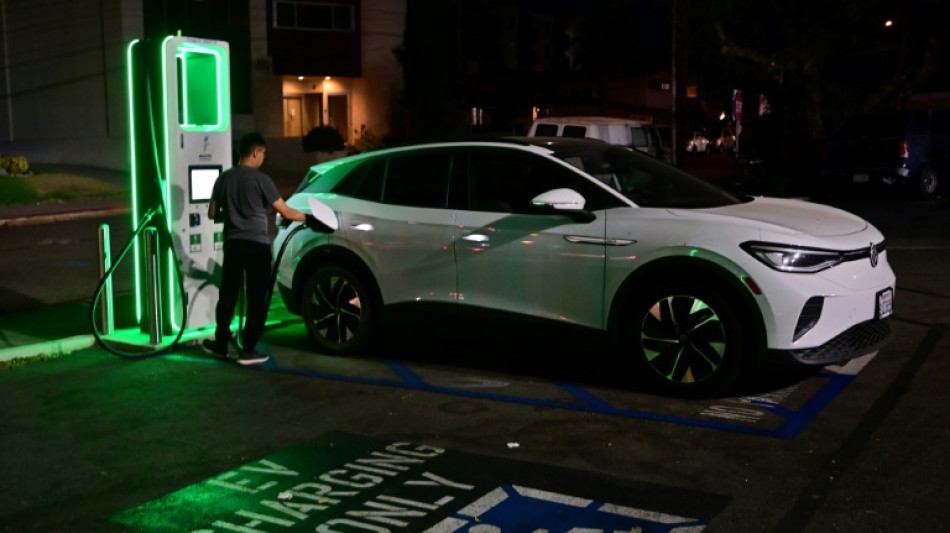
Europe in crossfire of US-China economic rivalry / Photo: Frederic J. BROWN - AFP/File

 Kids and social media: what would change under new EU law

 Modi pitches India as global chipmaking hub
 Ukraine plans record defence spending in 2027
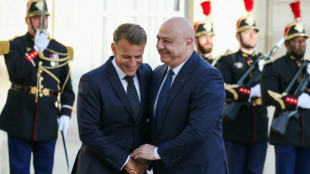
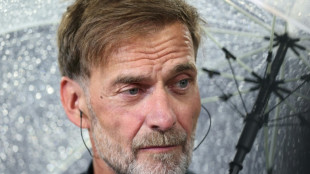 Klopp calls up 44 players in huge first Germany squad
 STARPRIME Responds to Diverging Gold Market Demand with AM/PM Fixing and XAU24/7

 Ukrainian fashion designer debuts art between air raids

 Gambian businesses struggle under prolonged blackouts
 Fiji declares national HIV crisis
 Australia to cut migration to fix housing crisis: minister

 NASA scan discovers new, 'once in a century' Moon crater
 Most stocks rise as Fed hikes and indicates drive to curb inflation
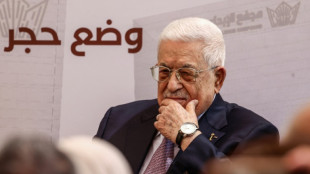 US again denies Palestinian leader Abbas visa to attend UN assembly

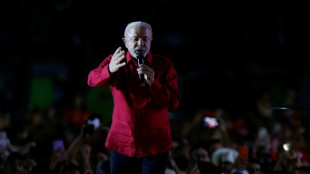 Lula says he will go to UN to tell Trump to 'stay out' of Brazil's elections

 Messi heads Inter Miami to Campeones Cup triumph

 AI looms large ahead of Xi, Trump summit

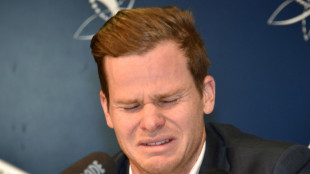 Smith still haunted by 'Sandpapergate' as he prepares for South Africa Tests
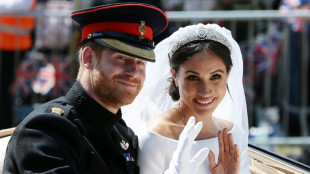
 UK-Sudanese author pens book to give children 'African history of Africa'

 Boehly and Walter sell Chelsea stake to Clearlake Capital

 Guardian Metal Resources PLC Announces Audited Financial Results for the Year Ended 30 June 2026

 Trybe Spirits Announces Sponsorship of The San Diego Spirits Festival

 Trump threatens EU over 'hostile' Canada association plan

 Argentine judge orders suspension of Falklands oil project
 Carrick takes the blame as troubled Man Utd suffer League Cup misery

 Barcelona hit seven in Racing Santander rout
 Amorim's Milan beaten by Benfica, Sunderland make dream European return

The economic confrontation between the United States and China has put Europe in the crossfire, with Washington's plan to boost green industries threatening to cause collateral damage to a key ally.
The United States has adopted the Inflation Reduction Act (IRA), which contains $370 billion in sweeping investments, subsidies and tax cuts to reduce greenhouse gas emissions, making it the largest-ever US programme to combat climate change.
But some of its provisions have been criticised by European Union officials as discriminatory against European carmakers, with some saying it smacks of protectionism.
French Economy Minister Bruno Le Maire and his German counterpart Robert Habeck travel to Washington to meet Treasury Secretary Janet Yellen on Tuesday and try to resolve the impasse.
EU leaders will hold a summit later in the week that aims to begin crafting a response to the US measures.
The IRA aims to bolster green industries that will be key to the future economy, such as the manufacturing of batteries and solar panels.
US firms will be able to receive subsidies similar to those their Chinese rivals receive, on the condition that they manufacture domestically.
"One of the key objectives of the IRA is to exclude Chinese suppliers from clean energy supply chains," said Tobias Gehrke, a fellow at the European Council on Foreign Relations.
He said the priority was reducing US dependence on Chinese imports.
China dominates the electric vehicle sector, with 78 percent of the global production of battery cells and three-quarters of the big plants to manufacture the lithium-ion batteries they use, according to a study by the Washington-based Brookings Institution.
- 'An afterthought' -
The IRA has sent chills down the spines of European leaders, who fear the generous support will encourage firms to shift production to the United States.
The EU has called on the United States to provide European firms exemptions -- like those granted to trade bloc partners Canada and Mexico.
However, attempts to find a resolution have so far failed to bear fruit.
Gehrke said Washington was thinking about manufacturing jobs and reducing dependence upon Chinese imports first and foremost, and the impact on its European, Japanese and South Korean allies was more of an "afterthought".
"I don't think America wants to punish Europe ... I don't think they thought about Europe at all," he said.
Cecilia Malmstroem, the EU's former trade commissioner and now a senior fellow at the Peterson Institute think tank in Washington, agreed.
"Europe has become a bit of collateral damage in this" effort to reduce dependence on China, she said.
"I do not think it was intentional to target the Europeans," she added.
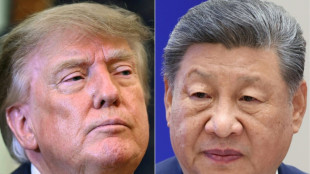
Rather, it is a product of the trade war with China started during Donald Trump's presidency.
First, Trump imposed punitive customs taxes on China in 2018, which President Joe Biden has maintained -- along with Washington's combative tone towards Beijing.
This was followed by restrictions on the export of certain electronic components to China, and the 2022 CHIPS Act which includes $53 billion in spending to boost the production of semiconductors in the United States.
Then came the IRA.
- Subsidies race -
Europe's fears have deepened in the wake of economic and supply crises sparked by the Covid pandemic and war in Ukraine that have cast the rules of globalisation into question.
A global focus on reindustrialisation has led to fears of a subsidies race in the United States, China, and Europe -- where the European Commission wants to make it easier to hand out state assistance to companies.
Pascal Lamy, a former director-general of the World Trade Organization, said Europe must "put pressure" on Washington, as the IRA is "more anti-European than anti-Chinese".
Gehrke said the deadlock between the historical allies also raised questions about Europe's own strategy towards China, as its reliance increases on Chinese-made components for electric vehicles.
"Like those in the US, Europe's clean energy supply chains are already dangerously dependent on China," he said.
"Targeting these dependencies is in the EU's economic interests and could help convince Washington that Europe is a necessary and useful partner on China."
H.Thompson--AT