
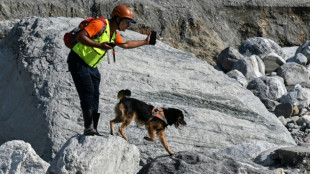
Dangerous 'heat stress' has surged worldwide, study shows / Photo: Frederic J. BROWN - AFP/File

 Asian stocks drop as oil spike fans rate hike bets, eyes on US jobs

 Viral anti-vax posts weaponise Philippine inoculation fears
 Saudi coalition accuses Houthis of drone attack on Medina

 Effective Altruism: the philosophy behind Silicon Valley's AI fears

 Chinese judoka accused of biting as home hope wins Asian Games gold

 Four-member crew docks at International Space Station

 Portugal win without Ronaldo as Klopp's Germany get first victory

 Wemby: 'Very sad' to see players endorse betting firms

 Manchester City Women scrape draw with Real Madrid

 India, Australia and Pakistan in same World Cup group

 Daryz's hopes of repeat Arc win boosted by draw

 Steelers ship disgruntled defender Porter to Cowboys

 Klopp gets first win as Germany boss

 Bolivia's attorney general arrested on drugs, money laundering charges

 Raiders host Chiefs in battle of unbeaten division rivals

 Lowest Fee Bitcoin ATMs Announces Launch of More Than 400 ATMs Nationwide

 G20 against 'weaponization' of food trade: French minister

 Female US inmate in critical condition after botched execution

 Spotlight on UK-UAE ties amid Manchester City scandal

 Ethiopia and Eritrea break diplomatic ties over conflict

 Downing Street says Manchester City not 'above the rules'

 Hadjar wants to 'fight for the title' from next season

 Bolivia's attorney general arrested for alleged drug trafficking, money laundering

 German sugar tax sparks new government row

 Musk returns to US government for Pentagon war study

The number of people exposed to dangerous heat stress worldwide has risen sharply over the last half century propelled by climate change, according to a study released on Monday as Europe sweltered through a punishing heatwave.
Heat stress -- the name given to the hazardous build-up of body heat caused by soaring temperatures, humidity and other factors -- is one of the most common ways that weather kills people.
The new study, published in the journal Nature Climate Change, tracked how heat stress levels surged between the 1970s and 2024.
"On every continent, strong to extreme heat stress is now more frequent," lead study author Rebecca Emerton, of the European Centre for Medium-Range Weather Forecasts, told AFP.
In the 1970s, for example, 16 percent of the world's population experienced at least one day of extreme heat stress -- when the "feels-like" temperature was at least 46C.
Fifty years later, the rate has risen to 22 percent.
"That might not sound like so much," Emerton said.
"But that's an extra approximately one billion people that are seeing at least some extreme heat stress now that wouldn't have done in the 1970s," she added.
The study used the Universal Thermal Climate Index (UTCI), which represents the temperature it "feels like", by including factors such as humidity, wind, radiation and how the human body responds to heat.
The daily average UTCI has been rising as heat stress events become more frequent, severe and longer-lasting due to human-driven global warming, the research found.
Some countries, including Spain, Portugal, Italy and France, are now experiencing "feels-like" temperatures up to five degrees hotter than they did in the 1970s, Emerton said.
In France on Monday, two children died during the country's second exceptionally intense heatwave of the year.
Heat stress is also "expanding into areas of the globe where historically it's not been experienced", Emerton said.
For example, very strong heat stress with a "feels-like" temperature of at least 38C has now reached parts of North America, the UK and Scandinavia, she said.
The researchers also tracked the global rise of unrelentingly hot nights.
During nights when "you can't get any relief, and your body can't cool down, that becomes very dangerous for people's health, particularly for vulnerable people", Emerton said.
Most of the world has seen increases in the number of tropical nights, when the "feels-like" temperature does not get below 20C, the researchers found.
The study only looked at data up to 2024, however Emerton said the heatwaves already pummelling Europe this year suggest the trend has been continuing.
T.Perez--AT