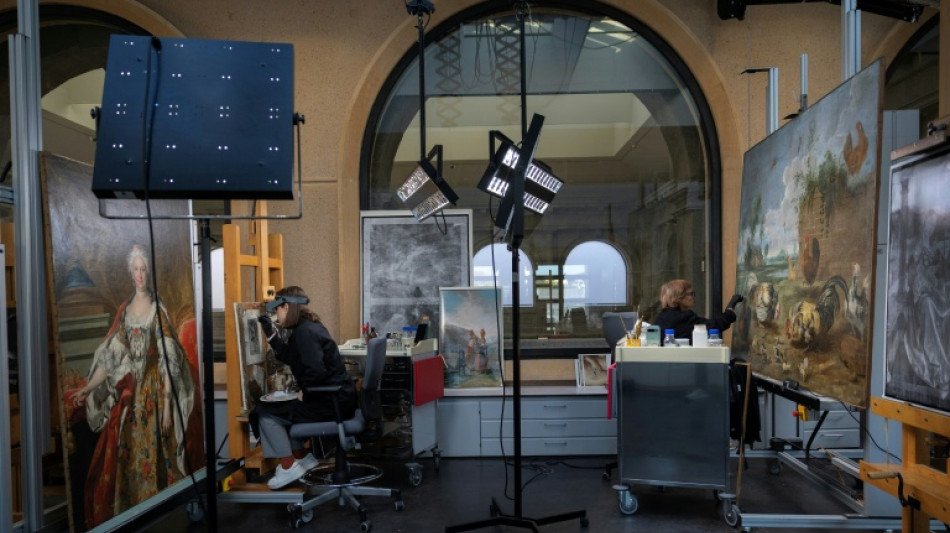
New tools rescue old art at Madrid's Prado museum / Photo: Pierre-Philippe MARCOU - AFP

 Toulouse edge Vannes, Lyon beat Pau to take Top 14 summit

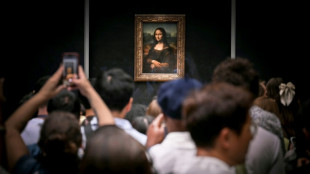 Germans arrested for Louvre stunt in Mona Lisa hall
 Saudi-led coalition says Houthis fired ballistic missile at Riyadh

 France's debt climbs to highest since 1978: ministry

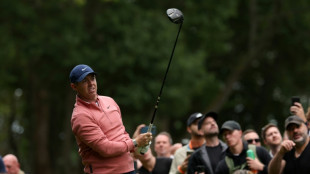 McIlroy two shots off the lead at Wentworth after eagle on 18

 Martinez brace saves Inter in Serie A top-two clash with Roma
 Rosenior abused but guides Paris FC past old club Strasbourg

 Seven-try Lyon beat Pau, climb to Top 14 summit
 Brighton defeat a 'big lesson' against complacency for Arsenal, says Arteta

 Thousands protest inaction over climate crisis in Switzerland

 Carapaz out of cycling world championships

 'Fragile' Tottenham beaten by Aston Villa despite late rally

 Mourinho hails Real Madrid grit before Atletico derby clash
 Martin wins Austrian MotoGP sprint after Acosta crash

 Japan edge Fiji to win Pacific Nations Cup
 Black smoke, flames rising near Riyadh airport: residents to AFP
 UK actor Naomi Watts honoured at Spain film festival

 Japan emperor declares Asian Games open after turbulent build-up

 Asian Games open with unity message after troubled build-up
 Denmark hails 'binding' Greenland deal with Trump

 We don't want Games host Japan losing money, says Asian Olympic official

 Ed Sheeran returns to stage after Palestinian controversy

 Asian Games to open in Japan after troubled build-up

 Drone owners rush to offload devices ahead of Beijing ban

 Trump's beef policies irk Texas ranchers, testing their loyalty

In a quiet space secluded from the throngs of daily visitors to Madrid's Prado art museum, a team of experts perpetuate an ancient tradition of restoring centuries-old European cultural treasures.
Creations by some of art's most illustrious names -- Goya, Velazquez, Rubens, Caravaggio, Bosch and El Greco -- are conserved in the vast, bright space at one of the world's most-visited museums.
The Prado has always put an emphasis on the conservation and restoration of art since it opened to the public in 1819.
Cutting-edge technology and modern tools to analyse and treat paintings and sculptures allow Almudena, Marta, Maria, Alvaro, Alicia, Elena, Sonia and Eva to maintain the tradition.
The team is capable of caring for the museum's most prized collections as well as works from other institutions.
In February, the Prado launched the restoration of "Pablo de Valladolid", an emblematic portrait that Spanish master Velazquez produced in the 17th century.
But the work will first undergo a deep technical analysis by new equipment, the museum said in a statement.
Scanning technology will allow the experts to identify and locate the materials used by the artist, while multispectral infrared reflectography will reveal details invisible to the naked eye.
Everything contributes to a deeper understanding of the artist's technique, the work's state of conservation and preparing its restoration.
D.Johnson--AT