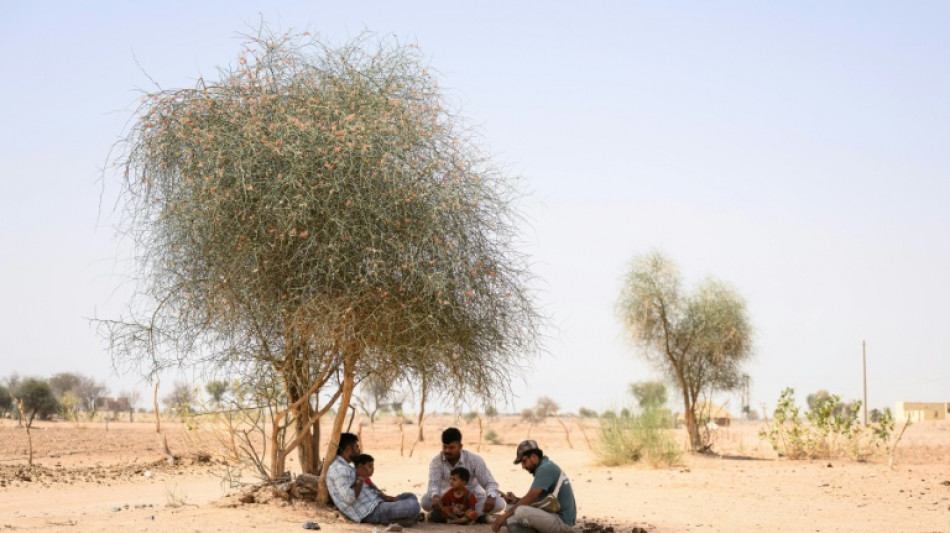
India learns to live with hotter summers / Photo: Manan VATSYAYANA - AFP

 England's Carse charged by cricket body over nightclub incident

 Amazon vows $1 bn for data center towns, decries 'myths'
 Oil prices drop on G7 fuel release, US jobs data boosts stocks

 G7 agrees deal to ease global energy supply concerns

 Spain's government dealt blow as lawmakers reject housing bills

 Food, medicine shortages deepen in Russian-occupied Oleshky

 Man City whistleblower Rui Pinto facing 'dire consequences' - lawyers
 Russia 'tearing Kyiv apart', mayor says, as strikes paralyse traffic

 Taiwan boxer Lin wins Games gold as Japan edge North Korea on penalties

 Japan tame North Korea to win Games gold after shootout drama

 US posts weak job growth data in September

 Ethiopia's conflict: the regional dimension

 Life expectancy almost back to pre-Covid levels, says WHO

 Turkey's football referee chief faces judge in graft probe

 Verstappen goes own way to avoid the rain

 Oil slides, bonds steady as EU addresses diesel price surge

 Spain housing package at risk in parliament, as protests mount

 Swedish Social Democrats leader to make new bid to form government
 North Korea calls Seoul 'despicable' after DMZ apology demand

 Taiwan boxer Lin wins gold as virtual taekwondo makes Games debut

 Man City face appeal deadline after explosive financial verdict

 Pole vault superstar Duplantis to skip indoor season

 Sri Lanka drop Asalanka from T20 against Pakistan

 Disney president says layoffs 'extremely painful' but necessary

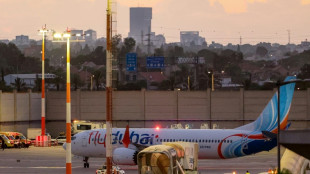
 Indian flydubai pilot opened cockpit door to save passengers

On India's hot plains, scorching summers have become increasingly harder to endure, requiring adaptations and forcing life into the hours of dark before the sun turns punishing.
"We try to adjust, but the traditional ways to combat heat are not working," said 26-year-old herdsman Sawai Bhati Singh, who lives outside the desert city of Jaisalmer, in the western state of Rajasthan.
"Every year the heat is increasing."
His home, made of thick stone blocks with few windows, helps keep some of the furnace-like heat out. But temperatures inside are still stifling.
The South Asian country is no stranger to scorching summers, but years of scientific research have found climate change is causing heatwaves to become longer, more frequent and more intense.
Temperatures in Singh's village of Sanwata hit 45C in early June, as is often during the summer. The highest temperature recorded in the area has been 49C.
Singh is worried about the health of his two young sons, aged two and four, playing barefoot in the dust.
In a separate kitchen hut with a thatched roof for ventilation, his wife and mother struggle as they cook on a wood fire.
Water is drawn from a nearby well and cooled in bottles wrapped in woven jute string, using evaporation to lower the temperature.
Singh's herd of goats and cattle struggles too.
"They stay in the shade," he said. "The heat impacts the eating, and that lowers their milk."
But temperatures are becoming harder to endure. The family bought their first air cooler, which uses wet fibres, last year.
"We never needed it before, but last year was hot, so we bought one," he said. "Now we have two."
A world away, along the lush green banks of the Yamuna river floodplains near the capital, New Delhi, farmer Bhole Shankar faces a different version of the same crisis.
New Delhi hit 46.5C this summer, still below the sizzling 49.9C record measured in 2024.
"Living on the floodplain feels cooler than being stuck in the middle of houses," 36-year-old Shankar said, standing outside a hut made of plastic sheeting on bamboo poles. "But on some days, day and night feel the same."
Shankar, his wife and their three sons, aged between nine and 16, live beneath the city's power lines -- but their hut is not connected. A solar panel provides enough power to run a small fan, pushing hot air.
The family shifts its routine, working in the fields before dawn, resting in the shade during the fiercest heat, and returning to check crops towards dusk.
The family roll up the tent's plastic wall and sleep on traditional rope-lattice beds, which both allow air to circulate.
"Each passing year feels hotter," he said. "We try to keep in the shade, but when you are a farmer, that's hard."
A.Anderson--AT