Russia's USSR-era rival to 'decadent' Eurovision born anew / Photo: Olesya KURPYAYEVA - AFP

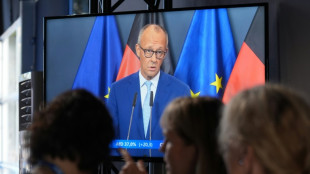
 Germany's Merz vows to stay course despite new vote losses
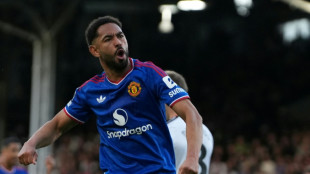
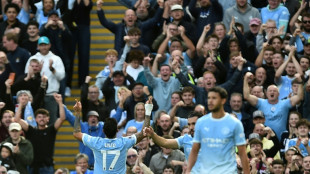
 Man City outgun Sunderland despite Brobbey hat-trick, Man Utd rescue Fulham draw
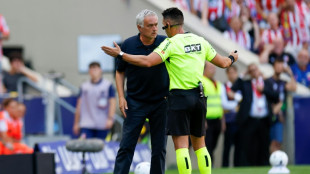 Mourinho blames ref committee for Real Madrid derby defeat
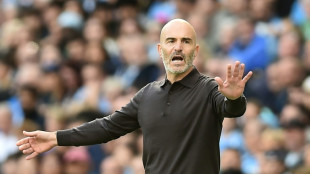 Maresca craves a 1-0 win after eight-goal Man City thriller
 Atletico Madrid beat Real Madrid in tense derby clash
 Reusser retains world time-trial title
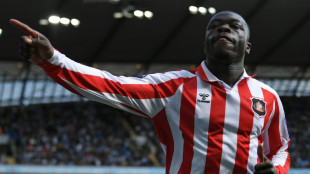 Man City outgun Sunderland despite Brobbey hat-trick, Liverpool win at Bournemouth
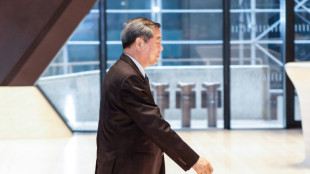 Top US, Chinese economic officials meet ahead of Trump-Xi summit
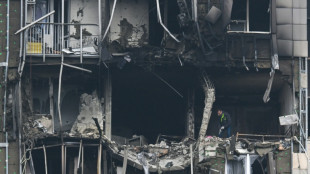
 Erdogan's LGBTQ crackdown 'first step of election campaign': activist
 Mass drone barrage on Moscow kills two
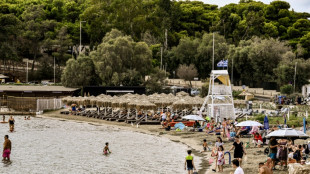 82-year-old dies after beach fight in Greece over sun lounger
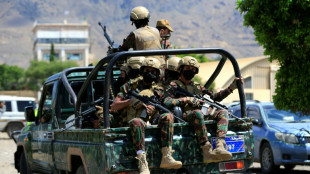 US warns of rapid escalation in Mideast war

 Iran 'put hearts on the court' to win Asian Games basketball bronze

 School girl Yu helps China dominate in Asian Games swimming openers

 Myanmar win first Asian Games teqball gold as Spain great Puyol watches

 China's 13-year-old Yu scorches to first major gold at Asian Games

 Russians vote on last day of parliamentary elections

 Hong Kong pays final respects to former city leader Tung

 Typhoon put people off Asian Games opening ceremony, official says

 China's 13-year-old Yu cruises as Asian Games swimming begins

 AI 'warning shots' focus Beijing on national security risks

 Philippine tribe in limbo over US-led tech hub
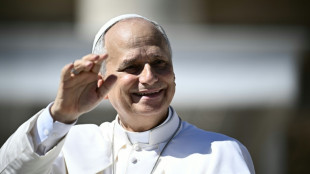
 Leo XIV, first US pope transcends his restrained style
 Singer Ed Sheeran says Gaza situation 'unjustifiable' following controversy
 In 'Tenzing', a Sherpa mountaineer gets his due
With artists from more than 20 countries and ambitions for a billion-plus viewers, Russia on Saturday revived its Intervision song contest, which Moscow hopes will compete with a "decadent" Eurovision.
First held in the Soviet era and relaunched in February on President Vladimir Putin's orders, the concert-as-soft-power tool kicked off at 8:30 pm (1730 GMT) at an arena near the Russian capital, with the opening ceremony hitching future-looking technology to nostalgia for the USSR past.
With Russia banished from Eurovision, the annual song contest extravaganza, over its offensive in Ukraine, the Kremlin has pushed Intervision as a means to lay the anti-Western narratives on thick while striving for new cultural and political alliances.
In a video address to the participants, including traditional allies Brazil, India and China, Putin hailed the contest's "main theme" of "respecting traditional values and different cultures".
"Today, Intervision is gathering a second wind, while remaining faithful to its traditions," the veteran strongman added.
Twenty-three countries were originally slated to take part in the contest, including Russia's old Cold War foe the United States.
But the US representative -- Australian pop singer Vasiliki Karagiorgos, known as Vassy -- had to pull out at the last minute because of "unprecedented political pressure from the Government of Australia", the organisers said.
No performers from an EU country will take part.
But former Soviet republics Uzbekistan and Kazakhstan have dispatched artists to Russia for the spectacle, which has been hyped with installations in central Moscow.
Besides Putin, the contest's kick-off drew in Dima Bilan, Eurovision winner in 2008, and Polina Gagarina, the contest's runner-up in 2015.
Giant augmented-reality projections of dancing silhouettes in traditional costumes were displayed to represent each participant.
- A billion viewers? -
Each country's act will sing in their native language -- "unlike Eurovision, where most songs are often sung in English," the organisers have been at pains to point out.
Moscow has high hopes for the competition's viewership.
The participating countries represent 4.3 billion people -- or more than half the planet's population, according to the organisers.
"If at least one-in-three or at least one-in-four people watch the contest, it'll be an audience without precedent," said Konstantin Ernst, director general of the broadcaster Pervy Canal, ahead of the contest.
First organised in 1965 in Prague, the competition was suspended after the anti-Soviet uprising in Czechoslovakia three years later.
It was then revived in Poland in the 1970s and held across various cities of the former Communist bloc.
Another difference from Eurovision? No public vote. An international jury alone will decide the winner.
F.Ramirez--AT