Hong Kong's 'hungry ghosts' tell tale of fading community / Photo: Leung Man Hei - AFP

 Selena Gomez Launches Black Equality Fund to Support Racial Justice Organizations
 GTA 6 Release Date Confirmed for November 19; Troubleshooting Pre-load and Launch Errors

 ‘They want silence’: how the film NAZA is shaking Israel
 Dún Laoghaire-Rathdown €335m Budget Faces Mixed Reaction Over Housing and Cost of Living

 BING X: 22,624.66 SNC have disappeared at BingX – how safe are tokens on BingX? Will BingX’s MiCAR licence be suspended?

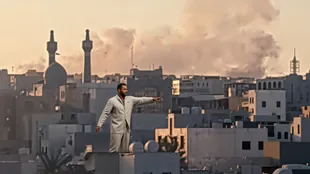 Iran Strikes US Sites in Kuwait Following US Airstrikes on Qeshm Island
Eyes glowing red, the towering "ghost king" presided over the atrium of a Hong Kong housing block on Sunday as residents performed age-old rituals -- a scene that may become history as redevelopment looms.
The Hungry Ghost, or Yu Lan, Festival has its roots in Chinese folk religion and marks the time during the seventh month of the lunar calendar when hell's gate opens and ghosts roam the earth.
Wah Fu Estate, a cluster of ageing public housing blocks with expansive sea views, is known for holding some of the most elaborate rituals in Hong Kong -- including the "ghost king" paper statue and folded decorations made by residents.
"It's a time for those ghosts to come to this universe," said sociologist Gary Wong, who helped organise this year's event.
"It's also a time for those people living in this universe to consolidate their community."
But the old haunts will soon be gone as the estate is set to begin its demolition and redevelopment as soon as next year.
Yiu Siu-fung, 73, recalled a time when multiple Wah Fu blocks each held celebrations, driven in part by a strong sense of community.
Those events were halted in 2020 due to strict pandemic-era social distancing rules.
Organisers were dealt a further blow in 2022 when Hong Kong authorities disbanded resident-led "mutual aid committees" in all public housing estates.
Festivities at Wah Fu restarted this year on a smaller scale, with the help of a government-funded project.
"For the young people, very few of them take part in Yu Lan," said Yiu, a resident for more than 20 years.
As night fell on Sunday, dozens watched ceremonial masters perform rituals such as "crossing the bridge" and "breaking hell's gate" in the well-shaped atrium, a feature of the building's 1960s architectural design.
Resident Janne Tsui, 25, had earlier helped fold delicate paper offerings after learning the technique in a workshop.
"Personally I'm worried that this sort of culture will be lost because of Wah Fu Estate's demolition," she told AFP.
Tsui said her family are among those moving away next year as part of the redevelopment plans.
Taking part as a volunteer was a way to "make more memories", she said.
"I used to find (Hungry Ghost Festival) very scary, but now I feel emotional about the changing times."
O.Brown--AT