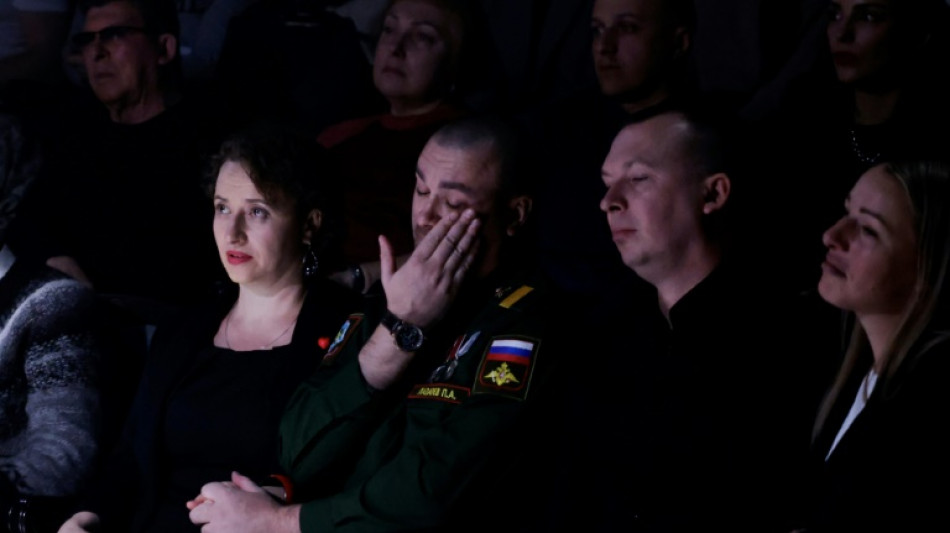
Russian playwright tells story of wounded soldiers / Photo: TATYANA MAKEYEVA - AFP

 US media outlets to sue Trump administration after White House ban
 Global stocks rally on lower oil prices, US-China hopes

 EU proposes energy rating for data centres
 Schoolgirl Yu scorches to second gold as doping case rocks Games
 Putin's party secures record score in Russia election

 Haupt Koleksiyonu: Paranın Biz İnsanlar Hakkında Anlattıkları

 Spanish PM says unregulated AI could be 'devastating'

 Yu, 13, smashes record again with second Asian Games gold

 Switzerland to play without Xhaka over fake Covid certificate

 From Korean Chipmakers to Leveraged Semiconductor ETFs: STARTRADER Launches 49 New 24/7 Stock and ETF CFDs

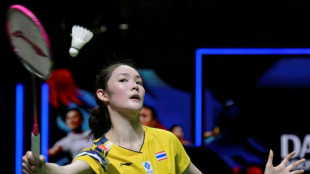 Thai badminton player first doping case at Asian Games: testers

 Колекція Гаупта: Що гроші розповідають про нас, людей
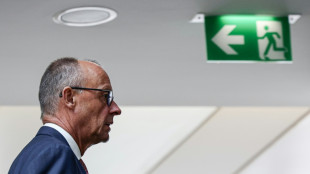 German far-right AfD poll winner says Merz 'twilight' has begun

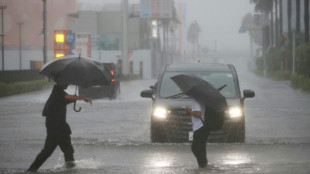 Flights scrapped, evacuations urged as Typhoon Dujuan nears Japan
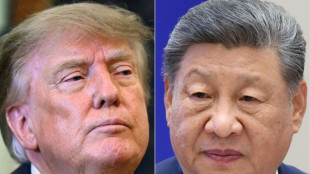 China confirms Xi to visit US this week for Trump talks
 مجموعة هاوبت: ما يكشفه المال عنا نحن البشر

 Colecția Haupt: Ce ne dezvăluie banii despre noi, oamenii

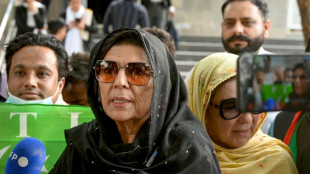 Sisters of jailed Pakistan ex-PM Imran Khan arrested

 African players in Europe: Semenyo brace helps City top table

 'For my family': India boxer beats hardship, injury to go for Games gold
 Indonesia doing 'everything' but still struggling to curb fires
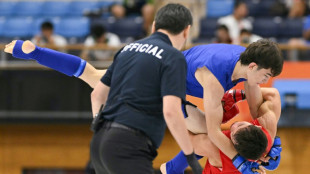 Once decried as 'human cockfighting', MMA wants Olympic spot
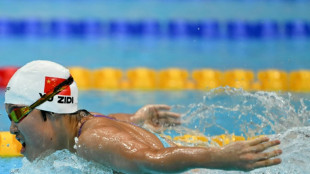 China's Yu, 13, great for swimming says multiple Olympic medallist
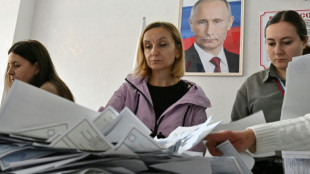 Putin's party set to retain power after Russia vote hit by cyberattacks, drones
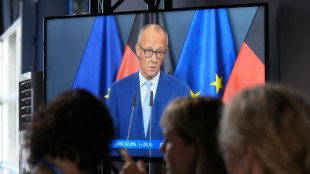 Germany's Merz under pressure after bruising state election losses

Sat in a Moscow theatre, Pavel wiped tears as he watched actors perform a dramatised version of his life: from his childhood in the south of Russia, near Ukraine, to his mobilisation into the Russian army and amputation after combat.
A few audience members smiled, some cried, most watched in silence.
Since Moscow launched its offensive against Ukraine three years ago, hundreds of thousands of Ukrainian and Russian soldiers have been killed and wounded.
But in Russia, showing and talking about the wounded is largely taboo -- both among supporters of the offensive and its critics.
"Radio-Pasha", a play written by former journalist Irina Bugrysheva, aims to change this.
It is based on her own experience as a masseuse treating battle wounded.
She said society was not accustomed to seeing wounded soldiers portrayed in the media.
"When I went to volunteer at the hospital in the fall of 2022, I started writing notes," Bugrysheva told AFP.
"I realised that what I was seeing was some other life that we are not told about, that we don't see on TV, that we don't hear on the radio."
- 'I don't take sides' -
Bugrysheva said she gave up journalism and social media at the start of the offensive on February 24, 2022 and trained to become a masseuse.
"I opened my Facebook and just closed it, because people -- who were close before -- were saying I was the one bombing Kyiv," she said.
Months later, she was volunteering at a hospital where wounded soldiers returning from Ukraine were being treated.
After her visits to the hospital, Bugrysheva took up writing again.
She compiled her experiences in a book titled "I touch the war with my hands", which will be published soon.
"I don't take sides. My focus is on the human soul alone," she said.
Bugrysheva came up with the title Radio-Pasha while watching soldier Pavel "Pasha" Lazarev talking non-stop on the phone at the hospital where he was being treated.
Her story caught the attention of Lyudmila Manonina-Petrovich, director of the small Kovcheg theatre in Saint Petersburg, who staged "Radio-Pasha".
Manonina-Petrovich said she wanted the audience to understand the plight of the soldiers returning from Ukraine.
"So that society would be ready for this return -- ready to accept it," she said.
- 'Very touching' -
That evening, on the smallest stage of the Vakhtangov Theatre in Moscow, there were only around a hundred spectators in attendance.
Among them was Alexei, a 27-year-old soldier who had returned from Ukraine.
He struggled to hold back tears.
"It was very touching. Lots of memories come flooding back. And you realise that nothing was in vain," he said.
Throughout the performance, the real Pavel Lazarev squeezed Bugrysheva's hand. A factory worker, he remembers the day he was mobilised.
"I had already done my military service in Chechnya. I knew I would be useful," he told AFP. "They called me up, and I went."
He said he took part in the fighting for the eastern Ukrainian city of Marinka, which Moscow took full control of at the end of 2023.
Wounded in combat, his leg had to be amputated.
"Through these performances, every fighter sees himself, endures this pain, and it becomes easier for him," he said.
But few venues are willing to host the plays and the organisers are having a hard time financing their project.
Private organisations and the authorities have shown no interest so far.
For the past three years, the Russian army has sought to portray the image of healthy soldiers on the road to victory.
The play is mainly performed in small cultural centres in the suburbs of Saint Petersburg.
Critics of the offensive do not condone the play either, as they reject compassion towards those fighting for Moscow.
Konstantin Zelensky, the actor who plays Lazarev, said he was upset that the theatrical community was indifferent to the play.
"I didn't have to make up anything. My brother was mobilised, he's in his third year of the special military operation," the actor said.
"Our so-called theatrical bohemians don't hide their lack of support for the special military operation. So we just get together and do it ourselves," he said.
P.Hernandez--AT